Watermelon lime juice
Watermelon and lime juice: Alioune's contemporary recipe for four people.
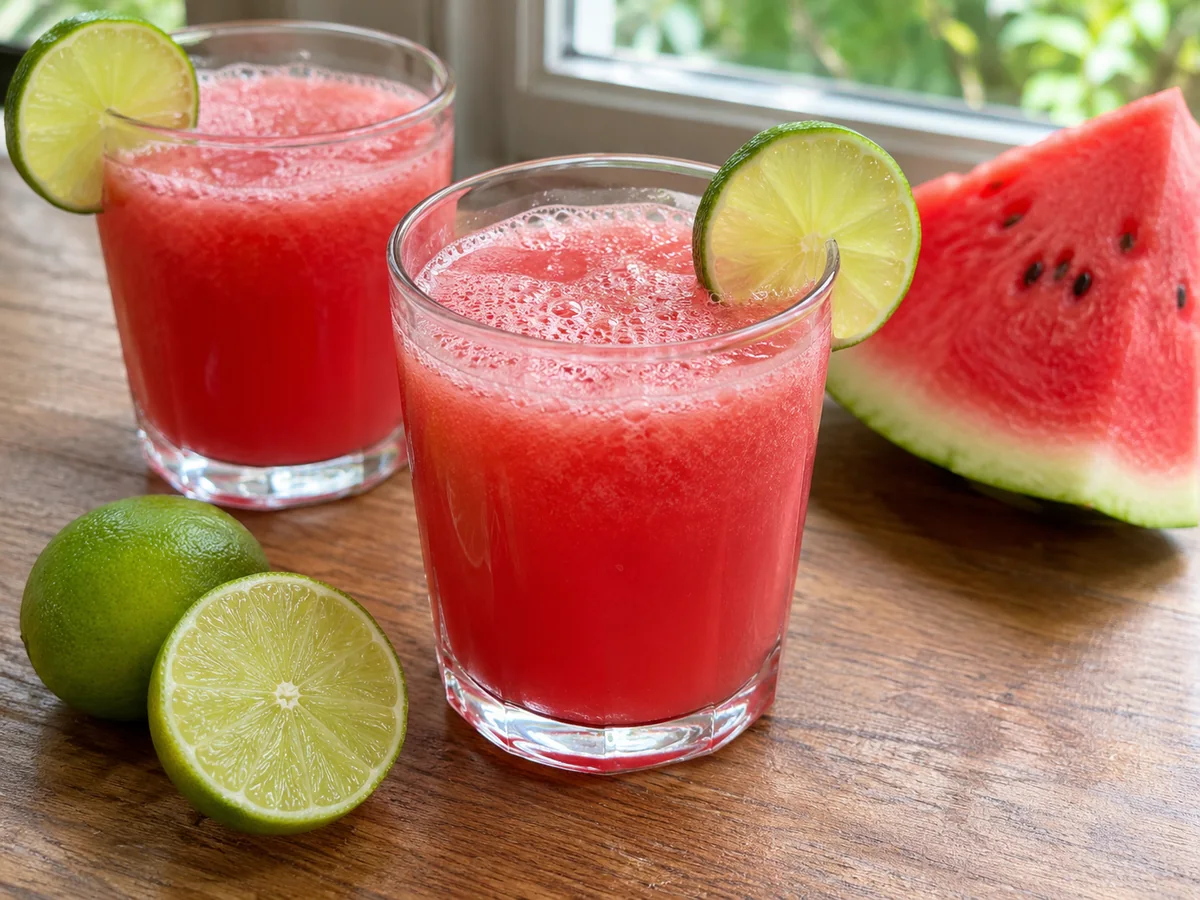
Ingredients
- 1000 g deseeded watermelon flesh
- 40 ml lime juice
- 100 ml drinking water
Preparation
Wash the outside of the watermelon before cutting it, even if the rind won't be eaten. Use a stable board and a clean knife appropriate for the size of the fruit. Scoop out the flesh and remove any hard seeds that would make it difficult to blend or eat.
Weigh out 1000g of ready-to-eat fruit. Cut it into cubes small enough to easily fit in the blender. Discard any damaged areas and keep the fruit chilled if you are not preparing the drink immediately after cutting.
Measure out 40 ml of lime juice and 100 ml of drinking water. The watermelon already provides plenty of liquid: the additional water is simply to aid blending and achieve the desired consistency, not an invitation to fill the pitcher without measuring.
Place some of the watermelon in the bowl with the water. Blend briefly to form a liquid base, then add the remaining pieces according to the appliance's capacity. Do this in batches if necessary, without exceeding the manufacturer's recommended limit.
Add the lime juice and blend for a few more seconds. The basic version retains the pulp and is not strained. Stop the appliance before checking the texture or scraping down the sides of the bowl with a spatula.
Taste with a clean spoon. No sugar is included; if the fruit lacks sweetness, it may be better to accept a less sweet drink rather than automatically adding syrup. Any added sugar must be shown in the product description and its calculation.
Pour into a clean, covered carafe, then serve chilled in four portions after stirring. Slight separation upon standing is normal. Keep the carafe refrigerated until serving and do not leave it in a warm room for several hours.
Introduction
Watermelon and lime juice is a blended fruit drink, prepared without added sugar in this version. The watermelon provides plenty of liquid and a sweetness that varies depending on the fruit; the lime adds a brighter finish. The small amount of water makes blending easy without excessively diluting the flavor. The pulp is retained to maintain the texture and consistency described in the recipe.
This recipe is a contemporary addition to the Congo-Brazzaville collection. Watermelon drinks appear in numerous cookbooks and are not specifically attributed to Congolese tradition here. The recipe describes a homemade preparation intended for serving chilled. It does not present the drink as a remedy, a detox treatment, or a systematic replacement for drinking water and whole fruit.
Cultural context
Watermelon may seem so juicy that it requires no special technique. However, choosing the edible part, removing the hard seeds, blending, and serving it significantly changes the result. The 1000g weight refers to the flesh without the rind and any troublesome seeds, not the weight of the entire wedge purchased at the market.
The term "juice" is used here in its common culinary sense, referring to a blended drink that retains its pulp. Passing it through a sieve would result in a smoother texture but would remove some of the pulp. The nutritional values listed correspond to the unfiltered version. A homemade drink is still a source of fruit in liquid form: serving a moderate glass and offering water alongside it helps ensure that each beverage has a clear place in the meal.
Tips
Wash the skin before cutting to limit the transfer of dirt to the flesh by the knife; adding lemon afterwards does not replace this step.
Weigh only the edible part without the skin, so that the proportions and intake correspond to the recipe stated.
Remove the large, hard seeds rather than relying on the blender to make them disappear pleasantly.
Start with a small amount of fruit and the measured water to prime the blades without overloading the device.
The mixing process may create foam: allow it to settle briefly before judging the volume and texture of the carafe.
Keep the pulp to match the estimate of the base version; very fine filtering reduces the amount of plant matter consumed.
Ideally, prepare the amount needed for the meal, keep the drink cold, and use a clean carafe and glasses for a fresh and elegant service.
Variations
A few washed mint leaves can be blended with the fruit for an herbaceous note. A small amount of ginger adds a more vibrant flavor, but use it sparingly so as not to overpower the watermelon. If you prefer a filtered drink, let us know you're making the change and don't resume your fiber intake without adjusting it. Ice cubes made from drinking water can chill the glass, but as they melt, they will alter the volume and concentration of the serving.
Accompaniments
Offer a small glass with a salad, grilled food, or a simple snack, keeping plain water available. The drink doesn't need a second syrup or a very sweet accompaniment to be enjoyable. The reference values refer to a quarter of the entire unfiltered preparation, including lemon and water, without any biscuits, cakes, or other food served alongside.
Nutrition notes
Watermelon primarily provides water and naturally occurring sugars, along with plant-based micronutrients. No sugar is added. The estimate refers to the beverage with its pulp; fine filtering or the addition of ice cubes will change the per-glass figure.