Lemongrass ginger infusion
Lemongrass and ginger infusion: Alioune's contemporary recipe for four people.
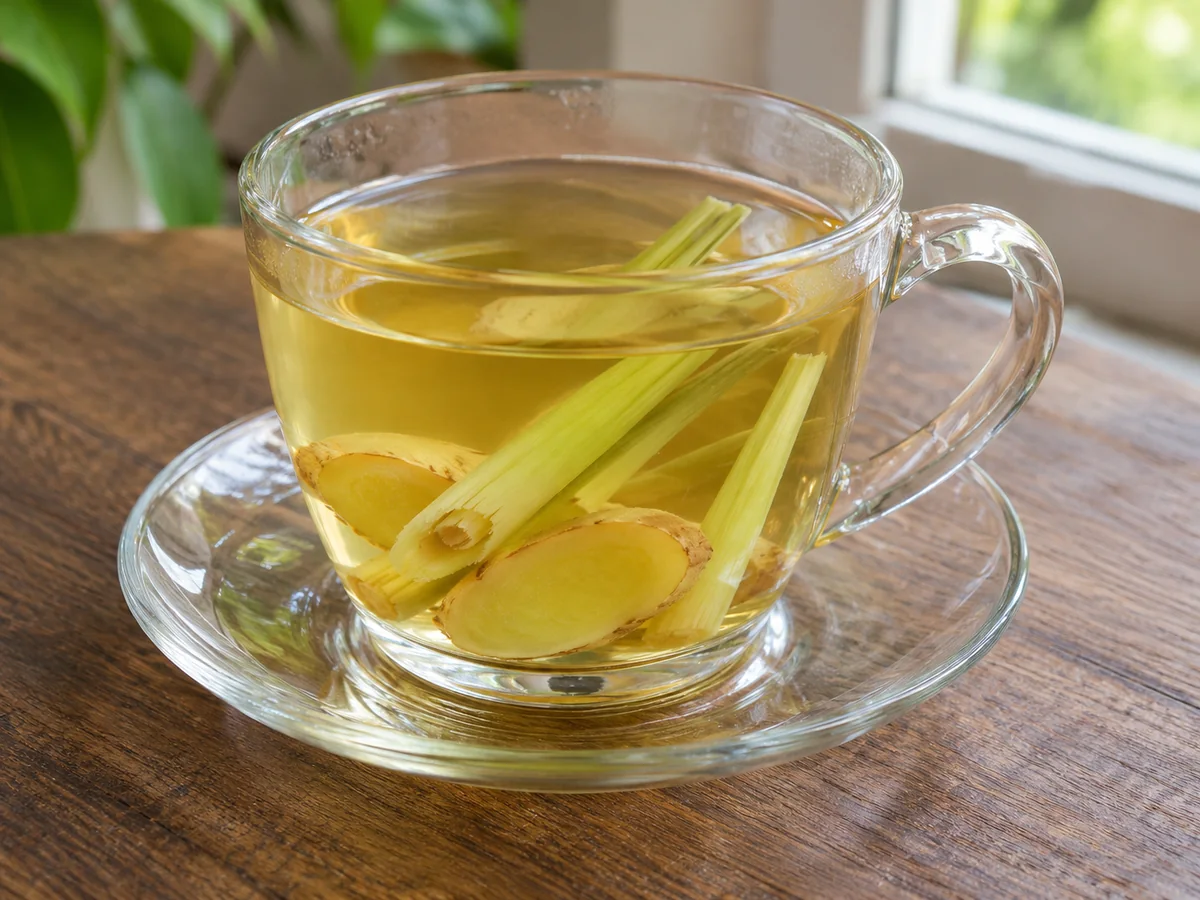
Ingredients
- 40 g fresh food-grade lemongrass
- 20 g fresh ginger, thinly sliced
- 1000 ml drinking water
Preparation
Check that the lemongrass is sold for food use. Remove any damaged parts and wash the stalks in clean drinking water. Weigh out 40g of usable portion, then lightly crush the stalks with the flat of a knife placed on a stable board.
Cut the stems into pieces large enough to be easily strained. Avoid cutting them into very small fragments: their fibers can pass through a coarse sieve and interfere with the tasting experience. Keep your fingers away when crushing or cutting the firm parts.
Wash the ginger, peel it if necessary, and weigh out 20g of the edible part. For this infusion, cut it into thin slices rather than grating it very finely; this releases its aroma while remaining easy to remove during straining.
Pour 1000 ml of drinking water into a saucepan and bring to a boil. Add the lemongrass and ginger, then remove from the heat. Cover to minimize the loss of aromas during infusion, without allowing it to boil vigorously for an extended period.
Let it steep for about 10 minutes. Taste a small amount, slightly cooled, with a clean spoon. If the flavor seems sufficient before the end, strain it earlier; if it is too strong, diluting it with a measured amount of drinking water will soften it.
Strain through a fine-mesh sieve into a clean, heatproof teapot or carafe. Carefully remove any stem fragments and ginger slices. Do not consider these solids as an edible garnish; they are removed in the basic method.
Divide into four cups of approximately 250 ml each and allow to cool to a comfortable temperature before drinking. For a cold serving, quickly chill the strained beverage and then refrigerate. Serve with ice cubes of drinking water only if you desire this additional dilution.
Introduction
Lemongrass and ginger infusion is a sugar-free beverage made by steeping edible stalks and ginger in hot water, then carefully straining. The lemongrass provides a lemony aroma without citrus juice; the ginger adds a more pronounced flavor. The result should be clear, pleasant to drink, and free of fibrous fragments, which are not part of the consumed portion.
This version is a domestic adaptation of the Congo-Brazzaville collection. While herbal infusions exist in many contexts, this recipe does not claim a specific traditional Congolese origin for these proportions. Nor does it transform a drinking practice into a medical prescription. The guideline conveyed is culinary: correctly identifying the food ingredients, adjusting the infusion, and serving a fragrant beverage.
Cultural context
Edible lemongrass used for cooking should not be confused with any other lemon-scented plant, nor with an essential oil. Buy a product labeled as food-grade, fresh, and healthy. The information sheet uses stalks, not a concentrated extract. An essential oil cannot be added as a direct replacement for the 40g of lemongrass specified.
The drink can be served hot or cold, depending on your preference and the time of day. In both cases, the beverage is strained: the nutrients contained in the stalks and whole ginger are therefore not fully transferred to the cup. This is why this recipe doesn't attribute artificial amounts of vitamins or minerals to them. The aromatic pleasure is enough to define the preparation, without any promise of detoxification, healing, or preventative effects.
Tips
Use only identified food-grade lemongrass; a plant's lemony scent alone is not enough to guarantee that it is suitable for this recipe.
The product sheet does not include any essential oils, room fragrances, or products intended for outdoor use.
Lightly crushing the stems facilitates the diffusion of the fragrance; chopping them very finely mainly complicates the filtering of the fibers.
Slices of ginger are easier to remove than very finely grated ginger, while still giving a fragrant infusion.
Cover while waiting and then filter at the chosen time to control the intensity, rather than leaving the plants in the carafe all day.
Let the cup cool down before drinking: a very hot drink can burn even when it looks light and transparent.
Keep the cold version in the refrigerator and consume it quickly; do not leave a large pot to cool slowly for several hours on the work surface.
Variations
A slice of clean lemon can be added when serving for a contrasting acidity to the lemongrass flavor. Sugar or honey will alter the flavor profile and should be measured; they are not included in the basic recipe. For a milder infusion, reduce the amount of ginger rather than automatically increasing the steeping time. An iced version uses the same preparation, with a different final volume if the ice cubes melt.
Accompaniments
Serve with a small biscuit, a piece of cake, or simply after a meal. The drink is also enjoyable on its own, without any need to attribute any medicinal benefits to it. The values given are approximate for a cup of strained, unsweetened infusion, and not the sum total of nutrients from the whole plants. Accompaniments and any added sweeteners are excluded.
Nutrition notes
Filtered, sugar-free tea provides negligible energy. The nutrients from the removed stems and ginger are not fully transferred to the cup. No final vitamin or mineral content is artificially determined; the water used also influences the composition.