Papaya lemon nectar
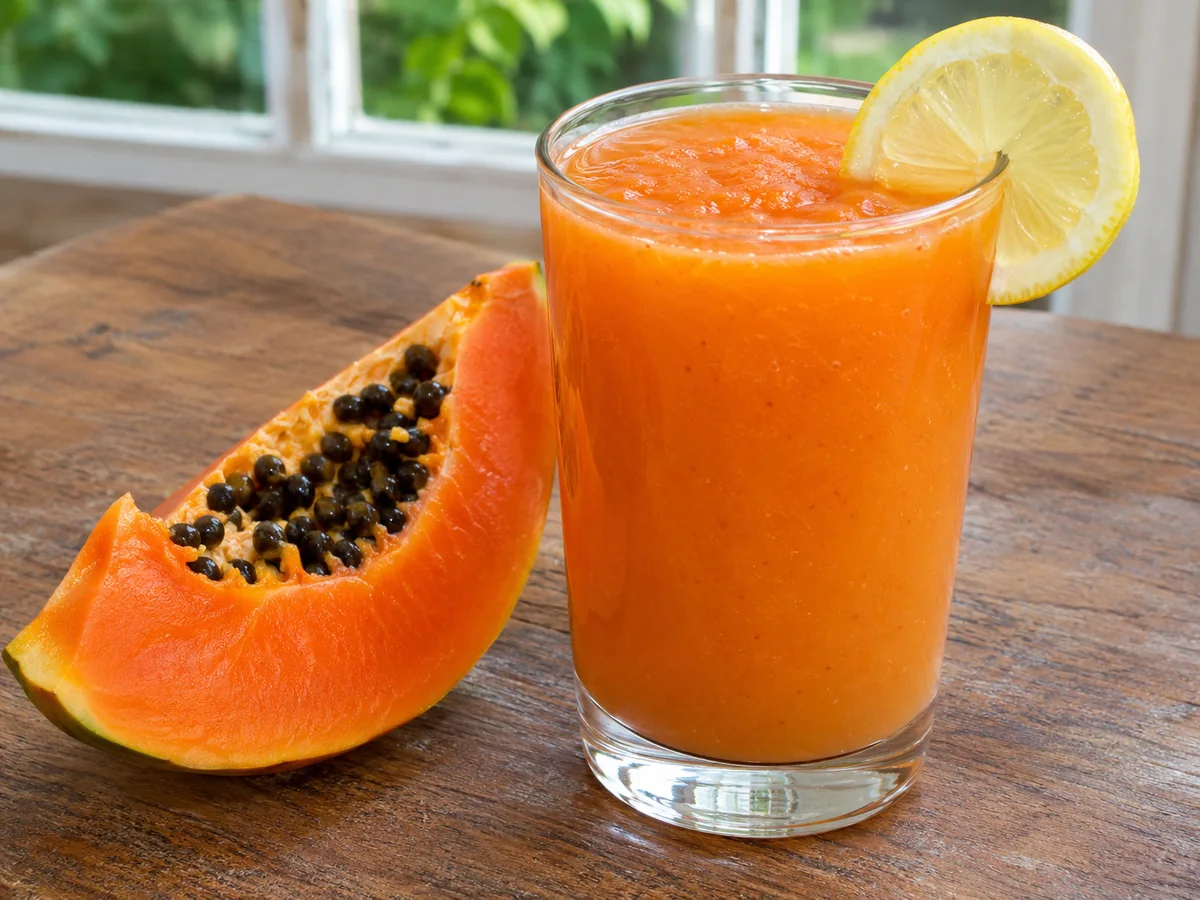
Papaya and lemon nectar: Alioune's contemporary recipe for four people.
Ingredients
- 600 g deseeded ripe papaya flesh
- 40 ml lemon juice
- 500 ml drinking water
- 25 g sugar
Preparation
Wash the outside of the papaya, then cut it open with a clean knife. Remove the skin and seeds. Weigh out 600g of ripe, healthy flesh, then cut it into pieces the right size for your blender. Discard any damaged parts just because they'll be blended.
Measure out 500 ml of drinking water, 40 ml of lemon juice, and 25 g of sugar. Use chilled water if you plan to serve it quickly. If you are making ice cubes, they should also be made with drinking water.
Place the papaya in the blender bowl with about half the water. Pulse, then blend more steadily until smooth. Stop the blender before scraping down the sides with a spatula; never work near the moving blades.
Add the sugar and lemon juice, then gradually pour in the remaining water. Blend again to dissolve the sugar and distribute the acidity. The liquid should pour easily while retaining a slight thickness from the pulp.
Taste with a clean spoon. The ripeness of the papaya greatly influences its sweetness. The recipe calls for all the sugar measured; if you choose to use less, note this variation so that the sugar content reflects the amount actually added.
Let the foam settle for a few minutes, then pour into a clean carafe. The basic version is unfiltered. If you add water for a thinner drink, measure it: the final volume and the amount per glass will change, even if the total quantity of fruit remains the same.
Divide the carafe into four portions after stirring, or refrigerate, covered, until ready to serve. Slight separation upon standing is normal; stir before pouring. Serve chilled, without leaving the beverage to sit at room temperature for several hours.
Introduction
Lemon papaya nectar is a blended fruit drink, thicker than strained juice and thinner than purée. Ripe papaya provides body and sweetness, lemon adds a zesty note, and water helps achieve a pleasant consistency. The basic version retains the pulp; it doesn't aim for a clear liquid by removing all the flesh.
This recipe is a contemporary addition to the Congo-Brazzaville collection. It uses papaya as an ingredient in a home drink, without claiming to be based on any specific local traditional preparation. The word "nectar" here describes the common culinary use of a diluted fruit beverage; it does not constitute a declaration of conformity to the regulatory categories of a commercial product. The recipe card provides a home-style method and its proportions.
Cultural context
A homemade fruit drink allows you to choose the thickness and the amount of added sugar. This doesn't mean it can be consumed without regard to portion size. The recipe calls for 600g of papaya flesh and 25g of sugar, divided among four people. It retains more plant matter than a carefully strained juice, but it doesn't automatically replace the experience of chewing a whole fruit.
Served chilled, this beverage is perfect for a meal or a snack, alongside drinking water offered separately. It has no purported therapeutic benefits and is not marketed as a detox treatment. The lemon balances the flavor; it does not sterilize the papaya or the container. Water quality, a clean blender, and proper refrigeration are the key practical indicators for a pleasant and reliable preparation.
Tips
Choose a ripe, soft and healthy papaya; a green papaya will not give the same sweetness or texture in this raw drink.
The stated weight is that of the flesh without skin or seeds, and not the weight of the whole fruit at the time of purchase.
Start mixing with some of the water: the material is drawn in more regularly than with a bowl immediately filled to the top.
Do not exceed the maximum capacity of the blender; if necessary, prepare two small batches and then combine them in the carafe.
Keep the pulp to respect the version described and its fiber estimate; fine filtering removes some of the consumed material.
Ideally, prepare the quantity of food for the meal, keep the leftovers cold and consume them quickly in a clean, covered container.
Variations
You can omit the added sugar if you're using a sufficiently sweet papaya, recalculating the energy and carbohydrate content of the serving. A small amount of fresh ginger adds a more vibrant flavor; finely chop it to avoid the long fibers. Replacing some of the water with another liquid changes the composition and can make the drink richer. Straining through a sieve produces a smoother juice, but it loses the original pulpy texture.
Accompaniments
Offer a small glass with a simple meal or snack, keeping water available. A small biscuit or a few pieces of fruit can accompany the drink, depending on appetite, but should not be included in the calculation. The estimates correspond to a quarter of the entire preparation, including the 25g of sugar and the reserved pulp, rather than a glass volume assumed to be the same throughout.
Nutrition notes
Papaya provides natural sugars, a portion of fiber, and micronutrients; the 25g of added sugar is included. The calculation retains the pulp. Fine filtering or further dilution will change the composition of a served glass.