Papaya and passion fruit salad
Papaya and passion fruit salad: a contemporary recipe by Alioune for four people.
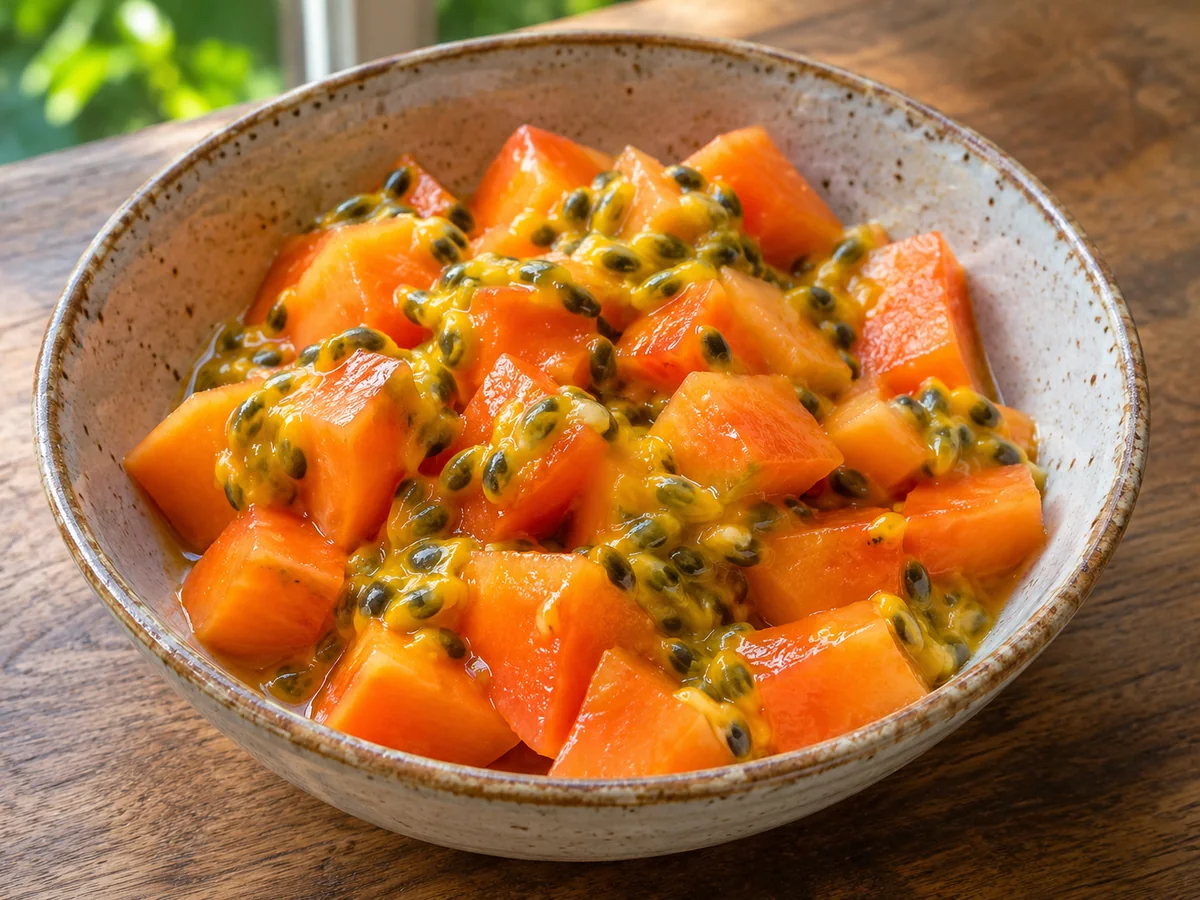
Ingredients
- 800 g deseeded ripe papaya flesh
- 150 g passion fruit pulp
- 20 ml lime juice
- 8 g mint leaves
Preparation
Wash the papaya and passion fruit before cutting them, even if their skins won't be eaten. Prepare a clean knife, a cutting board, and a bowl. This step minimizes the transfer of dirt from the outside to the flesh when opening.
Open the papaya, remove the seeds, and peel the flesh. Weigh out 800g of the edible portion, then cut it into even cubes, large enough to hold their shape in the mixture. Discard any damaged areas rather than hiding them under the seasoning.
Cut the passion fruits in half and scoop out the pulp with a spoon. Weigh out 150g, including the seeds, for the basic version. Mix this pulp with 20ml of lime juice in a small bowl to balance the acidity before adding it to the fruit.
Wash the 8g of mint leaves, drain them, and dry them. Finely chop them just before combining the ingredients. Leaves that are still wet will dilute the juice, and chopping them too early will cause them to lose some of their fresh aroma.
Pour the seasoning over the papaya cubes. Gently mix with two spoons, lifting the pieces. The goal is to moisten the surfaces, not to crush the fruit. Add the mint and distribute it with a few more movements.
Try a bite with the juice. The recipe doesn't call for added sugar; if you add some to taste, note the amount as a variation. Briefly chill the salad if you prefer it colder, but don't let it marinate for too long.
Divide the mixture into four bowls, with equal amounts of papaya and passion fruit juice. Serve chilled using a clean serving spoon. Keep any leftovers refrigerated rather than leaving the bowl on the table throughout the meal.
Introduction
Papaya and passion fruit salad is a refreshing dessert, with no added sugar, where the sweetness of the papaya balances the acidity of the passion fruit and lime. Mint provides a light finishing touch. The fruit remains in chunks: the passion fruit juice acts as a dressing, not a liquid in which the papaya should float. Simplicity requires above all ripe fruit and careful preparation.
This recipe is a contemporary creation of the Congo-Brazzaville collection. It does not claim a specific traditional Congolese origin for this combination. Papaya and passion fruit are present in various tropical cuisines; their combination alone is not enough to establish a single national history. The recipe conveys a personal way of presenting a fruit dessert, with clearly described proportions and serving instructions.
Cultural context
A dessert of sliced fruit can be prepared in minutes, but its flavor depends much more on ripeness than on lengthy preparation. A still-green papaya won't provide the desired texture, and a very acidic passion fruit can overpower the mixture. It's essential to taste the fruit before deciding on the balance, and not automatically add sugar to compensate for a poor choice of ripeness.
The passion fruit seeds remain in the base salad, adding a light crunch. Removing them through a sieve results in a different yield and eliminates some of the consumed pulp; the nutritional value is then no longer exactly the same as that calculated for the whole pulp. The stated weight of 150g refers to the pulp extracted from the shells, not the weight of whole fruits purchased.
Tips
Choose a ripe papaya that is still firm enough to form cubes; a very soft fruit will give more of a raw compote than a salad.
Weigh the flesh and pulp after removing any unwanted skins and seeds, in order to respect the proportions in the recipe.
The passion fruit seeds are retained in this version; filtering them out alters the texture and yield of the dessert.
Dry the mint before chopping it to preserve a fragrant juice rather than a diluted salad bowl.
Lime adds flavor but does not replace washing or refrigerating cut fruit.
Prepare the slices shortly before the meal to maintain a clean texture; prolonged waiting causes the papaya to release more juice.
For young children or people with chewing difficulties, adapt the size of the pieces and the presence of seeds to their needs, without promising an identical texture.
Variations
A little pineapple can replace some of the papaya for a more tangy dessert. The mint can be reduced or omitted if its flavor isn't to your liking. Strained passion fruit pulp yields a smoother juice, but requires recalculating the actual weight consumed. Adding sugar, syrup, or coconut milk alters the dessert's balance and should be listed in the ingredients for the variation.
Accompaniments
Serve plain after a saucy dish or with a small portion of unsweetened yogurt. A few shortbread cookies can accompany the salad, but their nutritional value is in addition to that of the fruit. The dessert doesn't need a second syrup: the passion fruit and lemon already provide the dressing. The estimates are for a quarter of the salad, without cookies or dairy products.
Nutrition notes
Papaya and passion fruit provide naturally occurring sugars, fiber, and plant-based micronutrients. No sugar is added. The recipe retains the passion fruit seeds; filtering them removes some of the material and alters the fiber content.