Avocado cocoa cream
Avocado and cocoa cream: a contemporary recipe by Alioune for four people.
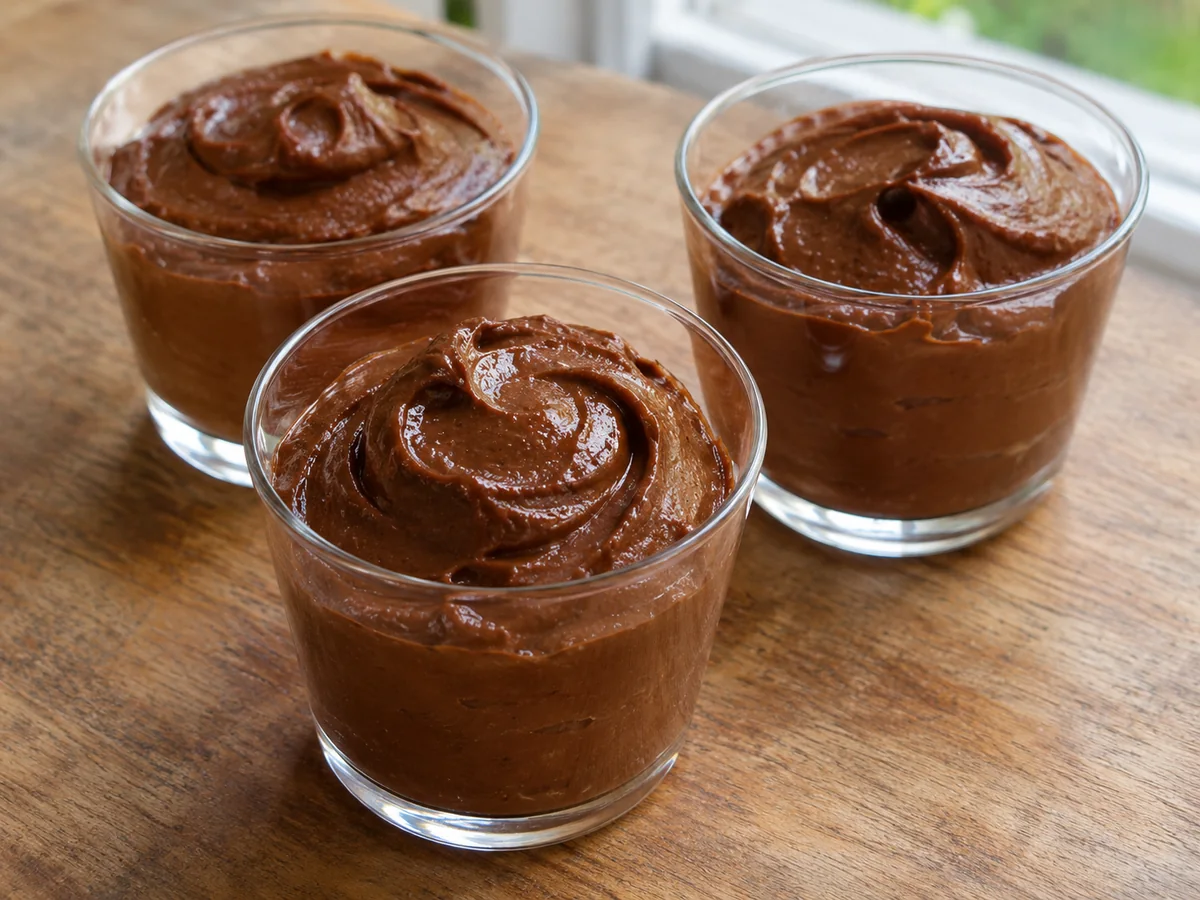
Ingredients
- 400 g firm ripe avocado flesh
- 200 g ripe banana flesh
- 30 g unsweetened cocoa powder
- 120 ml unsweetened coconut milk
- 25 g sugar
Preparation
Wash and dry the outside of the avocados before opening them. Remove the pits, scoop out the flesh, and weigh out 400g. Discard any clearly damaged areas; a badly bruised avocado is unsuitable simply because it will be masked by the color of the cocoa.
Peel the bananas and weigh out 200g of flesh. Cut them into pieces to make blending easier. Choose ripe but unblemished fruit: this will give sweetness and a smooth texture without imparting a fermented taste or unusual spoilage.
Place the avocado and banana in the bowl of a clean blender. Add the 120 ml of unsweetened coconut milk, which has been previously homogenized. Blend briefly, stop the machine, and scrape down the sides with a spatula before continuing.
Sift or crush the small lumps from the 30g of unsweetened cocoa, then add them along with the 25g of sugar. Blend again until you obtain a smooth cream. Take breaks to avoid unnecessarily heating the mixture.
Check the texture with a spoon. The cream should be smooth and pliable, without large pieces of avocado or dry powder. If your mixer is struggling, stir with the mixer turned off rather than immediately adding a lot of liquid, which would make the dessert too runny.
Taste with a clean spoon. The strength of the cocoa and the ripeness of the fruit will affect the perceived sweetness; any amount of sugar added beyond 25g should be considered a change. Then divide among four roughly sized bowls.
Cover and refrigerate for about an hour. Serve chilled, without leaving the cups sitting on a warm table for long. Gently stir the surface if necessary and present any garnishes separately to maintain the basic portion size.
Introduction
Avocado and cocoa cream is a cold, blended dessert that requires no cooking. The avocado provides texture, and the banana adds natural sweetness. Unsweetened cocoa powder gives it a chocolatey flavor, complemented by a small amount of sugar and coconut milk. The result should be smooth and pliable, thick enough to hold its shape on a spoon, without trying to perfectly mimic an egg mousse.
This recipe is a contemporary creation from the Congo-Brazzaville collection. Avocado can be used in both sweet and savory dishes depending on the cuisine, but this combination with cocoa does not have a specific traditional Congolese origin. The recipe card presents a personal adaptation based on fruit, without raw eggs or dairy cream. It should not be considered a light dessert solely because it contains avocado.
Cultural context
Avocado and coconut milk provide fats, while banana and sugar contribute carbohydrates. The creamy texture, therefore, doesn't come from a neutral ingredient. Understanding this composition allows you to choose the portion size without artificially pitting a fruit dessert against all other desserts. Cocoa adds flavor and bitterness; its proportion should be balanced with the ripeness of the banana.
The preparation requires no cooking. Therefore, it's essential to use fresh fruit, clean equipment, and properly stored ingredients, and then keep the cream refrigerated. The one-hour resting period primarily ensures freshness and a smooth texture. For a shared meal, four small bowls provide a clearer guideline than a large salad bowl where everyone would take a very different amount.
Tips
Choose unsweetened cocoa, not chocolate drink powder, whose sugar content would greatly alter the recipe.
A ripe but healthy avocado blends easily; very firm pieces would leave a grainy texture despite prolonged processing.
Homogenize the coconut milk before measuring it so as not to add only its fattiest layer.
Sift the cocoa clumps to avoid small, dry, bitter kernels in the finished cream.
Stop the blender before scraping the sides or pushing the ingredients back towards the blades; the spatula should never come into contact with a moving blade.
This recipe does not contain animal milk in its basic version, but ingredient labels and cross-contamination should still be checked according to the needs of the guests.
Keep the cream covered in the fridge and consume it quickly; the cocoa masks the color of the fruit without prolonging its shelf life.
Variations
A small amount of vanilla can complement the cocoa. For a less intense cream, slightly reduce the cocoa rather than systematically adding a lot of sugar. Replacing coconut milk with another liquid changes the richness and can make the texture thinner. Crushed peanuts added at serving provide crunch, but create an additional allergen and require recalculating the intake.
Accompaniments
Serve with a few pieces of papaya, pineapple, or a small slice of fresh fruit. A biscuit is optional, but not necessary to complement the already rich texture. Avoid automatically adding whipped cream, syrup, and sugar sprinkles to the same serving. The estimates are for a quarter of the cream, with the specified amounts of sugar and coconut milk, without any garnish.
Nutrition notes
Avocado and coconut provide lipids; banana and sugar contribute carbohydrates. Cocoa and avocado contribute fiber and magnesium. Despite its fruity base, this cream is energy-dense and deserves a portion appropriate to a meal.