Pan cooked pineapple with ginger
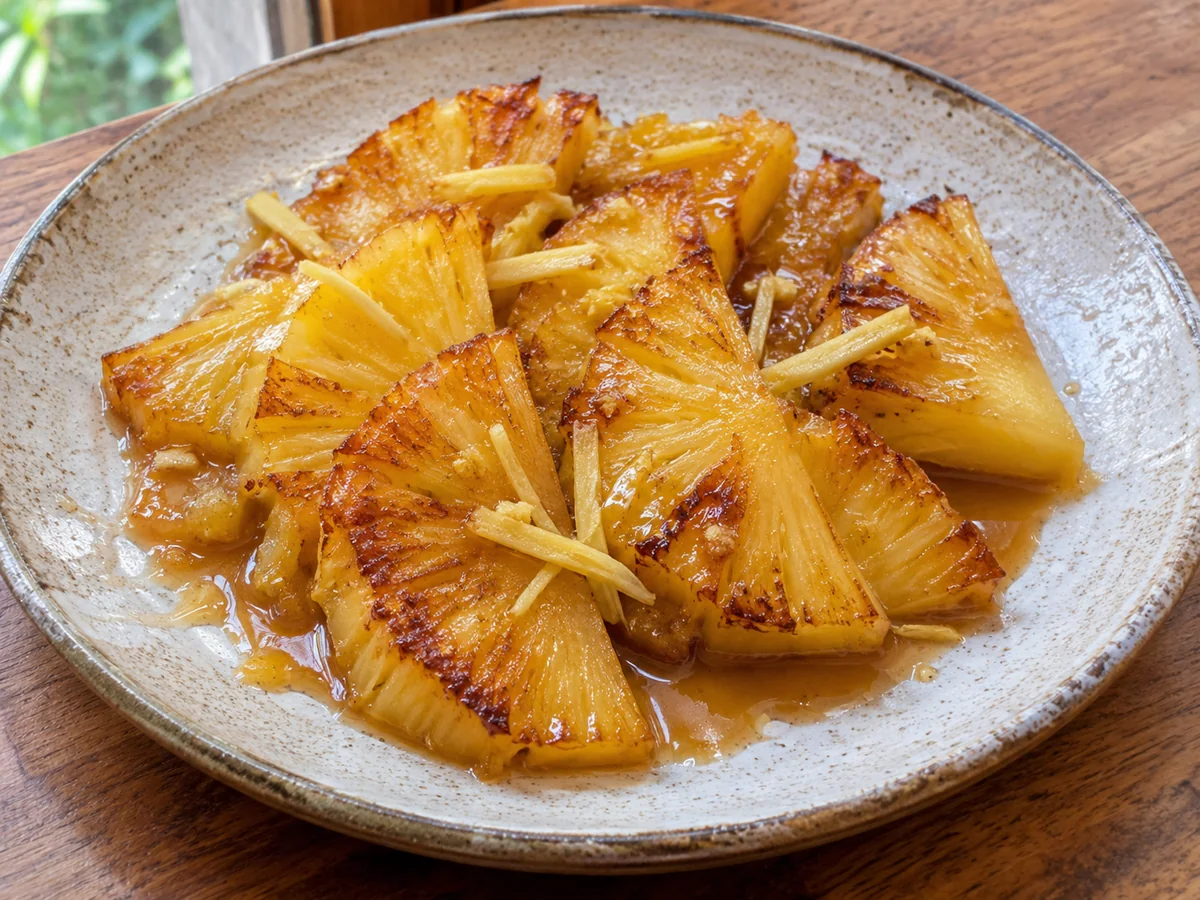
Pan-fried pineapple with ginger: Alioune's contemporary recipe for four people.
Ingredients
- 800 g fresh pineapple flesh
- 12 g grated fresh ginger
- 40 g sugar
- 20 g softened unsalted butter
- 50 ml drinking water
Preparation
Wash the outside of the pineapple before cutting it. Remove the skin, eyes, and any fibrous core if necessary. Weigh out 800g of flesh, then cut into even pieces, thick enough to be turned over without breaking during cooking.
Peel the ginger and weigh out 12g of the edible part. Grate it finely to distribute its aroma without leaving any large fibrous pieces. Prepare the 40g of sugar, 20g of butter, and 50ml of water near the pan.
Heat a large skillet over medium heat and melt the butter without letting it brown. Arrange the pineapple pieces in a single layer. If your skillet is small, do this in two batches, spreading the butter between each batch.
Let it brown for about 3 to 4 minutes on one side before turning it over. Avoid stirring constantly, as the fruit needs to remain in contact with the hot surface to color. Continue cooking for a few minutes on the other side, keeping the flesh juicy.
Sprinkle the sugar over the top and add the ginger. Mix gently, then let the sugar dissolve in the fruit juice. Keep a close eye on the bottom: it can quickly go from a light golden color to a burnt area if the heat is too high.
Carefully pour in the 50 ml of water, keeping your face and hands away from splashes. Simmer for a few minutes to obtain a thick sauce that coats the pieces. Gently scrape up the juices with a spatula, being careful not to scrape any blackened parts.
Divide the pineapple and juice into four portions. Allow it to cool before serving, as the syrup can be very hot while the fruit may still be pliable. Serve warm to enjoy the ginger aroma and the still-soft flesh.
Introduction
Pan-fried pineapple with ginger is a warm or hot dessert, with lightly browned pieces of fruit and a reduced juices. Butter and sugar help color the surfaces; the ginger provides a vibrant aroma that shouldn't overpower the pineapple. The recipe aims for a contrast between roasted edges and a still-juicy center, rather than a mushy consistency where all the fruit falls apart.
This version is a contemporary adaptation of the Congo-Brazzaville collection. Pineapple and ginger are ingredients found in many cuisines, and their mere combination in a pan is not enough to prove a specific Congolese origin. We therefore present a personal composition, without attributing to it a traditional history or ceremonial use. The technique and proportions are what we wish to convey.
Cultural context
Cooked fruit can serve as a dessert without requiring pastry, cream, or lengthy preparation. Pineapple contributes its natural acidity and juice, which is slightly concentrated during cooking. The amount of added sugar is clearly stated: even if the dessert appears simple and fruity, it is part of its nutritional value and should not be overlooked.
The choice of fruit makes all the difference. A very ripe pineapple can fall apart; an unripe one will remain firmer and more acidic. The recipe calls for fresh flesh, peeled, with the eyes and any overly fibrous parts removed. A pineapple in syrup would be a different product altogether. When serving, four portions of fruit and juice are divided, rather than a large amount of caramel poured over a few pieces.
Tips
The 800g refers to the flesh ready to cook; allow for a heavier whole fruit to account for the skin and removed parts.
Cut pieces of similar size so that the browning and tenderness progress at the same rate in the pan.
A pan that is too full promotes cooking in its own juices rather than light browning; cook in two batches if necessary.
Keep the butter light in color and reduce the heat as soon as it starts to brown too quickly, before adding the sugar.
Grate the ginger finely: large pieces remain pungent and fibrous, even after several minutes in the juice.
The added water loosens the cooking base; pour it carefully over a hot preparation to avoid splashing.
Cool the leftovers quickly, keep them in the refrigerator and reheat them gently, without overcooking them until the fruit dries out.
Variations
A small amount of lime juice can finish the juice for a more vibrant contrast, especially with a very sweet pineapple. Reducing the sugar is possible, but will result in less syrup and a different concentration of flavors. A butter-free version can use a small amount of a suitable oil, offering a different taste and nutritional profile. Don't add too many spices to the point of overpowering the fruit's aroma.
Accompaniments
Serve plain, with a dollop of unsweetened yogurt or a small slice of simple cake. Ice cream can accompany the fruit for a more indulgent dessert, but it adds sugar and fat beyond the recommended daily intake. There's no need to add caramel at the table: the cooking juices already serve that purpose. The values given refer to a quarter of the pineapple and its juice, without any garnish.
Nutrition notes
Pineapple provides natural sugars and some fiber; added sugar and butter increase energy. Ginger is primarily for its flavor. The fruit's original vitamin C is not considered to be fully retained after cooking.