Papaya and lemon compote
Papaya and lemon compote: Alioune's contemporary recipe for four people.
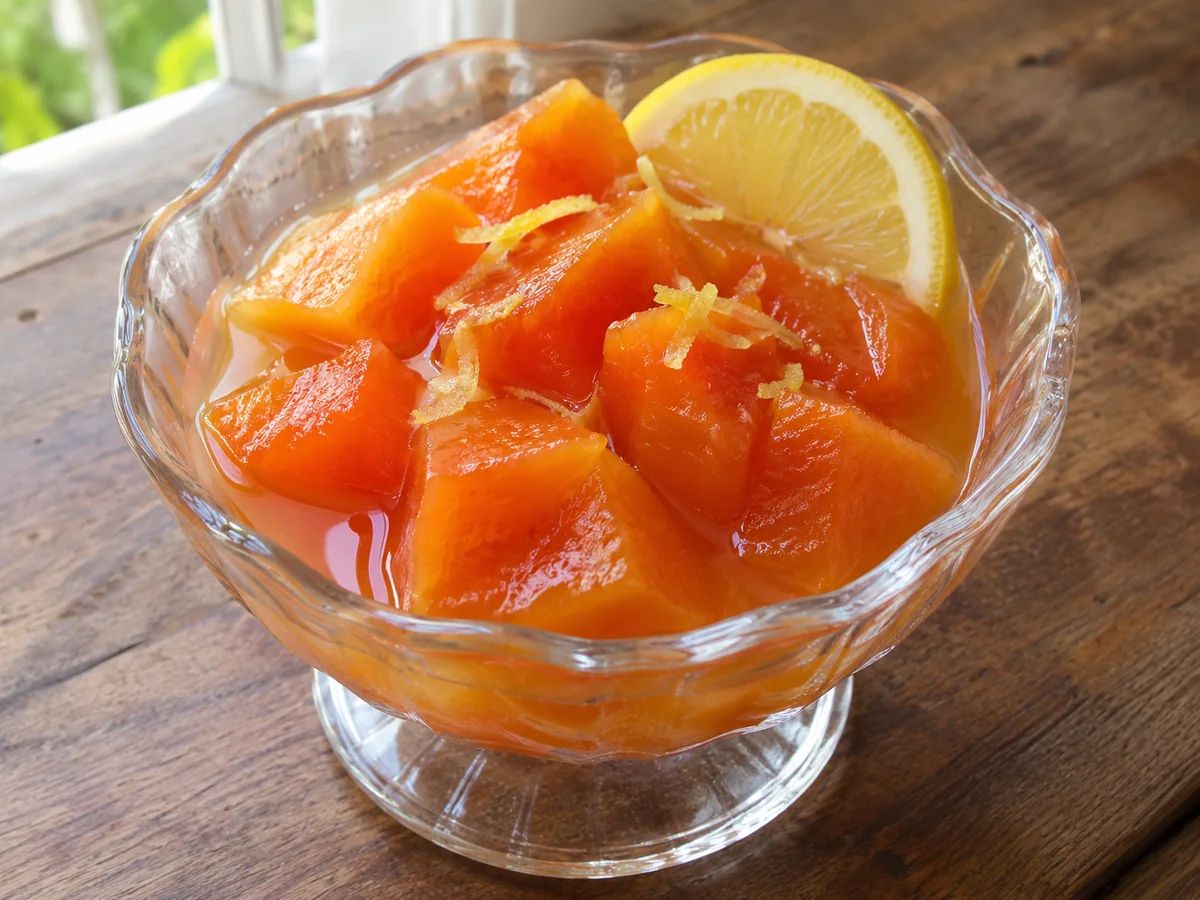
Ingredients
- 800 g deseeded ripe papaya flesh
- 35 ml lemon juice
- 50 g sugar
- 100 ml drinking water
Preparation
Wash the papaya before cutting it to avoid transferring dirt from the skin to the flesh. Open it, remove the seeds, and peel it. Check for any damaged areas, then weigh out 800g of edible flesh and cut it into even pieces.
Place the fruit pieces in a heavy-bottomed saucepan. Add 100 ml of water and 50 g of sugar. Gently stir to distribute the sugar evenly among the fruit without crushing it. Keep the 35 ml of lemon juice ready for later.
Heat over medium heat until it just begins to simmer, then reduce the heat. Partially cover and cook for about 15 minutes. Stir occasionally with a wooden spoon or spatula to ensure the bottom doesn't dry out.
Add the lemon juice and continue cooking for about 5 to 10 minutes, depending on the ripeness of the fruit and the desired texture. The pieces should be tender. If the mixture starts to stick while the fruit remains firm, add a teaspoon of water rather than increasing the heat.
Mash some of the pieces with a fork or potato masher. Leave a few chunks if you prefer a rustic compote. For a very smooth result, blend after the mixture has cooled down, using equipment suitable for hot preparations.
Taste a small spoonful once it's cooled. The perception of sweetness and acidity changes with temperature; there's no need to add sugar immediately just because the hot compote seems sweet or bland. Adjust the sugar only if you're planning to change the proportions.
Divide among four small, clean containers. Serve warm after a short wait, or chill quickly and then refrigerate for a cold serving. Cover the portions and scoop with a clean spoon at mealtime.
Introduction
Papaya and lemon compote makes a tender fruit dessert, with pieces that are more or less mashed depending on your preference. Ripe papaya is cooked gently with a little water and sugar; the lemon adds a bright note that balances its sweetness. The preparation is not as concentrated as jam and is not intended for storage at room temperature.
This recipe is a contemporary adaptation of the Congo-Brazzaville collection. It offers a domestic way to use ripe papaya, without attempting to reproduce a specific local traditional dessert. The fruit serves as an ingredient, but cooking it into a compote is not enough to establish a national origin. The story told here is that of a personal, simple recipe, clearly distinct from a long-lasting sweet preserve.
Cultural context
A green papaya and a ripe papaya do not yield the same dish. For this compote, the flesh should be soft, fragrant, and firm, with a color appropriate to its variety. Unripe fruit would require a different preparation and would remain firmer. The 800g weight refers to the flesh after removing the skin and seeds, not the whole fruit.
The compote can be served on its own as a dessert or alongside a dairy product. Its sweetness depends on both the fruit and the 50g of sugar added. This amount does not transform the recipe into jam: the proportion of sugar, the cooking time, and the jarring conditions are different. Presenting the dessert in clean containers makes serving easier, but does not replace cooling and refrigeration.
Tips
Choose a ripe but healthy papaya; cooking will not safely salvage a moldy or severely spoiled fruit.
The seeds and skin are not included in the 800g specified; weigh the flesh after preparation to ensure the correct proportions.
Use a pan that is wide enough to allow steam to escape, but avoid a very exposed bottom which would cause the fruit to burn.
Keep at a gentle simmer and stir more often as the compote thickens at the end of cooking.
The lemon balances the taste, but its presence does not transform this preparation into a stable preserve at room temperature.
Do not enclose a large, hot quantity in a deep container and let it cool slowly; spread it out to facilitate rapid cooling.
Keep refrigerated and consume quickly; for longer storage, freeze portions rather than improvising canning.
Variations
A small amount of ginger can be cooked with the fruit for a more vibrant flavor. Reducing or omitting added sugar is possible with a very ripe papaya, but the nutritional profile will change, and refrigeration will still be necessary. Adding some pineapple makes another, more tangy compote. Avoid using too many flavors to the point of overpowering the papaya.
Accompaniments
Serve plain, with unsweetened yogurt, or a small slice of simple cake. The compote can also accompany rice pudding in small quantities, keeping in mind the sugar already present in both desserts. The values given are for a quarter of the compote, without any dairy products, biscuits, or toppings added before serving.
Nutrition notes
Papaya provides carbohydrates, fiber, and vitamin C before cooking. Added sugar is included in the energy content. Cooking alters heat-sensitive vitamins; the values provided do not describe a concentrated jam.