Coconut rice pudding
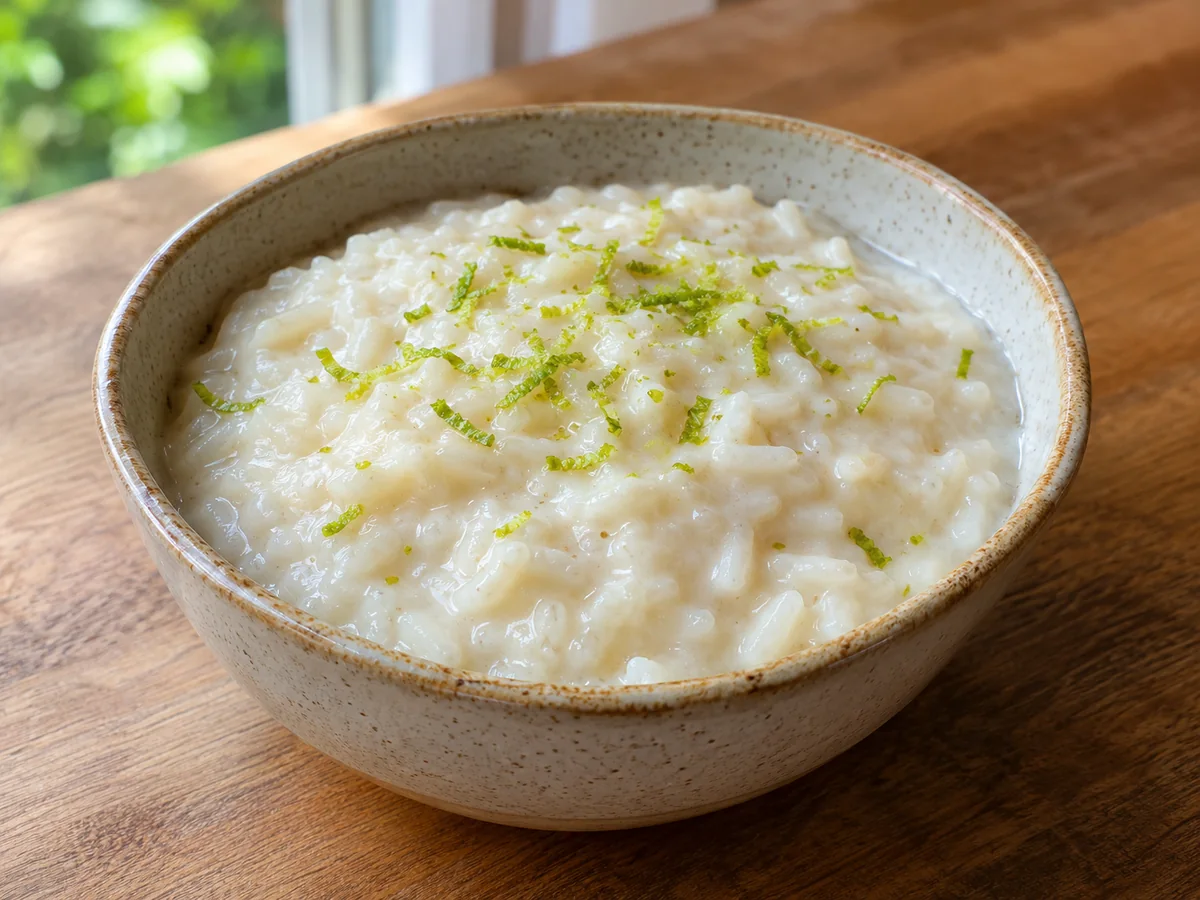
Coconut rice pudding: Alioune's contemporary recipe for four people.
Ingredients
- 150 g uncooked pudding rice
- 400 ml unsweetened coconut milk
- 500 ml pasteurised milk
- 60 g sugar
- 15 ml lime juice
Preparation
Pour the 500 ml of milk and 400 ml of coconut milk into a heavy-bottomed saucepan. First, stir the coconut milk in its container until smooth. Gently heat, stirring constantly, to combine the two liquids, being careful not to let them boil over.
Add the 150g of uncooked short-grain rice when the mixture begins to simmer. Stir to separate the grains and reduce the risk of sticking to the bottom. Lower the heat: the cooking should remain gentle, with small bubbles rather than a vigorous boil.
Cook for about 30 to 35 minutes, stirring regularly, especially the bottom and corners of the pan. The lid can remain slightly ajar if the liquid evaporates too quickly. Don't leave the rice unattended for long, as the mixture will gradually thicken.
Taste a grain carefully lifted with a small spoon. It should be tender all the way through. If the rice remains firm and there isn't enough liquid, add a little hot water; if the pot still contains a lot of liquid, continue cooking gently without trying to dry it out too quickly.
Stir in the 60g of sugar towards the end of cooking. Mix well and simmer for a few more minutes to dissolve. The rice should be creamy and coat the back of a spoon, but still slightly thinner than the desired consistency when served cold.
Turn off the heat, then gradually stir in the 15 ml of lime juice. Taste and divide among four bowls. If you prefer a warm dessert, simply let it cool before serving, without leaving it out for long.
For a cold serving, quickly chill the portions and then refrigerate them, covered, once the steam has dissipated. Stir gently before serving if necessary. Distribute the rice and its liquid evenly rather than scooping out the grains from the bottom.
Introduction
Coconut rice pudding is a creamy dessert where the round rice grains remain visible. They cook slowly in a mixture of milk and coconut milk, then sugar and a touch of lime complete the balance. The dessert should still appear slightly soft at the end of cooking; it thickens as it rests while the rice continues to absorb the liquid.
This version is a contemporary adaptation of the Congo-Brazzaville collection. Rice pudding and coconut rice desserts exist in many cuisines; our combination does not have a specific traditional Congolese origin without documentation. The recipe offers a simple home method, with a touch of lime added at the end of preparation. It differs from both savory coconut rice and rice flour porridge.
Cultural context
Short-grain rice is chosen for its ability to create a smooth, creamy consistency during cooking. Long-grain rice would remain more separated and require different preparation. Coconut milk adds flavor and fat; it is not a substitute for regular milk with an identical composition. Their combination results in a light dessert without the need for added cream.
The dessert can be served warm or cold, in four bowls. The texture changes between the two: softer when warm, firmer after chilling. It's therefore helpful to decide how to serve it before extending the cooking time to achieve a noticeable thickness. A dessert that has become very dense when cold cannot be corrected by leaving it on the table for a long time; its texture must be carefully adjusted and stored properly.
Tips
Choose uncooked short-grain rice intended for desserts or creamy cooking; cooked rice does not follow the same procedure.
Use a heavy-bottomed pan and a spoon that reaches the corners well to limit areas of sticking.
Keep a close eye on the first few minutes: the milk mixture can rise quickly even when the pan looks quite large.
Stir more often towards the end of cooking, when the concentration increases and the bottom is more likely to burn.
Do not aim for a very thick consistency on the stove if the dessert is to be served cold; resting will firm it up further.
Add the lime off the heat and in small quantities, stirring to preserve a clean taste without excessively acidifying the dessert.
Cool the rice pudding quickly, keep it in the refrigerator and avoid leaving it at room temperature for several hours before or after the meal.
Variations
A small amount of vanilla can flavor the baking. For a dessert less rich in coconut, reduce its proportion and add more milk or a little water, recalculating the nutritional values. Reducing the sugar is also possible according to taste, without automatically replacing it with syrup. Using a plant-based milk instead of regular milk will change the composition and sometimes the texture; also check if it is already sweetened.
Accompaniments
Serve plain or with a few cubes of fresh papaya or pineapple, added at the last minute. A tangy fruit can provide contrast without needing a second layer of sugar. The reference serving size is four bowls; smaller glasses will correspond to different quantities. The values include all the rice, both milks, sugar, and lemon, but not the additional fruit.
Nutrition notes
Rice and sugar provide carbohydrates; milk contributes protein and calcium. Coconut increases fats, including saturated fats. This estimate applies to one out of every four bowls and does not include any fruit that may be added at serving time.