Cassava flour cake
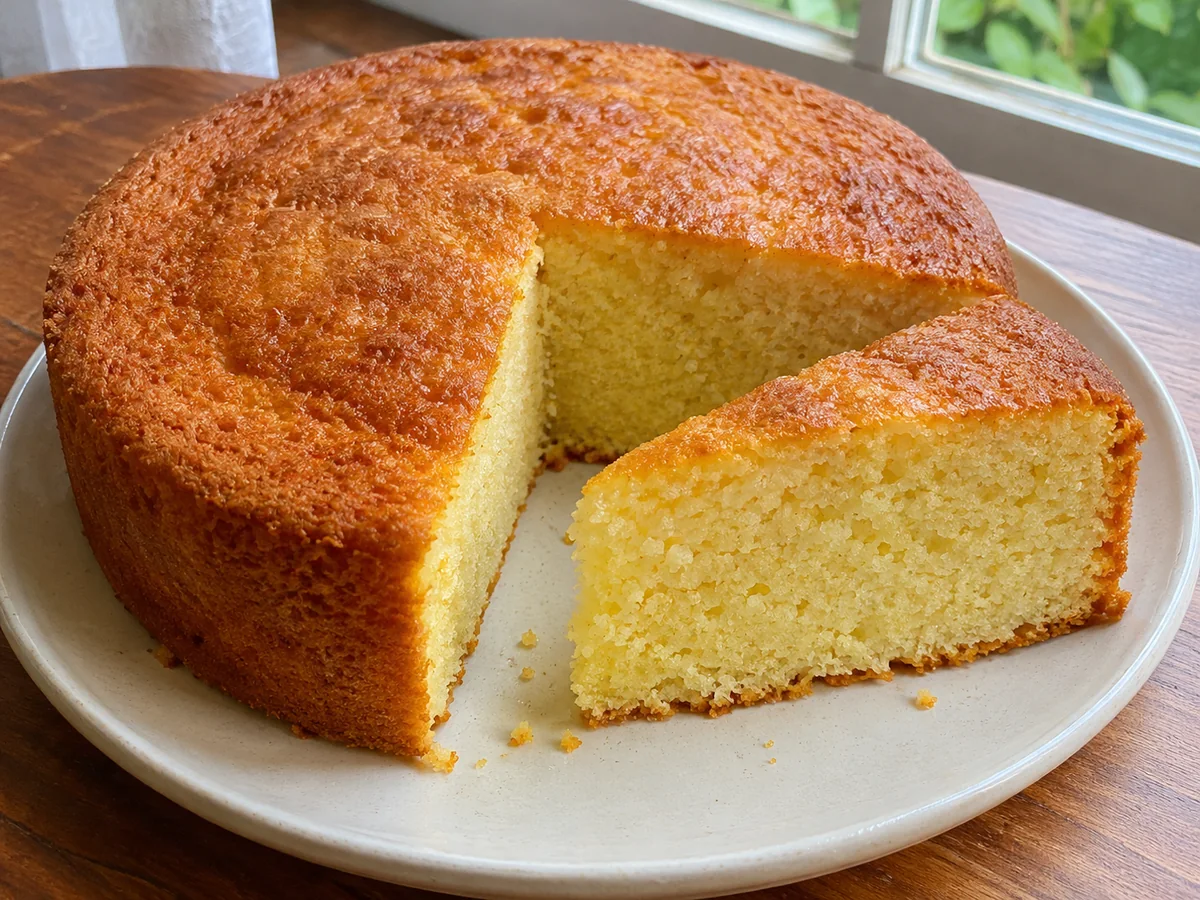
Cassava flour cake: Alioune's contemporary recipe for four people.
Ingredients
- 220 g food-grade ready-to-cook cassava flour
- 3 eggs
- 250 ml unsweetened coconut milk
- 100 g sugar
- 70 ml vegetable oil
- 10 g baking powder
Preparation
Preheat the oven to 175°C. Line a baking tin about 20 cm in diameter with baking paper, or grease it very lightly using a little oil taken from the 70 ml measured for the whole recipe. Use food-grade, ready-to-cook cassava flour, not cassava starch alone.
Mix the 220g of cassava flour and 10g of baking powder in a bowl. Distribute the baking powder evenly to avoid bitter patches or pockets that would cause uneven rising. Crush any small dry clumps with a spoon.
In a separate bowl, whisk the three eggs with the 100g of sugar until smooth. Add the remaining oil and the 250ml of previously homogenized coconut milk. Mix gently, without trying to create a very voluminous foam.
Pour the liquid ingredients over the dry ingredients in two or three additions. Work with a spatula until all the dry flour is incorporated. The dough should be smooth and fairly thick, without needing to be kneaded. Scrape down the sides of the bowl to maintain the correct proportions.
Pour into the pan and smooth the surface. Bake for approximately 40 to 45 minutes, avoiding opening the oven door at the very beginning of baking. The cake should rise moderately and take on a light color, without becoming too dark on top.
Check with a knife or skewer in the center: it should come out clean. If the top browns before the center is set, cover it with a baking sheet and continue baking for a few more minutes. A golden surface alone is not enough to guarantee the center is cooked through.
Let it rest in the mold for about ten minutes, then carefully unmold and let it cool on a wire rack. Wait until it is firm enough before cutting. Divide into four standard portions, or into eight smaller pieces, indicating your choice.
Introduction
Cassava flour cake is a coconut milk dessert that's quite moist but different from a very airy wheat cake. The eggs provide structure, and the baking powder helps the batter rise. Cassava flour doesn't contain the gluten network of wheat, so it's important to follow the proportions and let the cake cool completely before cutting it to prevent it from crumbling.
This recipe is a contemporary adaptation of the Congo-Brazzaville collection. It should not be confused with traditional preparations of fermented cassava or cassava wrapped in leaves. The use of ready-to-bake flour and a domestic oven represents a different technique. Cassava provides an important ingredient, but is not sufficient to attribute an ancient Congolese origin to this particular cake.
Cultural context
Cassava products are not interchangeable. Cassava flour, starch, gari, and fermented paste have different compositions and properties. This recipe calls for commercially available cassava flour for cooking and does not provide any instructions for preparing raw cassava. Purchasing a properly processed product is essential for the success and safety of this recipe.
The cake is calculated here as four generous portions to maintain consistency with the recipe set. It can be cut into eight smaller slices; the nutritional values per slice are then halved compared to the calculation for four. This clarification is useful: a small snack and a quarter of the cake do not represent the same quantity, even when the dessert name remains the same.
Tips
Check the product name: the cassava flour in question is neither gari nor tapioca starch used alone.
Do not use grated raw cassava as a direct replacement; its processing and moisture content would require a different recipe.
Mix the coconut milk thoroughly so that you don't just pour its fatty layer or just its liquid into the bowl.
Weigh the baking powder and mix it thoroughly with the flour before adding the eggs and milk.
Adjust the time to the mold: a thicker cake takes longer to cook in the center, even if the surface looks ready.
Allow to cool before slicing, as a gluten-free wheat pastry can be fragile when it comes out of the oven.
Even though cassava does not naturally contain gluten, check labels and cross-contamination if the dessert is intended for a person with celiac disease.
Variations
A small amount of vanilla or fresh lemon zest can flavor the dough. Reducing the sugar changes the taste but also slightly the texture: try a small amount rather than removing it all at once. Adding peanuts creates a new allergen and alters the nutritional content. Baking in small molds is possible, with a shorter baking time and individual control over the setting time.
Accompaniments
Serve with fresh fruit, herbal tea, or coffee, depending on your mealtime routine. The cake is already high in calories and doesn't necessarily require extra cream. For an afternoon snack, a small slice may suffice; if so, clearly indicate that it represents one-eighth of the cake. The basic nutritional values are calculated for one-quarter of the cake, without any beverage or toppings.
Nutrition notes
Cassava flour is primarily a source of carbohydrates; eggs, oil, and coconut increase energy. The dessert recipe is based on four generous portions. One-eighth of the cake provides half of the stated nutritional values, but this is not necessarily equivalent to one cookie.