Pumpkin and ginger soup
Pumpkin and ginger soup: Alioune's contemporary recipe for four people.
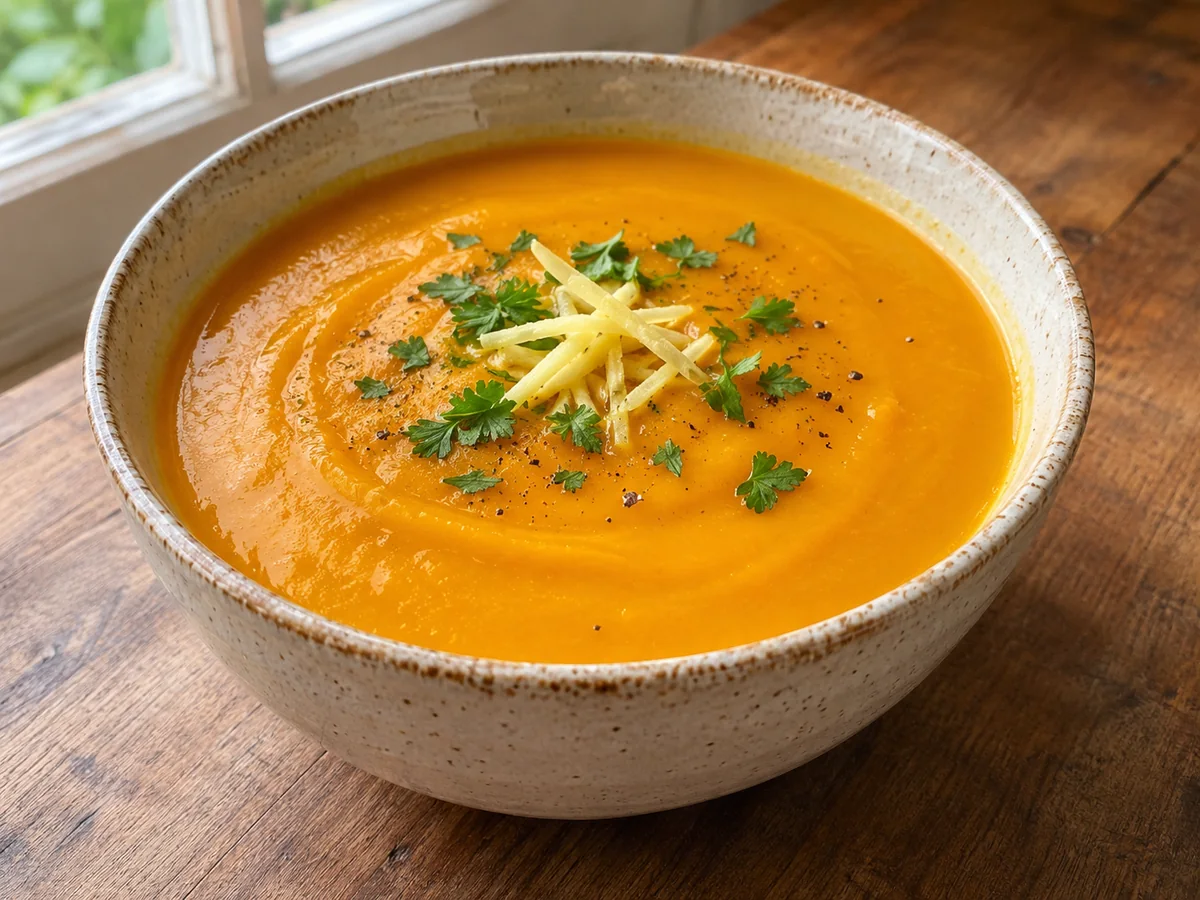
Ingredients
- 900 g cubed pumpkin flesh
- 250 g peeled cubed potatoes
- 120 g sliced onion
- 20 g grated fresh ginger
- 900 ml drinking water
- 20 ml vegetable oil
- 2 g salt to taste
- 1 g ground black pepper
Preparation
Peel the squash, remove the seeds and fibers, and weigh out 900g of flesh. Prepare 250g of peeled potatoes. Cut both vegetables into even cubes to ensure they cook more evenly and make blending easier.
Finely chop the 120g of onion. Peel the ginger and weigh out 20g of the edible part, then grate or chop it very finely. Any large pieces of coarse fiber left in the soup may still be noticeable after blending.
Heat 20 ml of oil in a fairly deep saucepan. Sweat the onion for 5 minutes over medium heat, then add the ginger for one minute. Stir to release the aromas without letting the small pieces brown or stick.
Add the squash and potatoes, stir, then pour in 900 ml of water. Season lightly with salt and pepper. Bring to a simmer, partially cover, and cook for about 25 minutes, until all the pieces are tender when pierced with a knife.
Turn off the heat and let it cool down. If using an immersion blender, keep the head submerged and work in a stable pan. Blend in short bursts, then more steadily, without lifting the blade above the hot liquid.
Check the texture and taste. If the soup is too thick, add a little hot water; if it's too thin, simmer for a few minutes, stirring occasionally. Adjust the salt only after this adjustment to avoid over-concentrating the seasoning.
Reheat briefly if necessary, then divide among four bowls. Stir the contents of the pot before each serving to maintain a consistent consistency. Serve warm but not hot, with the suggested toppings offered separately so everyone can choose their portion.
Introduction
Ginger pumpkin soup is a blended soup, softened by potato and enhanced by the aroma of fresh ginger. It contains neither cream nor coconut milk. The texture should be smooth enough to pour into a bowl, without resembling a runny purée or a broth where the vegetables separate. The final water level is adjusted after blending.
This recipe is a contemporary adaptation of the Congo-Brazzaville collection. It does not claim to be based on any specific traditional Congolese soup. Squash and ginger are the key ingredients; the cooking and blending methods are based on a widely used home cooking technique. The addition of potato acts as a thickener, without any need to attribute an ancient, undocumented history to this combination.
Cultural context
The word soup can refer to a chunky broth, a thick soup, or a dish served alongside other meals. Here, the result is smooth, but it retains the flavor of the vegetables and doesn't require a restaurant-quality texture. A slight unevenness in the mashing isn't a flaw if it's consistent with the available equipment and the desired presentation.
The ginger should provide a noticeable aroma without overpowering the squash. Its strength varies depending on the freshness and the part of the rhizome used. 20g is a good guideline; this can be reduced for those with sensitive palates, provided this is specified. This soup can be a good starter, but its low protein content means it cannot be considered a complete meal for everyone.
Tips
The 900g of squash refers to the flesh ready to cook, without the skin or seeds; do not confuse this weight with that of the whole fruit.
The potato provides binding: thorough cooking is necessary before blending to avoid a grainy texture.
Finely chop the ginger if your blender is not very powerful, or grate it to limit the long fibers in the soup.
Avoid closing an unsuitable blender with a large quantity of boiling liquid; follow the manufacturer's safety instructions.
Add the adjusting water in small amounts after blending, as not all squash varieties contain the same proportion of water.
Do not taste repeatedly with the serving spoon; use a small, clean spoon for each seasoning check.
Quickly cool the leftovers in small quantities, refrigerate and reheat until all the soup is piping hot, stirring the bottom.
Variations
Butternut squash typically gives a rich color; other squashes produce a paler or more watery soup. A squeeze of lemon added at serving provides a bright note, though it's not essential. A little coconut milk creates a richer version, so adjust the recipe accordingly. For a chunky result, cut the vegetables into smaller pieces and serve them in chunks, clearly indicating the difference in texture.
Accompaniments
A portion of beans, a well-cooked egg, or some fish can complete the meal. For a starter, a small slice of bread is sufficient, depending on your appetite. Avoid considering croutons or cream added at the table as negligible: they are not included in the basic calculation. The estimates are for a quarter of the soup, including oil, without any additional garnish.
Nutrition notes
Squash and potato provide carbohydrates and fiber, while the oil contributes fat. The soup is low in protein. The carotenoids depend on the squash; the ginger serves primarily as a flavoring in the quantity specified.