Coconut sweet potatoes
Sweet potatoes with coconut: Alioune's contemporary recipe for four people.
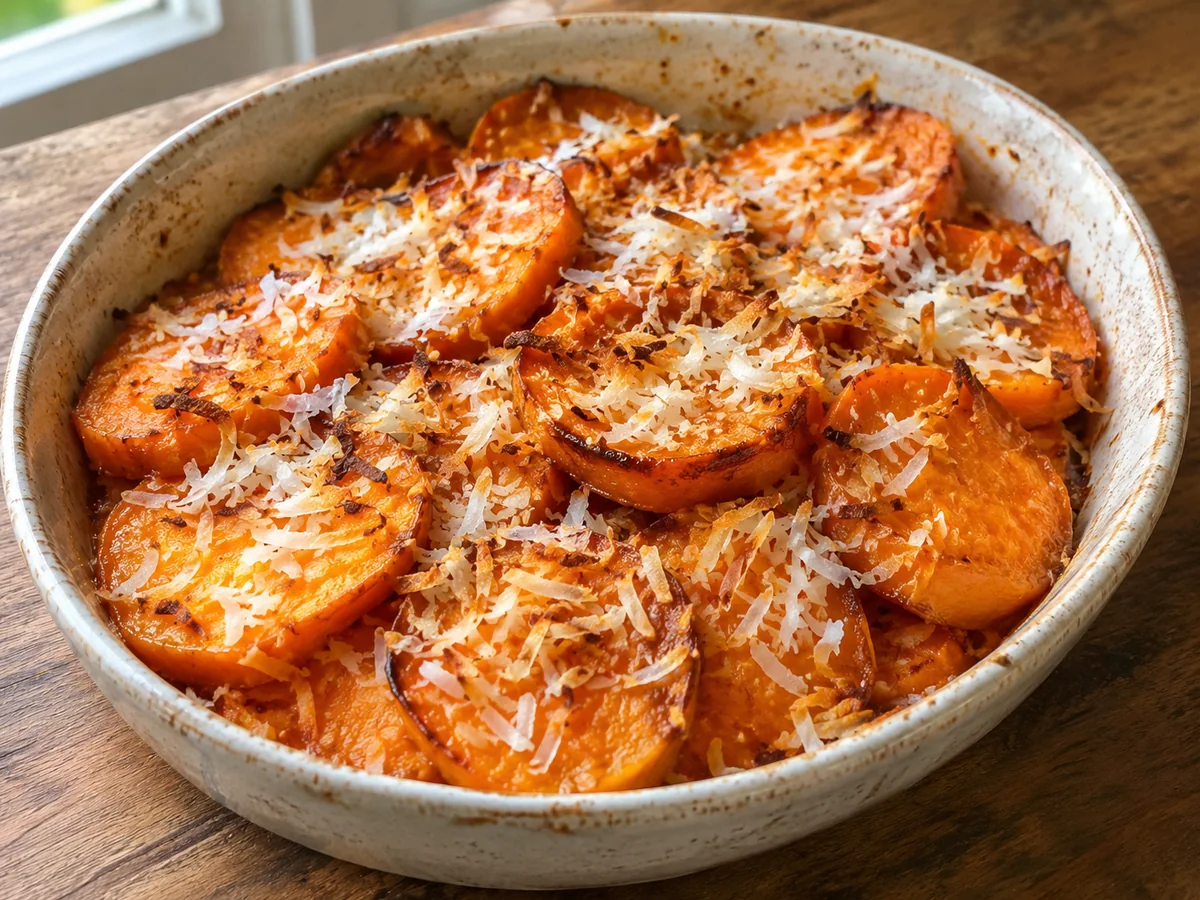
Ingredients
- 900 g peeled cubed sweet potato
- 60 g desiccated coconut
- 30 g sugar
- 20 ml vegetable oil
Preparation
Preheat the oven to 190°C. Peel the sweet potatoes, rinse them, and weigh out 900g of flesh. Cut into evenly sized cubes or wedges, about 2-3cm, to ensure even cooking across the entire baking sheet.
Dry the pieces with a clean cloth or paper towel. Place them in a bowl and add the 20 ml of oil. Mix thoroughly to coat all surfaces, ensuring no pool remains at the bottom of the bowl.
Spread the pieces in a single layer on a baking sheet lined with parchment paper. Avoid packing them too tightly; they need room to release some moisture and brown. Bake for approximately 20 minutes, turning them halfway through if necessary.
Meanwhile, mix the 60g of unsweetened shredded coconut with the 30g of sugar. Use a spoon to spread this mixture evenly rather than pouring it all at once over the sweet potatoes.
Briefly remove the baking sheet and check that a knife should easily pierce the flesh. Distribute the coconut and sugar evenly, then gently mix the pieces together. Return to the oven for approximately 10 to 15 minutes, keeping an eye on the coconut to prevent burning.
If the coconut browns quickly while the pieces remain firm, lower the heat slightly and continue cooking. The sweet potatoes should be tender throughout; the tips may brown, but the filling should not turn black or bitter.
Let it cool for a few minutes, then divide into four portions with the small coconut flakes collected from the baking sheet. Serve warm to preserve the contrast between the tender flesh and the lightly toasted topping, without automatically adding extra syrup.
Introduction
Sweet potatoes with coconut are baked in the oven, cut into chunks coated with a little oil and then topped with shredded coconut and sugar. The flesh should become tender, with lightly browned edges. The coconut is added during cooking to infuse the flavor without burning. This dish can be served as a warm treat or as a sweet and savory side dish, depending on the rest of the meal.
This is a contemporary adaptation of the Congo-Brazzaville collection, without attribution to a precisely documented traditional specialty. Sweet potato and coconut are two ingredients used in many tropical cuisines; their combination alone is not sufficient to prove a particular national origin. The recipe card conveys a simple home cooking method, specifying the quantities of sugar and fat rather than leaving them implicit.
Cultural context
The line between side dish and dessert here depends on the portion size and the serving context. Sweet potatoes already possess a natural sweetness, which varies depending on the variety. The 30g of added sugar is therefore not necessary to make them edible; it simply provides a more indulgent finish. It is possible to reduce the amount, but this variation should be presented as a change to the recipe.
Grated coconut can be fresh or dried. Here, we use an unsweetened dried version, which is more concentrated and easier to spread over the pieces. Fresh coconut contains more water and doesn't produce quite the same texture. The cultural reference point remains the flexible use of tubers and fruits in family cooking, without inventing a specific ritual role or tradition for this dish.
Tips
Weigh the flesh after peeling: depending on the shape and condition of the tubers, the required purchased weight may be greater than the advertised 900g.
Keep the pieces a consistent size; very thin, small cubes will dry out while larger ones finish cooking.
Add the coconut after the first cooking phase, as it browns much faster than raw sweet potato softens.
Choose unsweetened grated coconut to really control the 30g of sugar added in the recipe.
Don't judge the cooking solely by the outside color; always check the center of a large piece with the tip of a knife.
An overcrowded baking tray promotes moist cooking and less browning; use two trays if your equipment is small.
Quickly refrigerate the leftovers in a clean container and reheat them in a low oven, watching the already toasted coconut to avoid further bitterness.
Variations
For a savory topping, omit the sugar and add a small amount of salt and ginger: this is a variation that will need adjusting. A touch of cinnamon can flavor the sweet version without requiring additional sugar. With fresh coconut, expect a moister texture and adjust your monitoring of the baking sheet accordingly. Sweet potatoes with white or orange flesh will produce different colors and carotenoid levels.
Accompaniments
For a light treat, serve plain or with a lightly sweetened piece of fresh fruit. As a side dish, offer a moderate portion alongside fish or flavorful vegetables, without adding a second sweet sauce. The sweet potato already provides the starchy component. The values shown include coconut, sugar, and all the oil, but not any additional cream or toppings.
Nutrition notes
Sweet potatoes provide carbohydrates and fiber; coconut and oil contribute lipids, including saturated fats in the case of coconut. Added sugar is included. The color of the tuber influences the carotenoid content, making a single, universally applicable percentage impossible.