Plantain and cheese gratin
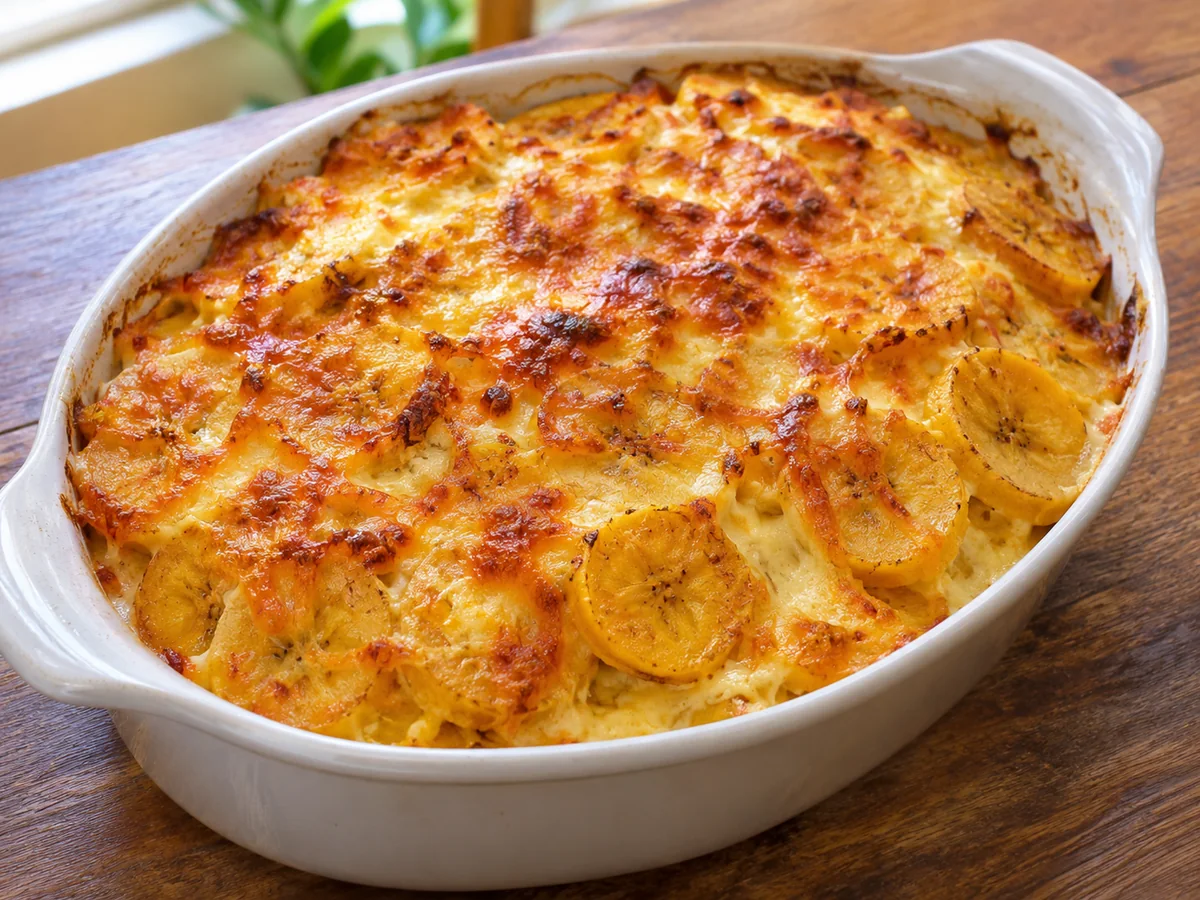
Plantain gratin with cheese: a contemporary recipe by Alioune for four people.
Ingredients
- 800 g peeled firm ripe plantain slices
- 300 ml pasteurised milk
- 2 eggs
- 100 g grated melting cheese
- 1200 ml drinking water
- 20 ml vegetable oil
- 2 g salt to taste
- 1 g ground black pepper
Preparation
Preheat the oven to 180°C. Peel the plantains and weigh out 800g of flesh. Cut into slices about 1cm thick. Heat 1200ml of water in a saucepan large enough to hold the slices without packing them down.
Place the slices in simmering water and parboil them for about 8 to 10 minutes. They should begin to soften while still retaining their shape. Gently drain them in a colander, then allow the steam to escape before handling them.
Grease a gratin dish with some of the 20 ml of oil provided. Arrange the slices in thin layers, without crushing them. If the dish is too small and very deep, the center will take longer to cook than the surface.
Beat the two eggs with the 300 ml of milk in a bowl. Add the remaining oil, some of the salt, and the pepper. Mix gently, without creating too much foam. Go easy on the salt, as the cheese already provides enough.
Pour the mixture over the plantains, circulating it between the slices. Distribute the 100g of grated cheese over the surface. Press down very lightly with a fork if any pieces are sticking out, without trying to completely submerge everything.
Bake for approximately 25 to 30 minutes. The top should be golden brown and the filling set in the center, with no visible egg liquid. If the cheese is browning too quickly, cover the surface with a baking sheet and continue baking at a moderate temperature.
Let it rest for 5 minutes outside the oven before cutting into four portions. This short rest makes serving easier and prevents the mixture from leaking. Serve hot, scooping out the slices and the filling evenly.
Introduction
Plantain gratin with cheese transforms slices of ripe plantain into a tender dish, bound with milk and eggs and then browned in the oven. The cheese forms a lightly browned surface, without becoming a thick, dry crust. The plantain must be precooked before assembly, as the egg mixture alone wouldn't be enough to tenderize raw pieces.
This recipe is a contemporary adaptation of the Congo-Brazzaville collection. It combines plantain with the technique of a home-style gratin, using dairy ingredients and cheese. It is not presented as a named traditional Congolese dish. Its origin lies in a personal creation: the cultural connection is the plantain's role as a savory ingredient, while the oven-baked preparation is explicitly an adaptation.
Cultural context
Ripe plantain still has its place in savory dishes, even when it adds a subtle sweetness. For this gratin, choose a fruit that's still firm enough to slice. A very soft plantain would fall apart during assembly and result in a more compact dish. The variety and ripeness therefore influence the final result as much as the amount of cheese.
This dish is richer than a simple boiled plantain: it contains oil, eggs, milk, and cheese. It is best served in measured portions, with vegetables or a salad rather than a second, very fatty side dish. The nutritional calculation is based on an Emmental-type cheese; other cheeses may alter the salt, calcium, and fat content of the portion.
Tips
Use ripe but still firm plantains, not dessert bananas: their behavior during pre-cooking is not the same.
Drain the slices carefully; waterlogged pieces dilute the mixture and make the gratin less neat when cut.
Choose a dish that is wide enough to avoid excessive thickness, which would make it difficult for the eggs to set in the center.
Start with a light salting and take into account the type of cheese used; not all gratin mixes have the same salt content.
Check the center rather than judging only the color of the cheese: a golden surface does not prove that the appliance is cooked.
Do not immediately place the dish under a very hot grill if the middle remains liquid; finish cooking the binding first.
Cool leftovers quickly, refrigerate them and reheat portions to the center, without letting the dish sit on the table for long.
Variations
A small amount of chives can add flavor to the mixture. For a less cheesy version, reduce the top layer and accept a thinner crust. Using milk of varying fat content will affect the creaminess and nutritional value; the basic recipe uses semi-skimmed milk. If using green plantain, the pre-cooking method will need to be adjusted, and the result will be less creamy: this substitution deserves its own variation sheet.
Accompaniments
Serve with a lemony coleslaw, tomatoes, or cooked leafy greens. Simply grilled fish makes a good complement to the meal without adding a second creamy sauce. The gratin already provides carbohydrates and protein; adjust the other portions according to your appetite. The nutritional values are for only a quarter of the gratin and do not include the suggested toppings.
Nutrition notes
Plantains provide carbohydrates; eggs, milk, and cheese contribute protein. Cheese provides calcium, lipids, and salt. A gratin is richer than a plain cooked plantain, and the nutritional values depend on the type of cheese used.