Pumpkin and yam mash
Pumpkin and yam puree: a contemporary recipe by Alioune for four people.
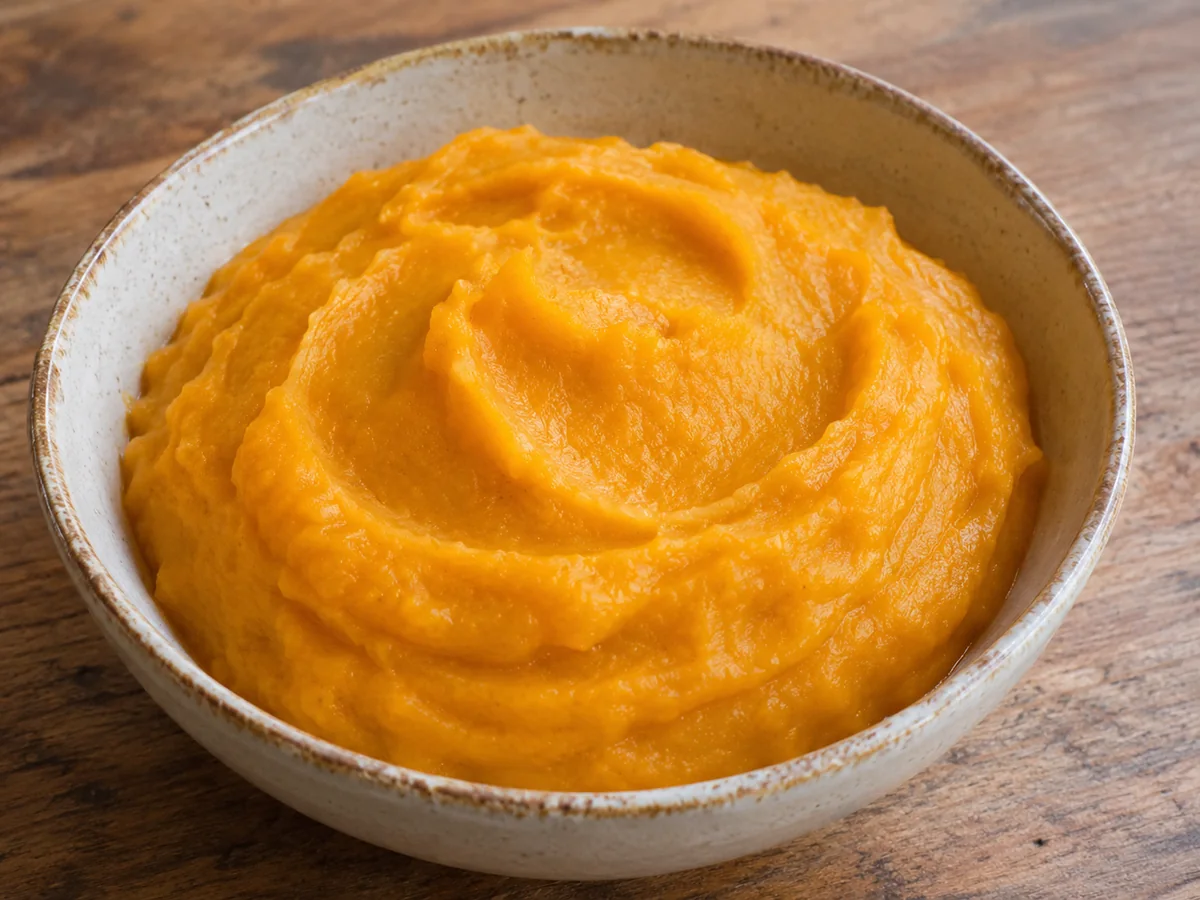
Ingredients
- 600 g peeled cubed edible yam
- 500 g cubed pumpkin flesh
- 150 ml pasteurised milk
- 1200 ml drinking water
- 20 ml vegetable oil
- 2 g salt to taste
- 1 g ground black pepper
Preparation
Peel the yam with a sturdy knife and rinse the flesh. Weigh out 600g, then cut into even cubes. Prepare 500g of squash flesh, without seeds or fibers, into similarly sized pieces. Keep the two ingredients separate initially.
Place the yam in a saucepan with the 1200 ml of water provided. Bring to a simmer and cook for about 10 minutes. This head start helps to ensure the final tenderness of both ingredients, as the squash often cooks faster than the yam.
Add the squash cubes and continue cooking for about 15 minutes over medium heat. Check a piece of each ingredient separately with the tip of a knife. The yam should no longer have a firm core; the squash should be tender but not necessarily falling apart.
Drain thoroughly, reserving a small bowl of the cooking water. Leave the pieces in the hot pan off the heat for a minute to release some steam. This step reduces the risk of the purée becoming too runny due to water trapped between the cubes.
Warm the 150 ml of milk in a small saucepan or in a microwave-safe container. Mash the vegetables with a potato masher, then gradually stir in the 20 ml of oil and the milk. You may not need to add it all at once if the squash is very watery.
Season with salt and pepper, then mix with a spoon. If the purée is too firm, add a small amount of the reserved liquid; if it is too soft, return it to low heat for a few minutes, stirring to allow some of the moisture to evaporate.
Taste and divide into four portions. Serve hot in a shallow dish, with the sauce or main course on the side. For an even texture, stir one last time before serving rather than just scooping out the softest part on the surface.
Introduction
This pumpkin and yam purée combines the sweetness of a water-rich vegetable with the denser texture of a tuber. The yam provides structure, the pumpkin adds a warm color, and the milk softens the mixture. The result should remain smooth to the touch, without becoming soupy or sticky. A light mashing by hand is all that's needed to maintain a pleasant texture.
This recipe is a contemporary adaptation of the Congo-Brazzaville collection. It should not be confused with fufu or traditional mashed potatoes: the addition of milk, the proportion of squash, and the use of a potato ricer produce a different result. The cultural reference point comes from the use of tubers as a side dish, but the specific combination presented here does not derive from any invented ancient or community tradition.
Cultural context
The word yam refers to several edible tubers that vary in texture and cooking properties. For this recipe, purchase a yam sold for consumption and prepare it according to the instructions specific to its variety. It is eaten cooked in this recipe. The weight given refers to the peeled flesh, not the whole tuber with its thick skin.
The mashed potatoes serve as a garnish. They can absorb a little sauce, but their presence doesn't replace the need for a protein source and additional vegetables if you want to create a varied meal. Serving them in a communal dish makes them easy to share: you can roughly smooth the surface with a spoon without aiming for a formal presentation. Overly elaborate mashed potatoes would lose some of the desired simplicity.
Tips
Weigh the tubers after peeling to respect the proportions; the amount of skin removed can vary considerably from one yam to another.
Cut cubes of similar size and test the cooking of the yam separately from that of the squash.
Do not use the immersion blender to work the puree for a long time: some tubers become sticky under intense blending.
Reserve some of the cooking water before draining; it allows for a measured adjustment without adding more milk or oil.
Pour the milk in gradually, as a very moist squash can be enough to soften a large part of the mixture.
If the milk already contains a sweet or flavored taste, do not use it: the recipe calls for plain pasteurized milk.
Cool the leftovers quickly in a shallow container, store them in the refrigerator and reheat, stirring, until all the puree is piping hot.
Variations
Butternut squash often yields a rich color and fairly dense flesh. Some of the milk can be replaced with cooking water for a less milky purée, keeping in mind that this will change the calcium and protein content. A touch of ginger can add flavor, but is optional. A completely milk-free version requires adjusting the texture and seasoning separately, without any guarantee of nutritional equivalence.
Accompaniments
Serve with fish in tomato sauce, chicken, or stewed beans. Leafy greens provide a contrasting texture and color. Since yam already provides the starchy base, rice or bread are not essential on the same plate. The values shown refer to only a quarter of the purée, without the sauce or any other side dish.
Nutrition notes
Yams primarily provide carbohydrates; squash and milk soften the preparation. Milk contributes calcium and protein. The purée remains a starchy side dish: the nutritional contributions of the fish, meat, or beans served with it are separate.