Beetroot and carrot salad
Beetroot and carrot salad: a contemporary recipe by Alioune for four people.
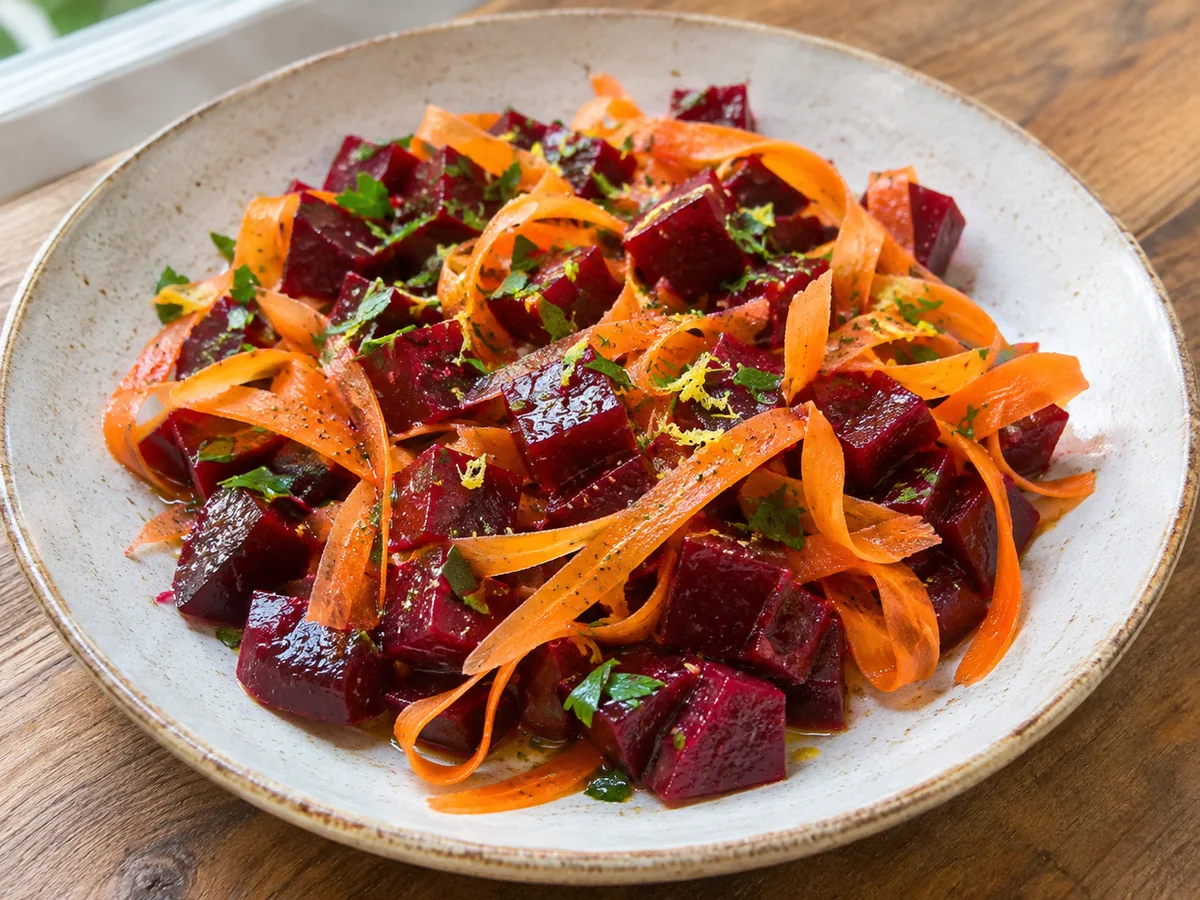
Ingredients
- 500 g peeled cooked diced beetroot
- 350 g grated carrot
- 40 ml lemon juice
- 15 g chopped parsley
- 20 ml vegetable oil
- 2 g salt to taste
- 1 g ground black pepper
Preparation
Check that the 500g of beets are already cooked and peeled. If you are starting with raw beets, cooking and cooling them is a separate step not included in the 20 minutes of preparation time. Cut them into even dice and set them aside in a bowl.
Wash the carrots, peel them if necessary, then weigh out 350g. Grate them using a medium grater: extremely fine strands would quickly soften in the dressing. Avoid leaving thick pieces of the core, as this would unbalance the texture.
Wash the parsley, drain it, and dry it before chopping. Measure out 40 ml of lemon juice and 20 ml of oil. Parsley that is still wet will unnecessarily dilute the vinaigrette and leave more liquid at the bottom of the salad bowl.
In a small bowl, combine the lemon juice with some of the salt and pepper, then whisk in the oil with a fork. Taste it on a small amount of carrot rather than on its own: the vegetables will alter the perception of acidity.
Combine the carrots and beetroot in a large salad bowl. Pour over the dressing and then mix with two spoons, gently lifting the beetroot cubes to avoid crushing them. Add the parsley and distribute it evenly.
Taste a bite containing both vegetables and adjust the salt if needed. If you prefer a shorter wait, place the covered salad bowl in the refrigerator. There's no need to let the salad marinate for several hours to develop flavor.
Mix again just before serving and divide into four portions with a comparable amount of vegetables and juice. Serve chilled, without adding ice cubes to the bowl: their melting would dilute the dressing and alter the texture.
Introduction
The beet and carrot salad plays on two textures: the already cooked beet, tender and sweet, and the raw, grated carrot, which is crunchier. A dressing of lemon, oil, and parsley brings the vegetables together without mayonnaise. The dish should remain fresh, with recognizable pieces, rather than becoming a soggy mixture from too much juice.
This recipe is a contemporary addition to the Congo-Brazzaville collection. It's suitable for home cooking and the diaspora, but it's not a precisely documented traditional Congolese salad. Beetroot is used here as a diversifying ingredient, combined with a simple method for preparing raw vegetables. Its inclusion in this recipe is purely editorial: a personal adaptation intended to complement the hot dishes in the collection.
Cultural context
A salad's place in a meal can vary: as a small starter, a side dish alongside fish, or a main course among several other dishes. Here, it primarily provides freshness, color, and contrast. It doesn't contain enough protein to replace all the elements of a meal on its own. This distinction prevents a brightly colored plate from being mistaken for a complete meal.
Beetroot easily colors everything it touches. Tossing the vegetables just before serving helps preserve the red and orange contrasts for a while; letting them sit longer results in a more uniform color without making the salad unappetizing. The choice, therefore, depends as much on presentation as on taste. The parsley and lemon should remain noticeable without completely masking the sweetness of the roots.
Tips
The recipe calls for plain cooked beetroot; beetroot already pickled in vinegar would give a different seasoning.
Weigh the vegetables after removing the uneaten parts in order to maintain the proportions in the recipe card and the consistency of the nutritional calculation.
Use an easy-to-clean cutting board for the beetroot and protect your work surface if its colouring bothers you.
A medium grater retains more crunch than a very fine grater, especially if the salad has to wait a little while before the meal.
Add the lemon gradually if the vegetables are particularly sweet or acidic, keeping the rest for final adjustment.
Do not replace washing vegetables and herbs with the addition of lemon; the acidity of the seasoning is not a method of disinfection.
Store leftovers promptly in the refrigerator in a clean container, and use a clean serving spoon rather than re-dipping utensils that have already been in the mouth.
Variations
A small amount of chopped chives can replace some of the parsley. For a softer texture, also grate the cooked beetroot, handling it gently. A touch of fresh ginger adds a more vibrant flavor, but use sparingly. Crushed peanuts can add crunch, but they introduce an allergen and significantly alter the nutritional content; they are not included in the basic version.
Accompaniments
Serve with fish, chicken, or legume patties. This salad pairs particularly well with a mild sauce, adding a lemony contrast. For a more substantial vegetarian meal, combine it with beans and a portion of starchy food, according to your appetite. The values given refer only to the two vegetables, parsley, and measured dressing, divided into four portions.
Nutrition notes
Beetroot and carrot provide fiber and plant-based micronutrients; carrots contribute carotenoids. The oil provides the lipids for the dressing. The salad is low in protein and does not replace all the components of a meal on its own.