Plantain omelette
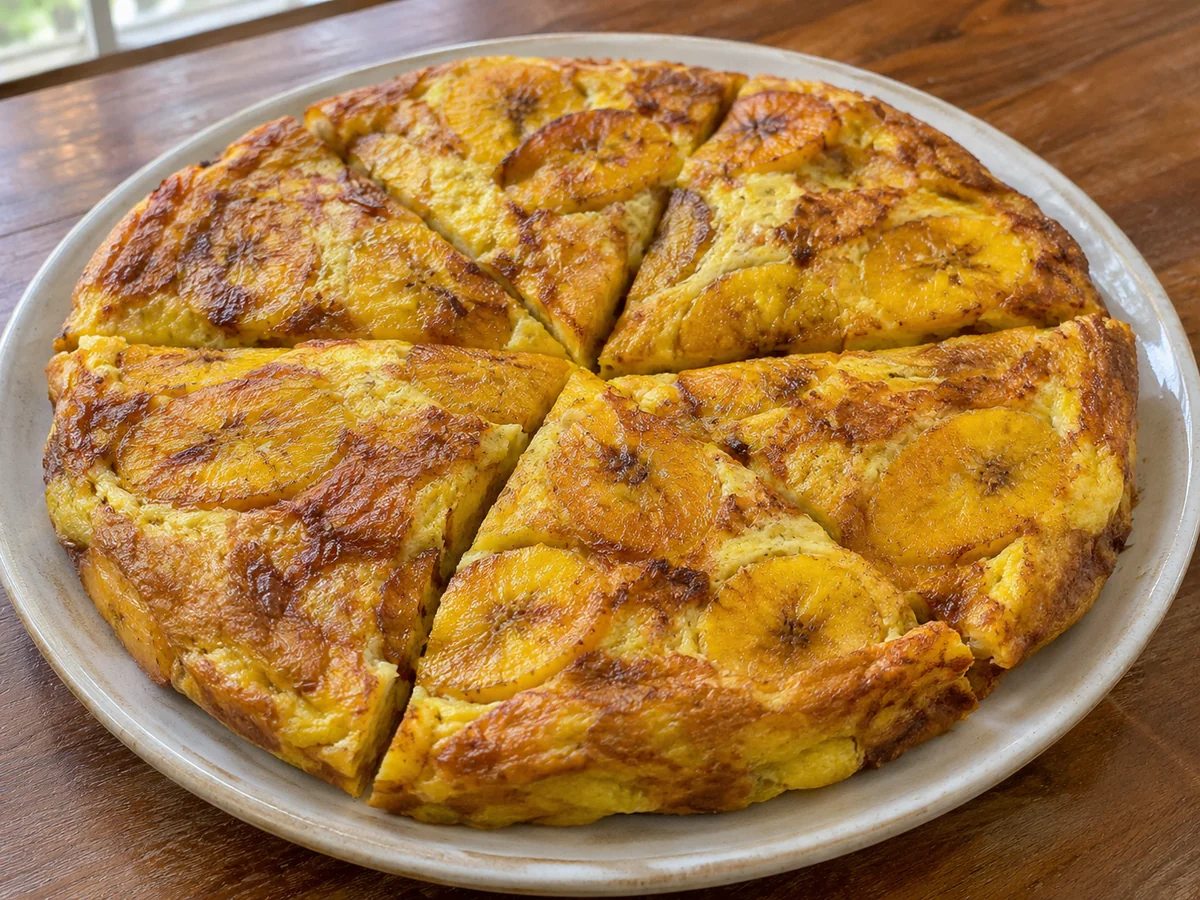
Plantain omelet: Alioune's contemporary recipe for four people.
Ingredients
- 450 g peeled firm ripe plantain slices
- 6 eggs
- 100 g sliced onion
- 40 g sliced spring onion
- 30 ml vegetable oil
- 2 g salt to taste
- 1 g ground black pepper
Preparation
Peel the plantains and weigh out 450g of flesh. Cut into slices 5 to 7mm thick to ensure even cooking. Finely chop the 100g onion and 40g of spring onion. Prepare a non-stick frying pan with a lid.
Heat about two-thirds of the 30 ml of oil. Arrange the plantain slices in a fairly single layer and fry them over medium heat for about 3 to 4 minutes on each side. They should become tender, but still hold their shape well enough to be moved.
Remove the onion rings to a plate. In the same pan, add the remaining oil and sauté the onion for about 5 minutes. Stir gently to loosen the browned bits, being careful not to let them burn.
Crack the six eggs into a bowl. Beat them with a fork along with the chives, some of the salt, and the pepper. There's no need to whisk them for a long time; simply combine the whites and yolks for a smooth texture.
Place the plantain slices back in the pan, arranging them on top of the onion. Pour in the beaten eggs and tilt the pan slightly to swirl them around the plantains. Reduce the heat and cover.
Cook for about 8 to 10 minutes over low heat, checking the center to ensure it's set. The eggs should be completely cooked, with no runny areas. If the bottom is browning too quickly, reduce the heat further and continue cooking covered rather than abruptly flipping a delicate omelet.
Turn off the heat, let it rest for a minute, then slide the omelet onto a plate. Cut it into four wedges, making sure the plantain is evenly distributed. Serve hot, with any condiments on the side so everyone can adjust the spiciness.
Introduction
The plantain omelet combines slices of ripe but firm fruit with just-cooked eggs. The slices are first pan-fried, then layered in the egg mixture along with onion and scallions. The plantain provides a natural sweetness, without the need for added sugar. The goal is a thick omelet that cuts cleanly, not a dried-out mass around still-hard pieces.
This recipe is a contemporary adaptation of the Congo-Brazzaville collection. Plantain is a familiar ingredient in many African cuisines, but its specific association with this omelet is not based on any invented ethnic or historical origin. It represents a practical, everyday dish, suitable for a simple meal. The ripeness of the plantain is an integral part of the recipe and should not be left to chance.
Cultural context
A very green plantain behaves like a firm starchy vegetable; a very ripe one becomes sweeter and more easily falls apart. In between, a ripe but still firm plantain is suitable for this preparation: it can brown without disintegrating in the mixture. Its use in savory dishes also demonstrates that the sweetness of a fruit doesn't mean it's only for dessert.
The omelet can be served whole on its plate and then cut into four. The distribution of the slices is important: each person should receive a portion of plantain and egg. The recipe doesn't become a mere side dish just because it fits in a pan; it provides protein, fat, and carbohydrates. Therefore, it can be served with vegetables rather than automatically adding another large portion of starchy foods.
Tips
Choose ripe but still firm plantains: very soft fruits fall apart and make turning the slices more difficult.
Cut pieces of similar thickness to avoid mixing pieces that are already brown with others that are still firm in the center.
Cook the plantain before adding the eggs; the short setting time of the omelet would not be enough to cook thick raw slices.
Use a pan that is wide enough to distribute the ingredients, but not excessively large: an omelet that is too thin is likely to dry out quickly.
The lid helps the top to set without imposing intense heat under the pan; lift it briefly to check the cooking.
Taste the onion and check the seasoning before adding the eggs if you wish to adjust the salt without tasting the raw mixture.
Refrigerate leftovers promptly and reheat them thoroughly. For vulnerable individuals, maintain the same requirement for fully cooked eggs at the first serving.
Variations
A few well-drained diced tomatoes can be added to the onion, but their water content may slow down the setting of the omelet. A small amount of parsley easily replaces some of the chives. For individual portions, divide the mixture between small pans, keeping a close eye on cooking times. When using green plantain, the pre-cooking time will need adjusting, and the same tenderness and texture cannot be guaranteed.
Accompaniments
A coleslaw with lime or seasoned tomatoes adds crunch and freshness. Cooked leafy greens are also suitable for a more substantial meal. Plantain already provides the starchy filling for the omelet; bread or rice are optional. The nutritional values indicated are for a quarter of the omelet, including oil, but excluding any accompaniments.
Nutrition notes
Eggs provide protein and several micronutrients, including vitamin B12. Plantains mainly supply carbohydrates and potassium. Oil is included in the calculation. The dish already contains a starchy food; bread or rice is added separately.