Coconut rice with peas
Coconut rice and peas: a contemporary recipe by Alioune for four people.
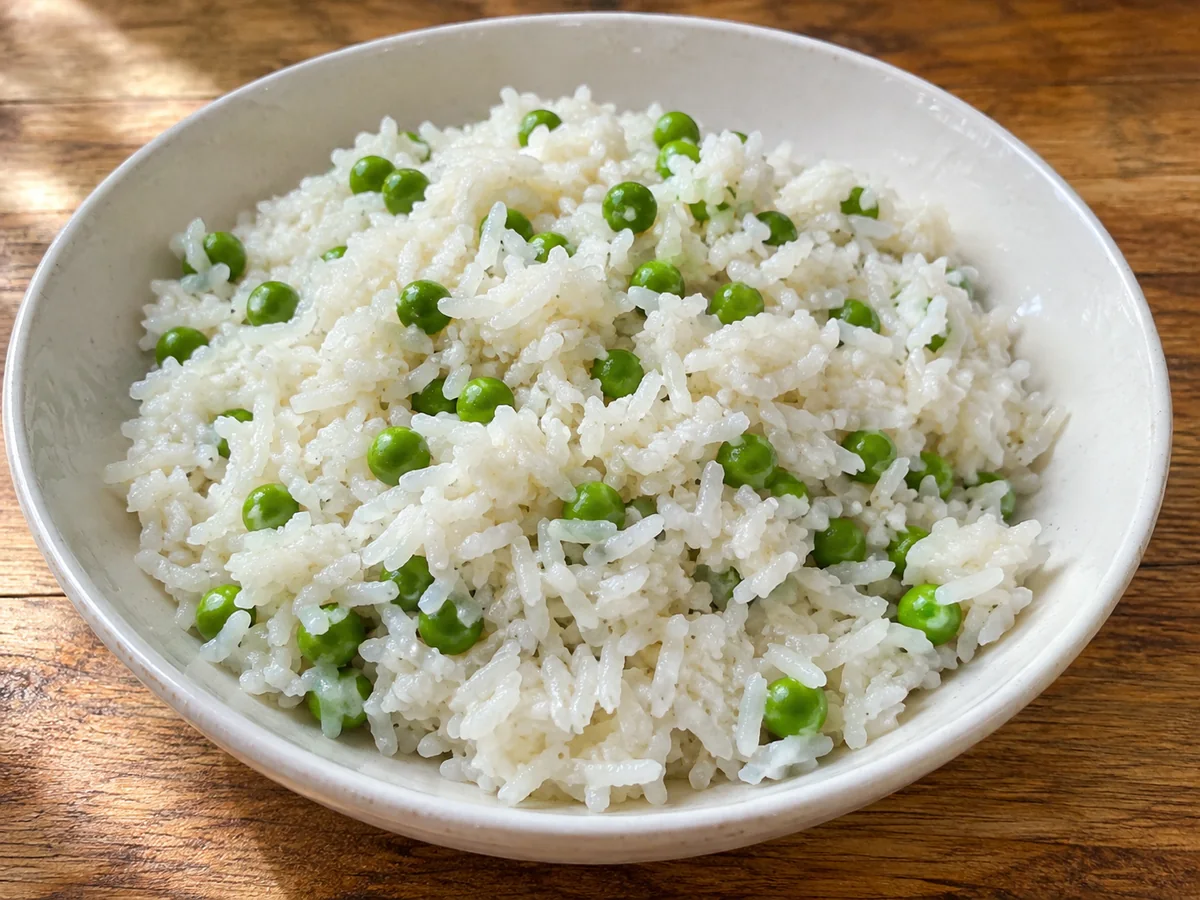
Ingredients
- 300 g rinsed uncooked long-grain rice
- 300 ml unsweetened coconut milk
- 250 g frozen peas
- 80 g sliced onion
- 300 ml drinking water
- 20 ml vegetable oil
- 2 g salt to taste
- 1 g ground black pepper
Preparation
Rinse the 300g of long-grain rice and drain it. Finely chop the 80g of onion. Stir or shake the container of coconut milk to combine the solid part and the liquid, then measure out the required 300ml. Keep the peas in the freezer until ready to use.
Heat the 20 ml of oil in a heavy-bottomed saucepan. Sweat the onion for about 5 minutes over medium heat, stirring occasionally. It should soften without browning, in order to preserve the light color and delicate aroma of the dish.
Add the drained rice and stir for one minute. Pour in 300 ml of water and 300 ml of coconut milk. Season lightly with salt and pepper, then stir to ensure the coconut milk doesn't pool in one area of the pan.
Bring to a gentle simmer. Immediately reduce the heat, cover, and cook for about 10 minutes. Boiling too vigorously will cause the coconut milk to rise and the fat to stick to the bottom.
Add the 250g of frozen peas, spreading them evenly over the surface. Gently lift the rice with a fork to incorporate them, then cover again. Continue cooking for approximately 8 to 10 minutes, depending on the type of rice and the heat.
Taste a grain: it should be tender but not mushy. If the liquid is absorbed but the rice remains firm, add a little hot water and continue cooking, covered. If the mixture still seems wet, let it rest before deciding it's undercooked.
Turn off the heat and let it sit, covered, for 5 minutes. Gently fluff with a fork, check the seasoning, and divide into four portions. Serve immediately to enjoy the contrast between the soft rice and the still-visible peas.
Introduction
Coconut rice with peas is cooked in a mixture of water and unsweetened coconut milk. It should remain soft, fragrant, and airy enough to be served as a side dish without becoming a sweet dessert. The peas add touches of green and a tender texture that contrasts with the rice. The onion provides a subtle base to this intentionally light-seasoned dish.
This recipe card is a contemporary creation of the Congo-Brazzaville collection. Coconut rice pudding exists in many forms in different cuisines around the world; this widespread use does not allow us to attribute our association with peas to a specific Congolese tradition. Coconut milk is used here as a cooking ingredient, not as proof of origin. We offer a reproducible family side dish, with its identity clearly presented as an adaptation.
Cultural context
The same name can refer to very different dishes: savory coconut rice, sweet rice, rice with caramelized coconut, or a preparation enriched with fish and spices. This version remains white and savory, without added sugar. It requires unsweetened coconut milk, which is different from coconut water and diluted plant-based drinks sold commercially.
On the table, its creamy texture calls for a certain restraint in the surrounding sauces. Coconut milk contains fats, a significant portion of which are saturated fatty acids: it therefore doesn't serve the same purpose as simple flavored water. This point of reference helps to understand the richness of the dish without attributing any particular benefits to it. The peas are weighed frozen, before being added to the rice.
Tips
Read the label on coconut milk: a very diluted or sweetened drink will not give the same texture or nutritional value.
Homogenize the coconut milk before measuring it; using only the thick layer would make the recipe greasier and less liquid.
Keep the heat low and the pan deep enough to limit boil-overs when the mixture starts to heat up.
Add the peas during cooking rather than at the very beginning to better preserve their texture and color.
Do not try to dry rice that is still damp by suddenly increasing the heat; let it rest covered first.
Cool leftover rice quickly, place it in the refrigerator and do not leave it sitting in the pan for several hours.
To reheat, add a small amount of water and heat to the center, preparing only the amount that will be consumed.
Variations
You can reduce the amount of coconut milk and increase the amount of water for a lighter filling, keeping the total liquid quantity the same. A small amount of finely grated ginger can be cooked with the onion. Fresh peas are an option, but their cooking time will depend on their ripeness. If using brown rice, adjust the liquid and cooking time accordingly.
Accompaniments
Grilled fish, shrimp in tomato sauce, or a side of beans make good accompaniments to this dish. Add a crisp vegetable or a lemony salad to balance the textures. Avoid pouring a second, heavy coconut sauce over the rice if you want to keep the meal moderate in fat. Side dishes are not included in the per-serving estimate.
Nutrition notes
The rice provides carbohydrates, the peas fiber and plant-based protein. The coconut milk increases the fat content, including saturated fat. This topping is therefore richer than plain rice; portion sizes and accompanying sauces matter.