Pumpkin rice
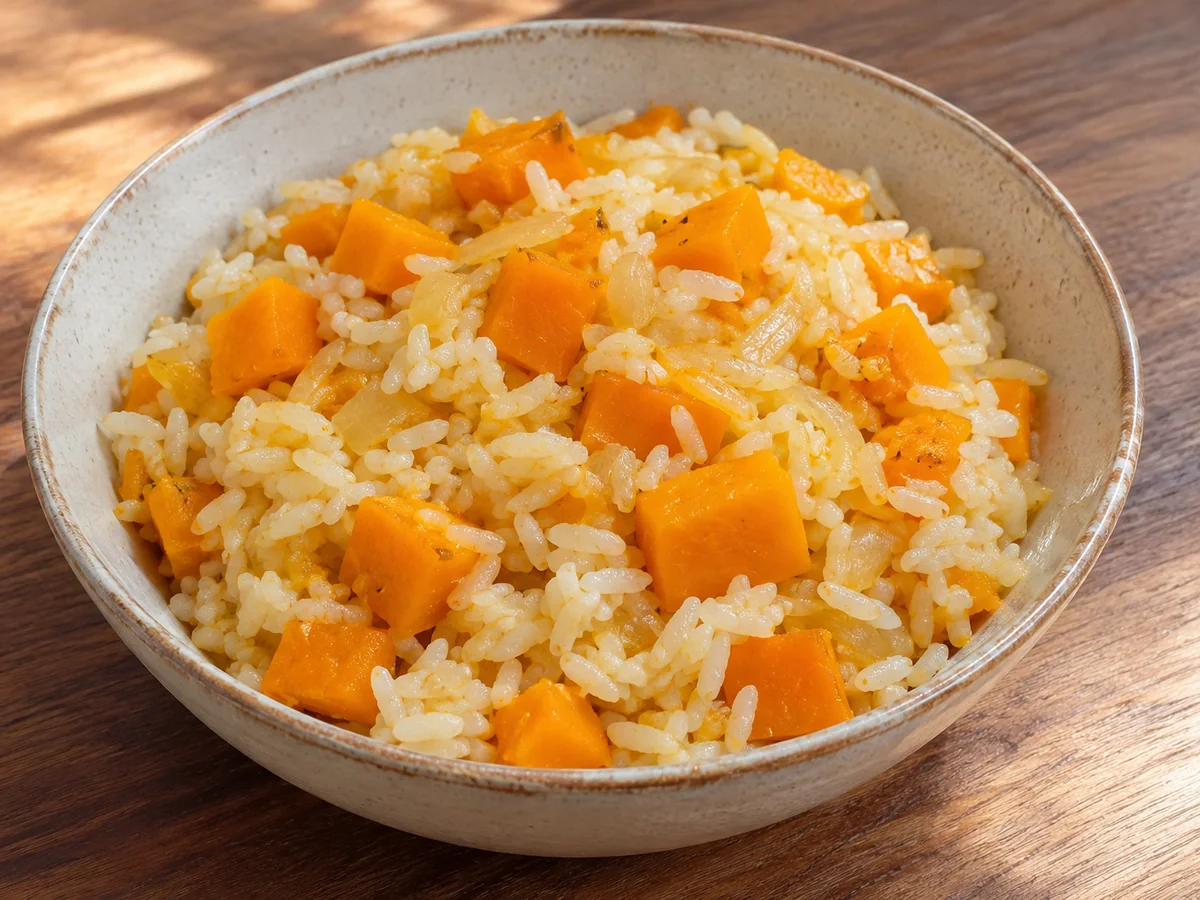
Pumpkin rice: Alioune's contemporary recipe for four people.
Ingredients
- 300 g rinsed uncooked long-grain rice
- 400 g cubed pumpkin flesh
- 100 g sliced onion
- 6 g minced garlic
- 650 ml drinking water
- 20 ml vegetable oil
- 2 g salt to taste
- 1 g ground black pepper
Preparation
Rinse the 300g of rice in drinking water, then let it drain in a fine-mesh sieve. Peel the squash, remove the seeds and fibers, and weigh out 400g of flesh. Cut it into small, even cubes of about 1.5cm so that it cooks at the same time as the rice.
Finely chop the 100g of onion and the 6g of garlic. Choose a heavy-bottomed saucepan with a tight-fitting lid. Heat the 20ml of oil and sweat the onion for about 5 minutes, without letting it brown.
Add the garlic and squash cubes. Stir for 2 minutes to coat them in oil, then add the drained rice. Stir for another minute with a spatula, gently enough not to crush the small vegetable cubes.
Pour in 650 ml of water, season lightly with salt and pepper. Bring to a simmer, stirring once to distribute the ingredients. As soon as small bubbles appear regularly, reduce the heat to low and cover.
Cook for approximately 15 to 18 minutes without constantly lifting the lid. Then check that a grain and a cube of squash are cooked through. If the rice remains firm while the base is dry, add a few tablespoons of hot water, cover, and continue cooking briefly.
When the rice is tender and the water absorbed, turn off the heat. Let it rest, covered, for 5 minutes: this allows the moisture to distribute and makes serving easier without having to continue cooking over a heat source.
Fluff the rice with a fork, lifting it rather than crushing it. Taste and adjust the seasoning if necessary. Divide into four portions, making sure to distribute the squash pieces from the bottom to the top.
Introduction
Pumpkin rice is a mild and colorful side dish, cooked by absorption in a single pan. The grains should remain separate, with small pieces of tender pumpkin scattered throughout. Onion and garlic are enough to build the flavor; there's no need to transform this recipe into a creamy risotto or add a multitude of spices to give it character.
This version is a contemporary adaptation of the Congo-Brazzaville collection. It combines a common starchy food with the flesh of an edible squash, but does not claim a specific regional or ceremonial origin. The squash used here refers to the flesh of the fruit, not the ground seeds used to thicken other preparations. This distinction avoids grouping under the same name products with different culinary uses and nutritional compositions.
Cultural context
In meals where several dishes are presented on the table, rice can serve as a base for a sauce, fish, or leafy greens. Adding squash to the rice changes its texture and role: this side dish already has a mild flavor and some vegetal matter. It's best served with a measured sauce rather than drowning it and obscuring the squash.
The choice of saucepan, lid, and rice is just as important as the recipe name. Long-grain rice absorbs water differently than short-grain or parboiled rice. The 650 ml indicated is therefore a suitable starting point for this method, not a universal rule. Adjustments should be minor to ensure a consistent result without turning the rice into mush.
Tips
Cut the squash small enough to cook together with the rice; large pieces would remain firm by the time the grains were ready.
Drain the rice after rinsing so as not to add an unpredictable amount of water to the pot.
Cooking at too high a temperature causes the liquid to evaporate before it is absorbed and can burn the bottom; the lid must retain the steam.
Don't add a large glass of water right away if the grains seem a little firm: start with a few spoonfuls and wait for their effect.
Avoid stirring during cooking, as the rice will release more starch and the squash will fall apart.
To prepare in advance, quickly cool the rice in a shallow container, then place it in the refrigerator; do not leave the pan to warm up for long on the table.
Heat only the necessary amount until it is thoroughly heated, adding a little water to recreate steam, and avoid repeated heating.
Variations
Butternut squash often yields firm cubes and a rich color; a waterier squash may require slightly less liquid. A little chive added when serving provides a fresh touch. Brown rice requires a different cooking method and time: it does not replace white rice gram for gram in the instructions given. Any change of grain warrants separate testing.
Accompaniments
Serve with fish in tomato sauce, grilled chicken, or a bean dish. Cooked leafy greens complete the meal without adding a second starchy food. Since the rice already contains fat and a mild vegetable, a light, slightly tangy sauce provides a nice contrast. The values per serving refer only to this rice, not the other dishes in the meal.
Nutrition notes
Rice provides the majority of the carbohydrates; squash adds a vegetable component and carotenoids, the amount of which varies depending on its color. The dish remains moderately high in protein. Fish or legumes can complement the meal, but are not included in the figures shown.