Green cooking bananas in tomato sauce
Green bananas with tomato: a contemporary recipe by Alioune for four people.
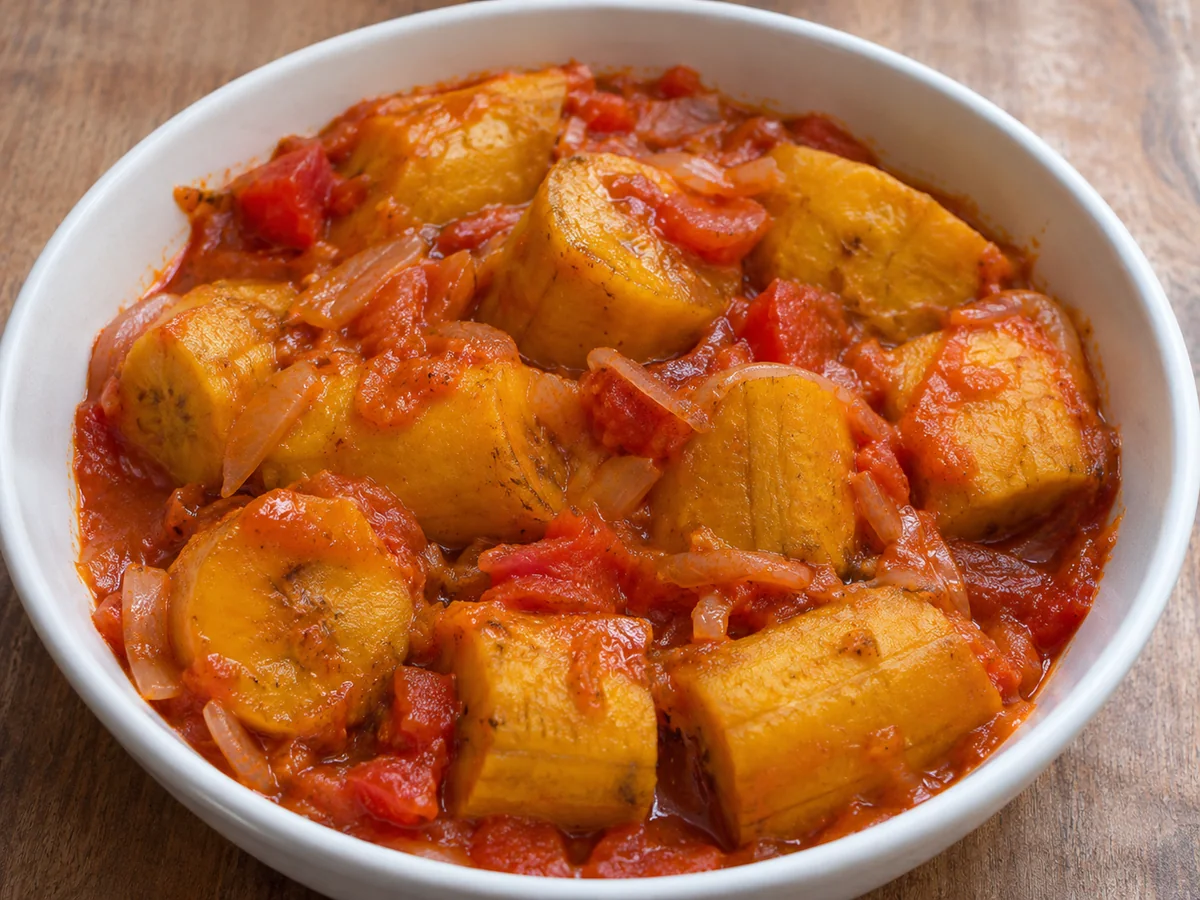
Ingredients
- 900 g peeled green cooking banana chunks
- 500 g diced tomatoes
- 120 g sliced onion
- 8 g minced garlic
- 500 ml drinking water
- 20 ml vegetable oil
- 2 g salt to taste
- 1 g ground black pepper
Preparation
Prepare the tomatoes, onion, and garlic before peeling the bananas. Place a wide saucepan on the work surface and keep the measured 500 ml of water nearby. Peeled bananas tend to oxidize; it's best to minimize the time they spend peeling.
Make a lengthwise incision in the banana peel, without cutting too deeply into the flesh. Peel the strips of peel away with a small knife. If the latex sticks to your hands, wear kitchen gloves. Rinse the bananas and then cut them into even pieces.
Heat the 20 ml of oil. Fry the onion for about 5 minutes, until softened, then add the garlic. Stir briefly without letting it brown: this would give a very noticeable bitterness to such a simple sauce.
Add the 500g of diced tomatoes. Cook for 5 minutes over medium heat, stirring occasionally, until they release their juices and begin to break down. Season lightly with salt and pepper; you can adjust the seasoning after the sauce has reduced.
Place the bananas in the base and pour in the water. Bring to a simmer, partially cover, and cook over low heat for about 25 minutes. Carefully turn the pieces halfway through cooking rather than vigorously stirring the pan.
Pierce a large piece: the tip should easily go all the way to the center. If the banana remains firm, continue cooking for a few minutes with a little hot water. If it's cooked but still very juicy, finish cooking uncovered without suddenly increasing the heat.
Taste the sauce, adjust the salt, and let it rest for 5 minutes off the heat. Divide the pieces and their juices into four portions. Serve hot, keeping any spicy seasonings separate to preserve the flavor of the tomatoes.
Introduction
Green bananas with tomato are cooked here like a savory starchy vegetable. Their firm flesh absorbs some of the juices, giving them a different texture than pan-fried ripe plantains. The tomato and onion form a light sauce; the garlic provides an aromatic base. The dish should be spoonable without becoming a thick mash.
This recipe offers a contemporary domestic adaptation for Congo-Brazzaville. It draws on the culinary use of cooking bananas, a practice shared by several tropical countries, but does not claim to be the origin of any specific local dish. Variety is crucial: use cooking bananas that are still green, not dessert bananas that have simply been picked too early. Taste, firmness, and cooking time can vary depending on the bananas you choose.
Cultural context
To systematically equate bananas with savory dishes would be to overlook the diversity of their culinary uses. A green cooking banana acts as a starchy ingredient, while a ripe one can become sweeter and more melt-in-your-mouth. In this recipe, this contrast explains the choice of banana: we're looking for firmness and the ability to absorb sauce, rather than a dessert-like flavor.
The dish can be served very simply, in a shared bowl. The banana pieces are distributed with the tomato, rather than presented dry alongside a sauce where each person receives a different amount. To complete the meal, fish or beans are suitable. The presence of cooked bananas creates a marker of the ingredient; it does not, however, justify attributing this specific association to the entire Congolese population.
Tips
Buy a variety explicitly sold as a cooking banana; the label or the seller provides a more reliable indicator than the color alone.
Do not confuse the 900g of flesh provided with the weight of the whole fruit: the thick skin represents a significant part of the purchase.
Cut pieces large enough to withstand simmering and of a similar size so that they cook evenly.
Let the tomato cook before adding the bananas: a raw base gives a more watery and less thickened sauce.
Keep at a gentle simmer. Rapid boiling can cause the edges of the pieces to break while their centers remain firm.
When reheating, add a little water and gently lift the pieces; the mixture usually thickens during resting.
Quickly refrigerate the leftovers, then reheat the required portion until it is piping hot throughout, without repeatedly heating it.
Variations
A small amount of fresh ginger can be added to the onion for a more fragrant sauce. Chili pepper is also an option, preferably served separately during a family meal. For a softer texture, cut the bananas slightly smaller and monitor their cooking closely. If you are using green plantains, be sure to mention this change: their composition and cooking method are not exactly the same as other cooking bananas.
Accompaniments
Serve with well-cooked fish, chicken, or beans. A side of leafy greens adds a contrasting color and texture. Since the banana already provides the starch, a second side of rice isn't necessary. The nutritional values refer only to the bananas and their sauce, divided into four equal portions.
Nutrition notes
Cooking bananas primarily provide carbohydrates, along with potassium and fiber. Tomatoes and onions complete the vegetable portion. The calculation uses plantains as the reference; other varieties of green bananas may yield different results.