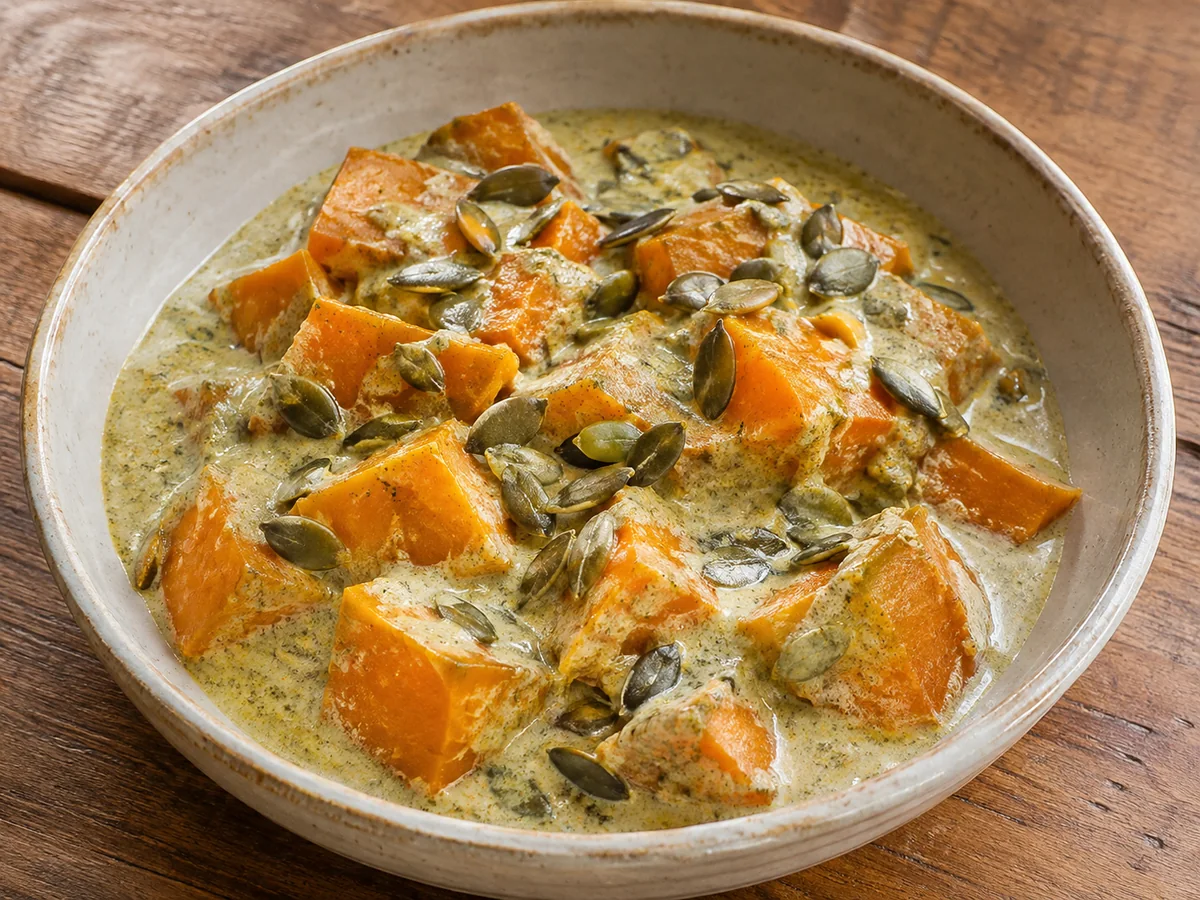
Pumpkin in pumpkin seed sauce
Pumpkin with pumpkin seeds: a contemporary recipe by Alioune for four people.
Ingredients
- 900 g cubed pumpkin flesh
- 120 g ground hulled pumpkin seeds
- 120 g sliced onion
- 8 g minced garlic
- 500 ml drinking water
- 20 ml vegetable oil
- 2 g salt to taste
- 1 g ground black pepper
Preparation
Peel the squash and remove the stringy fibers and seeds from the cavity if purchased whole. Weigh out 900 grams of flesh, then cut it into approximately 3-centimeter cubes. Separately, prepare the shelled seeds for the sauce.
Grind the seeds finely enough to minimize large fragments in the juice. Stop grinding if the seeds overheat or clump together. Slice the onion and mince the garlic before cooking, as the first stage requires regular stirring.
Heat the oil over medium heat in a heavy-bottomed pot. Sauté the onion for four minutes, then add the garlic for one minute. Add the squash and stir gently to coat it with the aromatics without letting it brown too much.
Pour in the 500 milliliters of water, bring to a simmer, then reduce the heat. Partially cover and cook for about 10 minutes. The cubes should begin to soften, but still be firm enough to absorb the seed sauce.
Take a little of the hot liquid and mix it with the ground seeds in a bowl. Work with a spoon to break up any dry clumps, then pour the mixture back into the pot. Stir all the way to the bottom, where the mixture will begin to thicken.
Continue cooking for about fifteen minutes over low heat, with the lid slightly ajar. Check that a knife tip easily pierces the squash and that the sauce doesn't stick. Add one or two tablespoons of hot water if it thickens too quickly.
Season gradually with salt and pepper after tasting. Remove from the heat when the sauce coats the pieces without forming a thick paste. Divide into four portions, leaving a few cubes whole; lightly crushing their surface will help the sauce adhere.
Introduction
Pumpkin with pumpkin seeds combines two food parts that can easily be confused when reading a list too quickly: the flesh of the vegetable and the shelled seeds. The former provides the tender pieces, while the latter, finely ground, thicken the sauce. The result is a smooth, creamy vegetable dish, without the need for cream or wheat flour.
Pumpkin seed pastes are known in several Central African cuisines, prepared in sauces or sold in packets. Alioune's version presented here is a contemporary stew of pumpkin flesh and ground seeds. It doesn't automatically use a local name like mbika to refer to any preparation containing seeds. Choosing an edible pumpkin sold for its flesh and commercially shelled seeds makes the proportions easier to understand; it doesn't assume that the seeds necessarily come from the same pumpkin used in the same pot.
Cultural context
Ground seeds can play a role comparable to that of a sauce base: they add substance and a distinctive flavor, going beyond simply being sprinkled on top when serving. Grinding and dispersing them in the liquid are therefore essential steps in the recipe. The flesh of squash varies considerably depending on the variety, with textures ranging from more watery to more mealy. This variation explains why a cook observes the sauce before deciding to add water. On the table, the dish can hold a generous portion of vegetables, but the presence of the seeds gives it a different energy density than a squash simply boiled in water.
Tips
Use a squash intended for food; decorative squashes and products with an abnormally bitter taste are not ingredients to improvise.
The seeds in the sauce must be hulled: a hard, poorly ground shell gives an unpleasant texture that does not disappear in the juice.
Grind in small quantities to maintain a powder or a fine paste, without excessively heating the seeds in a small appliance.
A very watery squash requires less added water than a mealy variety; keep the planned amount as a guide and observe the consistency.
Diluteing the seeds before incorporating them helps to avoid dry clumps, especially when the squash cubes are already fragile.
After binding, really lower the heat and stir to the bottom: a thick sauce can stick without appearing dry on the surface.
When reheating, add a little hot water and gently lift the cubes; the seed sauce will continue to thicken as it cools.
Variations
A different variety of squash can alter the color, sweetness, and carotenoid content of the dish. Using seeds from another plant is not a neutral substitute: their taste, allergens, and composition must be checked. For a smoother sauce, grind the seeds more finely before cooking rather than blending the entire pot afterward, which would eliminate the desired squash pieces.
Accompaniments
Serve with a green vegetable, plain rice, or a small portion of cassava prepared separately. The seed sauce is already quite rich; there's no need to add a second, fatty sauce on the side. Distribute the sauce evenly among the four plates when using the nutritional estimates. These values include the seeds and all the oil in the recipe, but not any starchy foods that may be added to the meal.
Nutrition notes
The squash provides water and moderate amounts of carbohydrates; the seeds are rich in protein, fat, and magnesium. Their presence makes the sauce more nutritious. The carotenoid content depends on the variety and color of the squash.