Sweet potato leaves with beans
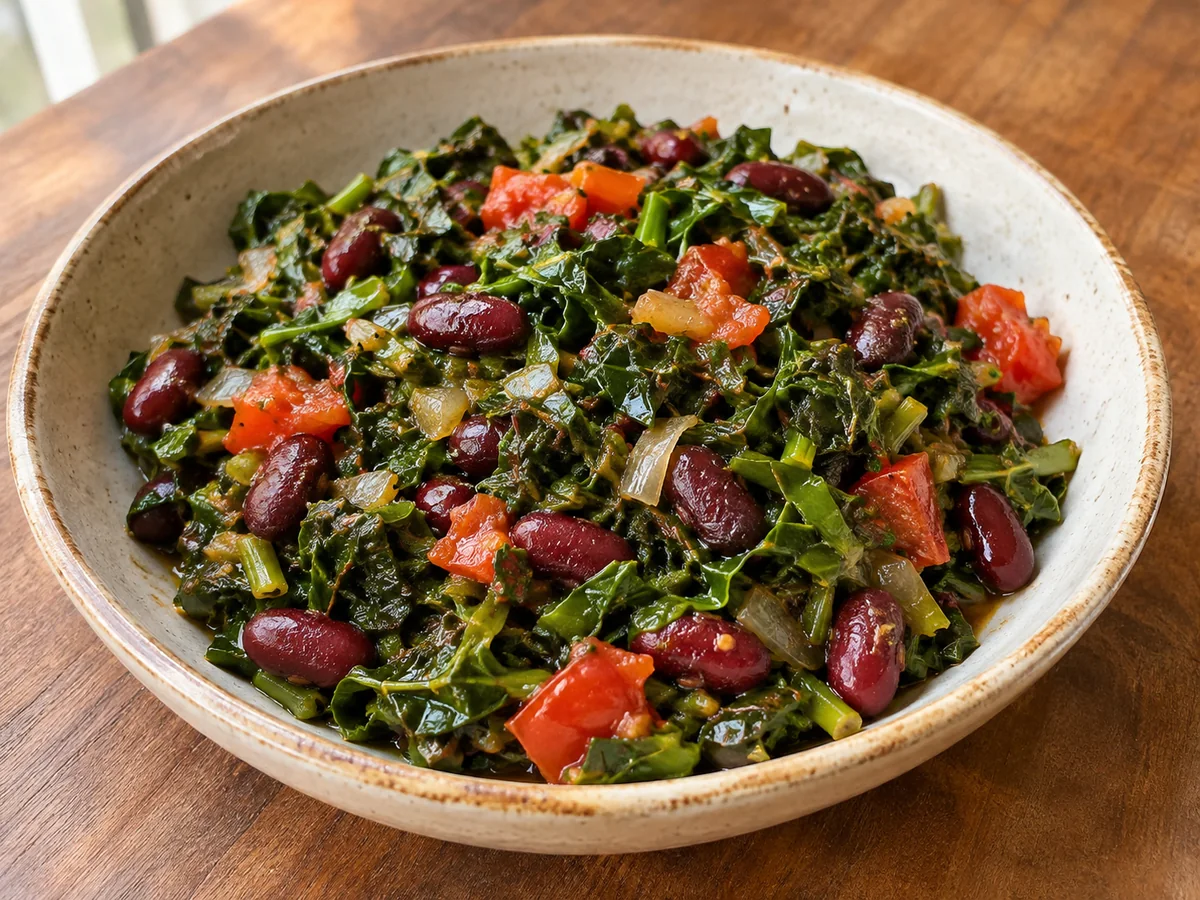
Sweet potato leaves with beans: Alioune's contemporary recipe for four people.
Ingredients
- 500 g sorted edible sweet potato leaves
- 500 g cooked drained red kidney beans
- 300 g diced tomatoes
- 120 g sliced onion
- 8 g minced garlic
- 300 ml drinking water
- 20 ml vegetable oil
- 2 g salt to taste
- 1 g ground black pepper
Preparation
Purchase sweet potato leaves intended for consumption and properly labeled. Remove any damaged leaves, thick stems, and fibrous parts. Wash thoroughly in several changes of water if necessary, then drain; the weight indicated is for the sorted, usable leaves.
Roll the leaves into small bundles and finely chop them with a knife, without turning them into a paste. Separately, prepare the fully cooked and drained red beans. Wash the tomatoes, dice them, slice the onion, and mince the garlic.
Heat the oil in a casserole dish and sauté the onion for four minutes over medium heat. Add the garlic for one minute, then the tomato. Stir to soften the base and prevent the garlic from browning on contact with the bottom.
Add the leaves and 300 milliliters of water. Stir to moisten everything, partially cover, and simmer for about 15 minutes over low heat. Turn the leaves occasionally so they cook evenly, without letting them dry out against the sides of the pot.
Taste a small amount of cooked leaves to check their tenderness. If they remain fibrous, continue cooking for a few more minutes before adding the beans. A more mature bunch or coarsely chopped pieces may require more time.
Add the beans and continue cooking for about ten minutes. Stir gently, lifting the beans to avoid crushing them, then taste the liquid before adding salt and pepper. Salted canned beans require less added salt than unseasoned cooked beans.
The dish is ready when the leaves are tender and the beans are hot throughout. Adjust with a tablespoon or two of water if necessary, then divide into four portions, making sure to serve leaves and beans on each plate.
Introduction
Sweet potato leaves with beans form a vegetable dish where finely chopped leaves encase whole kidney beans. Tomato and onion provide the necessary juice for gentle cooking, without turning the dish into a soup. The goal is tender leaves, a base lightly thickened by a few beans, and a noticeable vegetal flavor.
The use of sweet potato leaves as food is documented in the Congo Basin press. These leaves belong to a different plant than cassava: they should not be confused with the leaves used for saka-saka or pondu. The specific combination with red beans and the proportions presented are those of this contemporary version by Alioune. The recipe is therefore based on an identified regional ingredient while distinguishing the known vegetable from the specific composition published in the Congo-Brazzaville collection.
Cultural context
Leafy greens play a significant role in many Central African cuisines, but their names, textures, and preparations are not interchangeable. Using a correctly identified leaf is more important than searching for a rough equivalent in a local language. Here, sweet potato leaves are paired with pre-cooked beans, which add a mealy texture to the vegetable core. The dish can be served with a small portion of cassava or plantain prepared separately. Choosing a version without meat or smoked fish maintains a purely vegetable-based approach to the recipe; it does not claim to encompass all the ways these leaves are cooked in the country.
Tips
Do not use a leaf found in the garden solely on the basis of its resemblance: its food identification must be certain before any preparation.
Removing the very tough stems improves the texture more reliably than excessively overcooking all the leaves to soften them.
A fairly fine cut facilitates even cooking, but pureeing would lose the desired contrast with whole beans.
The weight of the beans is a cooked and drained weight; dry beans cannot be introduced directly into this short phase.
Keep an eye on the bottom of the pot: the leaves and some crushed beans will absorb some of the liquid as it simmers.
The color of the leaves is not sufficient proof of cooking or nutritional composition. Above all, check their texture and the quantities used.
Cool the stored portions quickly, then refrigerate them; when reheating, a little water is usually enough to restore their suppleness.
Variations
Pre-cooked white beans can be substituted for red beans, though the flavor, color, and nutritional values will need to be recalculated. A peanut-based alternative would be higher in fat and contain an additional allergen; this must be explicitly stated. If sweet potato leaves are unavailable, spinach can be used as an alternative; this convenient substitution should not be presented as an equivalent to the original plant.
Accompaniments
A small portion of steamed plantain, plain rice, or cassava is suitable for this preparation. It can also be paired with a crisp salad to vary the textures, without necessarily adding another legume dish. Beans and leaves are already included in the per-serving estimates; rice, cassava, or any other side dish should be added separately if you wish to estimate the entire plate.
Nutrition notes
Kidney beans contribute protein, carbohydrates, and fiber. Sweet potato leaves provide plant-based micronutrients. The iron in this dish is non-heme; cooking methods and the variety of ingredients influence the actual vitamin content.