Cabbage and white beans
Cabbage with white beans: Alioune's contemporary recipe for four people.
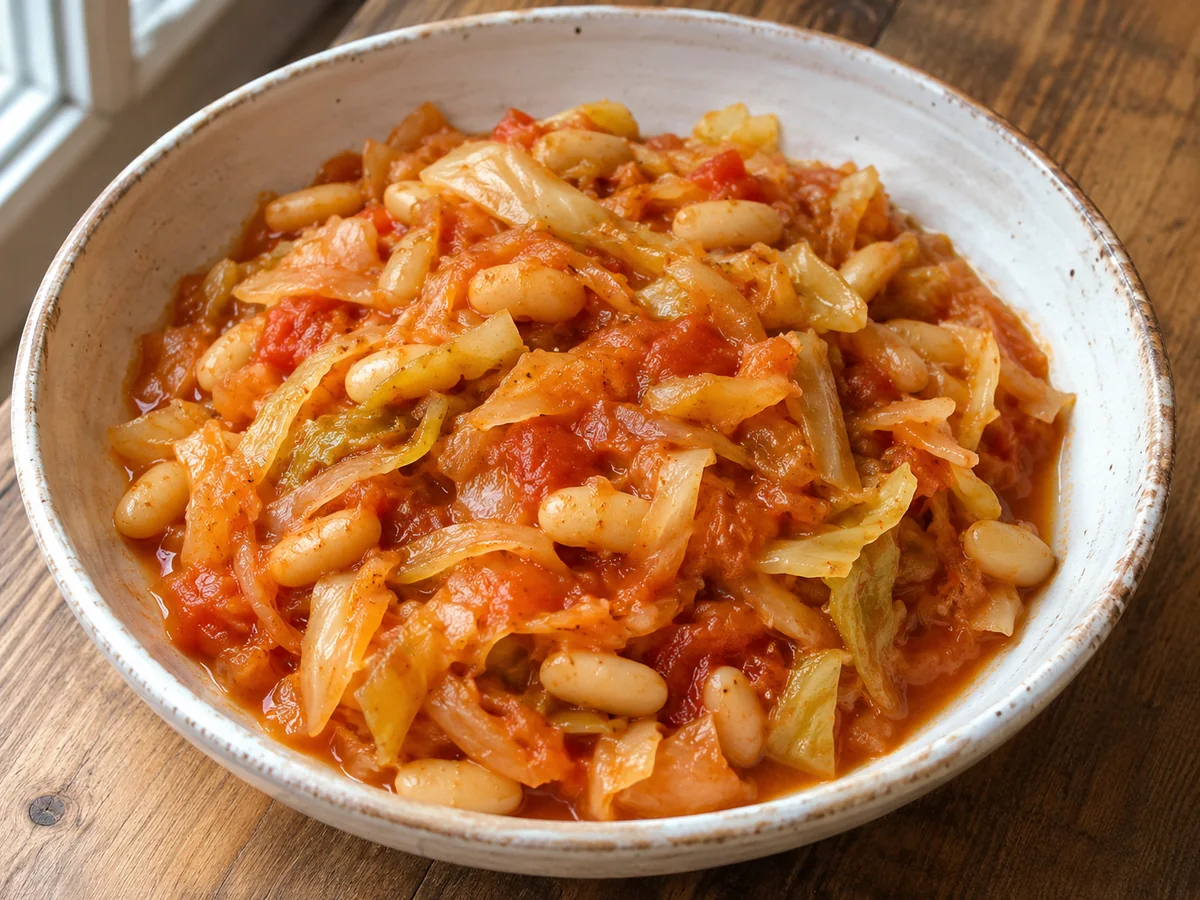
Ingredients
- 650 g shredded white cabbage
- 500 g cooked drained white beans
- 300 g diced tomatoes
- 120 g sliced onion
- 8 g minced garlic
- 250 ml drinking water
- 20 ml vegetable oil
- 2 g salt to taste
- 1 g ground black pepper
Preparation
Check that the beans are fully cooked, then drain them. If they are canned, read the manufacturer's instructions and rinse them if necessary. The 500-gram weight here refers to beans ready to be added, not to the weight of dry beans.
Remove any damaged leaves and the very tough core from the cabbage. Wash the usable parts, then cut them into even strips. Wash the tomatoes and dice them. Finely chop the onion and garlic before heating the pot.
Pour the oil into a heavy-bottomed pan and sauté the onion for four minutes over medium heat. Add the garlic for one minute, then the tomatoes. Stir to soften the tomatoes and deglaze the pan, scraping up any browned bits without letting the aromatics burn.
Add the cabbage and 250 milliliters of water. Stir, partially cover, and simmer over low heat for about 10 minutes. Turn the strips to distribute the juices, then check that they are starting to soften.
Gently fold the drained beans into the cabbage. Continue cooking for about ten minutes over low heat. The beans should be hot throughout, but still hold their shape well enough to distinguish them from the other vegetables.
Taste a small amount of bean and sauce before adding salt: canned beans may already contain salt. Add pepper and adjust the consistency with a few tablespoons of hot water if the stock becomes dry, without aiming for a large quantity of broth.
Divide into four equal portions. If serving with rice or cassava, keep these side dishes separate until plating. Some of the beans may naturally break down and thicken the sauce, but the mixture should not become a smooth puree.
Introduction
Cabbage with white beans is a vegetable dish in a light sauce: the shredded cabbage cooks first with the tomato, then the pre-cooked beans are added to warm through without falling apart. The result is a smooth mixture that can be served on its own in a generous portion or with a starchy side dish. The onion and garlic complement the two vegetables without requiring complicated seasoning.
This version by Alioune extends the tradition of simmered beans, a common feature in Congolese cuisine in dishes like madesu, while here specifically pairing them with white cabbage. This family connection doesn't mean that all bean recipes follow the same method. The recipe card represents a contemporary home-style dish from the Congo-Brazzaville collection. It starts with fully cooked and drained beans: preparing them from dried beans would be a separate step, with its own soaking and cooking time.
Cultural context
Beans can take center stage in a meal rather than being a mere side dish. Their combination with cabbage adds a mealy texture alongside the softer, veggie strips. The tomato sauce brings these elements together without cream or peanut paste. This version contains no animal products; therefore, it should not be confused with beans cooked in meat broth or with pig's feet. When serving, a single spoonful of beans would not represent the entire dish: the cabbage and its juices are part of the portion. The dish can be presented in the center of the table, with the garnishes kept separate to accommodate individual preferences.
Tips
Draining the weight avoids a major error in proportion: five hundred grams of dried beans would yield much more substance after cooking.
A very firm cabbage requires a longer first cooking time; wait until it starts to soften before adding the beans.
Choose a ripe tomato for a mild sauce; if it is very acidic, let it cook a little longer before judging the seasoning.
Stir with a wide spatula that lifts the beans, rather than with a small spoon that crushes them against the bottom.
A light binding with a few broken beans is normal and sufficient: there is no need to add flour to this preparation.
The dish thickens as it cools. Add a splash of water when reheating instead of adding more spoonfuls of oil to restore its suppleness.
Cool the preserved portions quickly and refrigerate them in a covered container, without leaving the casserole dish warm on the work surface for long.
Variations
Pre-cooked red kidney beans can be substituted for white beans, though their color and nutritional value will need to be adjusted. A spicier version can be made with chili served separately. Adding a piece of meat or smoked fish would change the dish's vegetable character, its saltiness, and its preparation time; this possibility deserves a separate recipe card or an explicitly described variation, not a hidden mention in the tips.
Accompaniments
A small portion of plain rice, boiled plantain, or cassava prepared separately is suitable with the tomato sauce. Cabbage and beans can also be served with a crisp salad, without necessarily adding a second starchy side dish. The nutritional values include the beans, vegetables, and oil in the recipe for one-quarter of the dish. They do not include bread, rice, or any additional side dishes served at the time of eating.
Nutrition notes
White beans provide plant-based protein, carbohydrates, and fiber. Cabbage completes the vegetable intake and contributes folate. Iron is of plant origin; the calculated amount does not represent complete absorption by the body.