Fish with cabbage and tomato
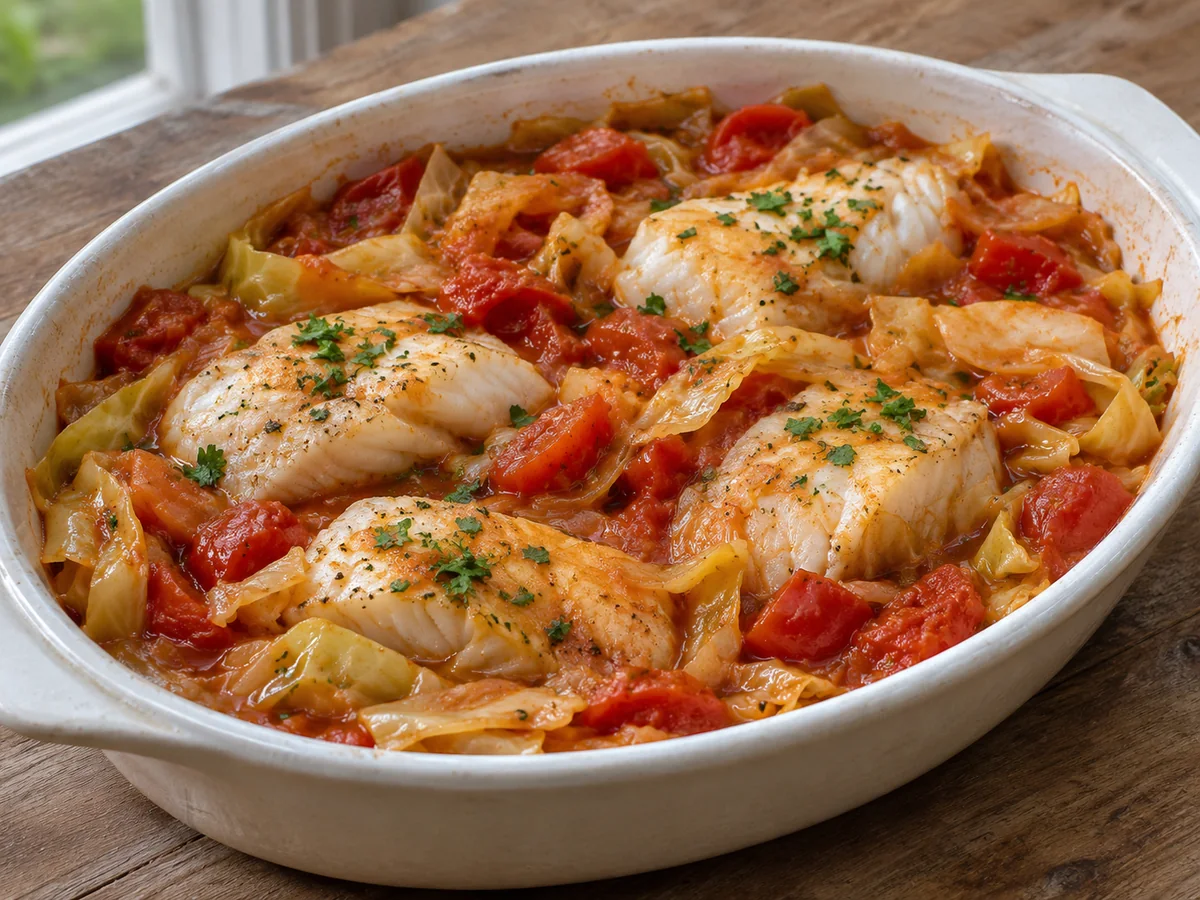
Fish with cabbage and tomato: a contemporary recipe by Alioune for four people.
Ingredients
- 700 g boneless white fish fillets
- 500 g shredded white cabbage
- 400 g diced tomatoes
- 120 g sliced onion
- 8 g minced garlic
- 350 ml drinking water
- 20 ml vegetable oil
- 2 g salt to taste
- 1 g ground black pepper
Preparation
Check the fish fillets and remove any visible bones. Cut them into four even portions and keep them refrigerated. Remove any damaged leaves from the cabbage, wash the usable parts, and then shred them, discarding the hard core.
Wash the tomatoes and dice them. Finely chop the onion and garlic. Prepare a casserole dish or sauté pan large enough to accommodate the four portions of fish without having to pack them tightly at the last minute.
Sauté the onion in oil for four minutes over medium heat. Add the garlic for one minute, then the tomatoes. Stir to soften them and loosen any browned bits. The base should be fragrant, without any burnt garlic, which would impart a lingering bitterness.
Add the cabbage and 350 milliliters of water. Season lightly with salt, partially cover, and simmer for about 18 minutes. Turn the strips occasionally so they absorb the liquid evenly and begin to soften.
Check the cabbage is tender before adding the fish. If it's still quite crunchy when you want it soft, continue cooking it for a few more minutes. Then place the fillets on top of the vegetables and drizzle them with some of the cooking juices.
Cover and cook gently for ten to twelve minutes, depending on the thickness. The fish should reach an internal temperature of at least 63°C and become opaque. Do not stir it with the cabbage to speed up the cooking; continue cooking gently if the center requires it.
Taste the sauce, season with pepper, and adjust the salt. First, serve the fish portions with a spatula, then add the cabbage and tomato around them. Distribute the remaining sauce so that each plate has an equal amount of sauce and vegetables.
Introduction
Fish with cabbage and tomato combines fillets gently cooked on a bed of vegetables. The cabbage first softens in tomato juice and a little water, then the fish is placed on top of this almost-finished base. It's a moist and generous dish, where the strips of cabbage remain distinct and the pieces of fish aren't broken up by repeated handling.
This version is a home recipe by Alioune for the Congo-Brazzaville collection. It belongs to the broad category of fish dishes served with vegetables and sauce, but no specific source allows us to attribute a vernacular name or a unique traditional origin to it. The choice of a common white cabbage and boneless fillets reflects a desire for simplicity and easily reproducible portions. Fish sold under the general name of white fish can vary greatly: their true name should remain known to the cook.
Cultural context
In a meal centered around fish, vegetables are more than just decoration. Here, cabbage absorbs the tomato juices and becomes a substantial part of each portion. The dish can be served in a large casserole, but a wide spatula allows each diner to keep a piece of fillet before distributing the vegetables. This presentation encourages sharing and highlights the ingredients, without suggesting that there is only one Congolese way to cook cabbage. The tomato complements the flavor of the fish without requiring peanut paste or palm nut sauce: their absence is part of the identity of this version.
Tips
The very firm heart of the cabbage can be finely shredded rather than left in large chunks which would require longer cooking than the leaves.
Keep the fish cold while the vegetables are simmering; it doesn't need to wait next to the hot pot.
A wide, shallow container makes the final addition easier than a small pan where the fillets overlap.
If the tomatoes are very juicy, start with a little less water and only add more if the cabbage needs more liquid to cook.
The sauce should remain fluid enough to produce steam under the lid, but it should not turn the dish into soup.
To keep a portion fresh, quickly separate it from the main dish, cool it without waiting too long, then keep it covered in the refrigerator.
Variations
Another type of fish can be used if it lends itself to gentle cooking, but its nutritional composition and thickness must be taken into account. Unseasoned canned tomatoes can be substituted for fresh tomatoes by adjusting the liquid and salt. Adding a bell pepper or peanuts would create a different version, which deserves to be named and recalculated rather than discreetly included in this recipe.
Accompaniments
White rice, cassava prepared separately, or boiled plantain accompany the sauce without overpowering the fish. Since there's already plenty of cabbage, there's no need to prepare a second large dish of cooked vegetables. A small, crisp salad will suffice if you'd like some extra texture. Side dishes are not included in the estimates; these cover the fish, cabbage, tomato, and their cooking juices.
Nutrition notes
The fish provides protein; cabbage, tomato, and onion contribute fiber and minerals. The sauce contains the required oil. The calculation uses a lean white fish: a fattier species results in a different nutritional distribution.