Catfish with aubergines and peanuts
Catfish with eggplant and peanuts: a contemporary recipe by Alioune for four people.
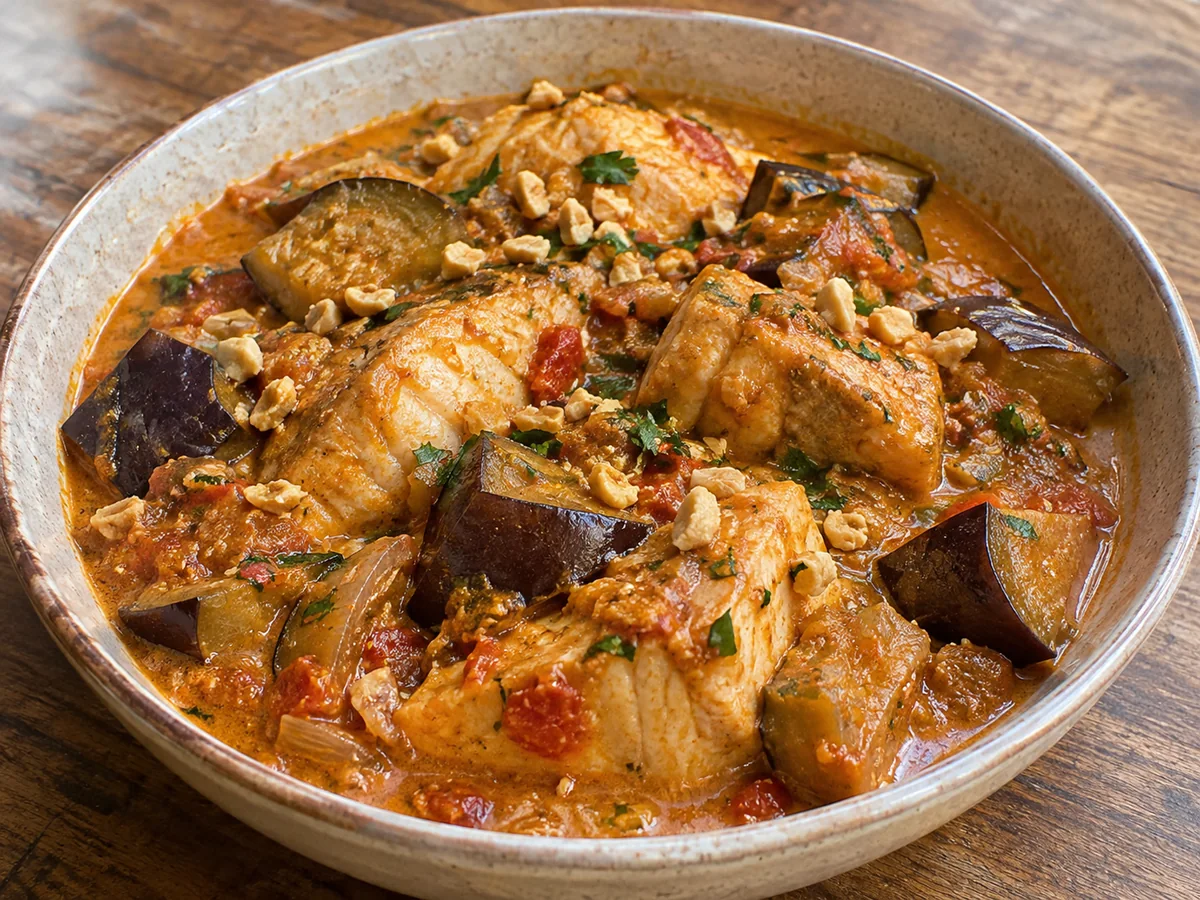
Ingredients
- 650 g boneless catfish fillets
- 500 g aubergine chunks
- 70 g unsweetened peanut butter
- 250 g diced tomatoes
- 120 g sliced onion
- 450 ml drinking water
- 20 ml vegetable oil
- 2 g salt to taste
- 1 g ground black pepper
Preparation
Check the catfish fillets and remove any visible bones. Cut them into four portions or large, even pieces, then keep them chilled. Wash the eggplants and tomatoes; cut the eggplants into cubes large enough to hold their shape during cooking and the tomatoes into dice.
Finely chop the onion and heat the oil in a large saucepan over medium heat. Sauté it for five minutes, stirring occasionally, until softened. It should flavor the sauce base without darkening.
Add the eggplants and tomatoes, then stir for two minutes to coat them. Pour in the 450 milliliters of water and bring to a simmer. Immediately ladle out a small amount of this liquid to mix the peanut paste in a bowl.
Pour the smooth peanut mixture back into the pot. Partially cover and simmer for about sixteen minutes. Stir regularly until it reaches the bottom and check that a cube of eggplant begins to soften under the spoon before adding the fish.
Place the catfish pieces in the sauce and drizzle with a spoonful of juice. Cover and simmer gently for ten to twelve minutes, depending on their thickness. Do not turn them frequently; the heat and sauce should do the work.
Check that the internal temperature of a thick piece of fish, with the flesh having become opaque, reaches at least 63°C. If the fish requires more time, continue cooking gently rather than increasing the heat significantly. Season with salt and pepper after tasting the sauce.
Serve four portions by first lifting the fish, then adding the eggplant and juices. If the sauce has thickened too much, thin it with a little hot water before serving, without stirring vigorously.
Introduction
Catfish with eggplant and peanuts is a stew in which the elements cook in a specific order. The eggplant is first softened in a tomato and onion base bound with peanuts. The catfish fillets are then placed in this already fragrant mixture, where they cook without being stirred. Their flesh should remain in pieces, surrounded by tender vegetables and a sauce thin enough to be shared.
Fish dishes with peanut sauce are documented in the culinary press of the Congo Basin, particularly with saltwater fish. Alioune's version adapts this sauce to catfish fillets and adds eggplant. It is therefore a clearly identifiable adaptation, not a purported reproduction of a single local recipe. The term "catfish" encompasses several species: ask for the name of the fish being sold and do not assume that all products have the same nutritional characteristics.
Cultural context
In fish stew recipes, the cooking liquid and the accompanying starchy side dish form an important part of the meal. Peanuts produce a thicker sauce than a clear fish stock, while eggplant absorbs some of the liquid and becomes meltingly tender. This preparation differs from fried fish that is then dipped in a sauce: the fillets in this version are cooked directly in the vegetable stew. This method minimizes handling and eliminates a frying step, but it does require a sauce to be prepared before adding the fish. A wide serving spoon allows for easy distribution of the pieces without turning the contents of the dish into a crumbly mess.
Tips
Ask for the species and origin of the catfish to be specified when purchasing; this information helps to choose suitable nets and to document the variations.
Keep the fish large pieces: small, fragile cubes may disappear into the sauce before the eggplants are ready.
Choose a pure peanut butter with no added sugar and take into account the salt it may already contain depending on the brand.
Peanut sauce sticks easily to the bottom; use a flexible spatula to reach the entire surface while cooking the vegetables.
If the eggplants are still firm, wait before adding the catfish. Adding the entire dish afterward would negatively affect the texture of the fish.
To move a cooked piece, slide a utensil underneath instead of pinching it tightly with kitchen tongs.
Leftovers are gently reheated with a little water, after rapid cooling and storage in the refrigerator in a covered container.
Variations
Another firm fish can provide a similar version, but not an automatic nutritional equivalent: the fat content varies depending on the species. For a lighter texture, keep the same quantities and simply thin the sauce when serving; its overall nutritional value remains the same. A different type of eggplant may release more water or require a few extra minutes, so check before adding the fish.
Accompaniments
Plain rice or steamed plantains pair well with this sauce. Ready-to-eat chikwangue can also accompany the meal if it's in keeping with local customs. Avoid drowning starchy foods in an excessive amount of sauce when using the nutritional estimates: these include a quarter of the pot's contents, but no additional side dishes. A crisp vegetable on the side provides a useful contrast.
Nutrition notes
Catfish and peanuts provide protein; peanuts also contribute lipids and magnesium. Eggplant adds fiber. The estimate uses a reference African catfish, the composition of which may differ from the fillet actually purchased.