Shrimp in coconut milk
Prawns in coconut milk: Alioune's contemporary recipe for four people.
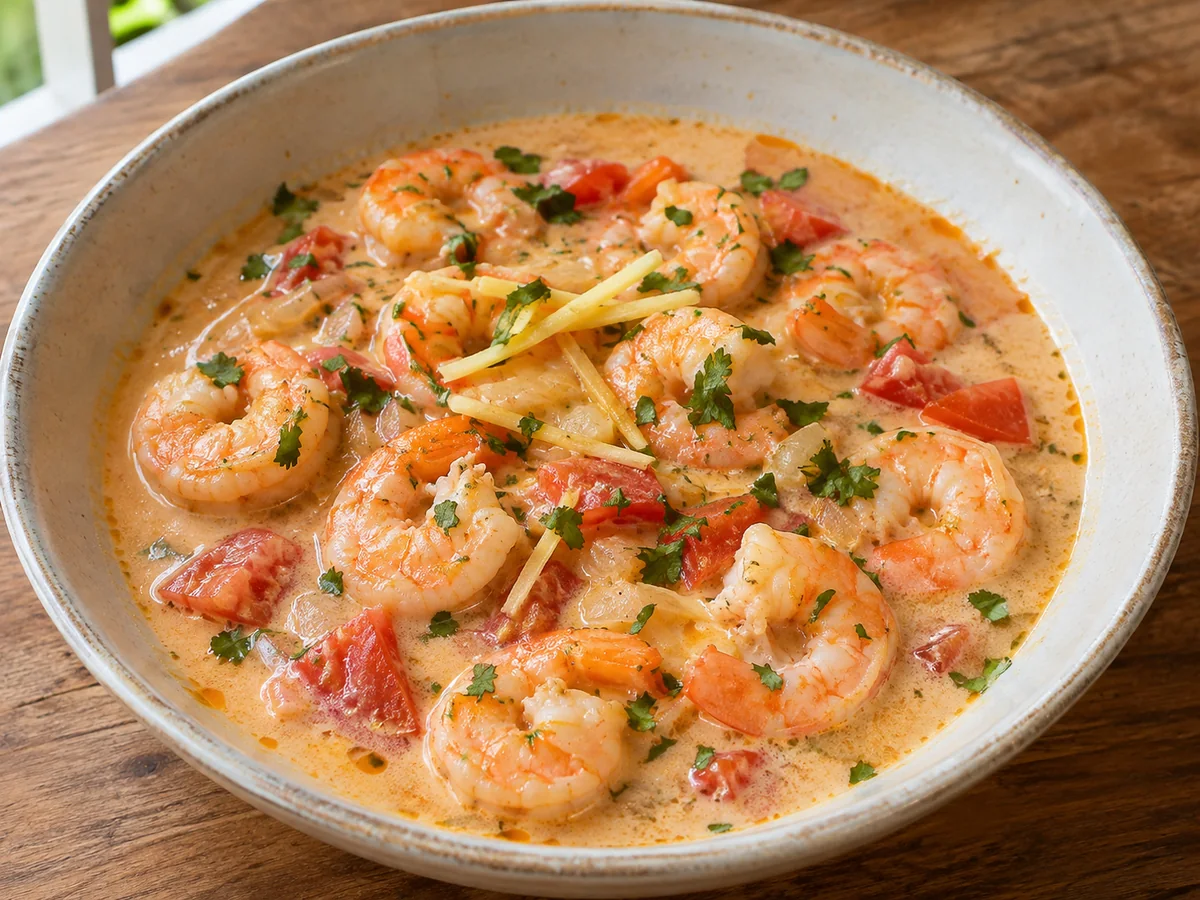
Ingredients
- 600 g raw peeled shrimp
- 350 ml unsweetened coconut milk
- 250 g diced tomatoes
- 120 g sliced onion
- 15 g grated fresh ginger
- 100 ml drinking water
- 20 ml vegetable oil
- 2 g salt to taste
- 1 g ground black pepper
Preparation
Keep the shrimp refrigerated until ready to use. If frozen, thaw according to the package directions, then drain and pat dry. Do not leave them sitting on the counter while preparing the vegetables.
Finely chop the onion, grate the ginger, and dice the tomatoes. Measure the coconut milk and 100 milliliters of water. Stir the coconut milk before measuring if the fat has naturally separated in the can.
Heat the oil in a fairly large sauté pan over medium heat. Sauté the onion for four minutes, then add the ginger and cook for another minute. The aromatics should be fragrant but not heavily browned, as the sauce is intentionally kept light and mild.
Add the tomatoes and stir to soften them. Pour in the coconut milk and water, then simmer gently for about nine minutes. The sauce should begin to thicken, but still be liquid enough to coat the shrimp.
Add the shrimp in as even a layer as possible. Cook gently for four to six minutes, depending on their size, turning them once. Their flesh should become opaque and pearly; smaller shrimp will cook less time than very large ones.
Check the doneness of a thick prawn, ideally using a thermometer with an internal temperature of 63°C. Season gradually with salt and pepper. If the sauce lacks consistency, remove the cooked prawns briefly to reduce the sauce separately rather than letting them toughen.
Divide immediately into four portions, with a comparable amount of shrimp and sauce. The dish is ready to serve: prolonged cooking does not improve the flavor combination and generally makes the shrimp firmer.
Introduction
Shrimp in coconut milk requires a short cooking time, preceded by careful preparation of the sauce. The onion, tomato, and ginger simmer together first; the raw, peeled shrimp are added only at the end. The coconut milk provides a smooth, enveloping texture, while the tomato adds a touch of acidity. The dish should remain fluid, not become a thick paste that would overpower the shrimp.
This recipe is a contemporary creation by Alioune for the Congo-Brazzaville collection. The combination of seafood and coconut is found in many tropical culinary traditions; therefore, the mere presence of coconut milk is not enough to attribute a traditional Congolese origin to it. The published version is defined by its quantities, its ginger, and its two-step method. It can be prepared with fresh or properly thawed shrimp, ensuring that you check the exact type and storage instructions of the purchased product.
Cultural context
The choice to serve peeled shrimp allows for easy spoonfuls, with a sauce to be shared over rice or another starchy side dish. This differs from a platter of whole shellfish to be shelled at the table. Coconut milk provides fat and should not be confused with a very diluted plant-based milk, which would result in a different sauce. In this recipe, the sweetness does not come from added sugar; it comes from the coconut and onion. Shellfish are a significant allergen; their presence is still felt even if the sauce appears mild and only slightly spicy.
Tips
Buy raw shrimp to follow this method; cooked shrimp would only require a brief reheating in the finished sauce.
Drain the thawed shrimp well so as not to add more water to the sauce than was included in the proportions.
Choose unsweetened coconut milk intended for cooking, rather than a flavored drink or coconut dessert.
Separated coconut milk is not necessarily spoiled: mix it, but always check the condition of the packaging and its smell after opening.
Maintain a gentle, steady simmer; high-heat cooking promotes a separate sauce and does not make the shrimp more tender.
Prepare the side dish before the final stage, so that the shrimp can go directly from the sauté pan to the plates.
Refrigerate any stored portion promptly and avoid repeated reheating, which is particularly detrimental to the texture of shellfish.
Variations
A touch of chili pepper can be added separately, without altering the mild base of the recipe. If you use a different size of shrimp, adjust the cooking time of the final step, not the sauce. Substituting cubed fish is possible as an alternative recipe; its texture, cooking time, and nutritional information will need to be adjusted. A light plant-based milk is not a direct substitute for culinary coconut milk.
Accompaniments
Serve with white rice, cooked brown rice, or steamed vegetables accompanied by a small portion of yam. Avoid automatically choosing a second side dish with coconut milk, which would simply repeat the richness of the sauce. A lightly dressed, crisp salad can complement the meal. The nutritional estimates are based on one-quarter of the shrimp and their sauce, including all the coconut milk and oil used.
Nutrition notes
Shrimp is the main source of protein. Coconut milk increases the fat content, particularly saturated fat, and the energy of the sauce. Tomato and onion provide a vegetable component. Starchy side dishes are not included in the calculation.