Fish balls in tomato sauce
Fish balls with tomato sauce: a contemporary recipe by Alioune for four people.
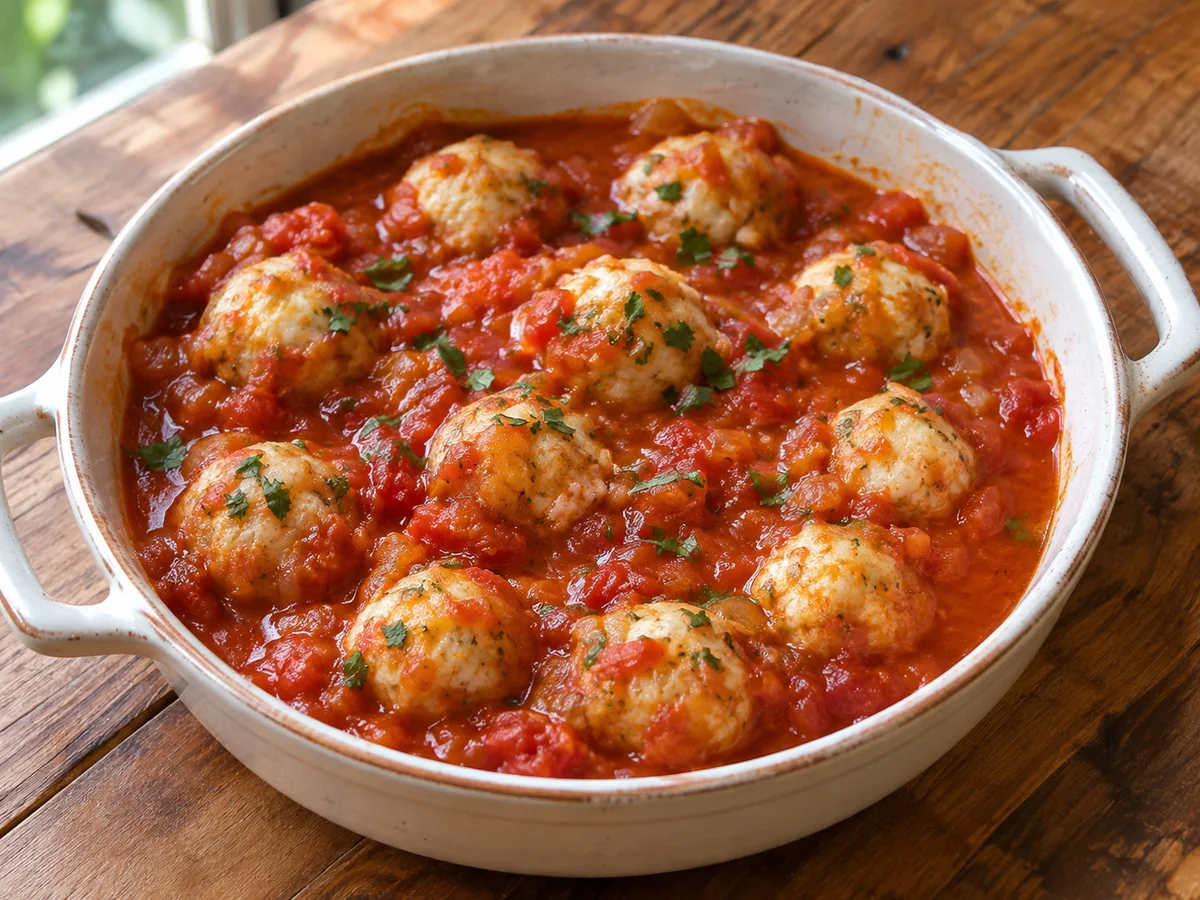
Ingredients
- 650 g boneless white fish fillets
- 1 egg
- 60 g breadcrumbs
- 500 g diced tomatoes
- 120 g sliced onion
- 8 g minced garlic
- 200 ml drinking water
- 20 ml vegetable oil
- 2 g salt to taste
- 1 g ground black pepper
Preparation
Carefully check the fillets with your fingertips and remove any remaining bones with clean tweezers. Cut the cold flesh into pieces, then chop it with a knife or in short pulses using a food processor. Avoid turning it into a hot, sticky paste by prolonged blending.
Mix the fish with the egg, 60 grams of breadcrumbs, and half the salt and pepper. Mix just until well combined. Divide into 16 portions and shape into even balls, then refrigerate while preparing the sauce.
Thinly slice the onion, mince the garlic, and chop the tomatoes. Sauté the onion in oil for four minutes over medium heat. Add the garlic for one minute, then add the tomatoes; stir, scraping up any browned bits from the bottom of the pan, being careful not to let the base stick.
Pour in 200 milliliters of water and simmer for about ten minutes. The sauce should be cooked and slightly reduced before adding the fish. If you prefer a smoother texture, crush any large pieces of tomato with a spatula.
Place the meatballs in the sauce in a single layer, as much as the pot allows. Cover and maintain a very gentle simmer for twelve to fifteen minutes. Do not use a large spoon to stir them; instead, gently move the pot around.
Check the internal temperature of a thick meatball with a thermometer, aiming for at least 74°C. Continue cooking if necessary. Taste the sauce and adjust the remaining salt and pepper, being careful not to crush the meatballs with the tasting utensil.
Serve four fish balls per person, with a similar amount of sauce. Use a wide spoon or a small slotted spoon to lift them. The dish should be plated while the fish is still moist, without waiting too long over a high heat.
Introduction
Fish balls in tomato sauce offer another way to serve boneless fillets: the flesh is minced, bound with an egg and a little breadcrumbs, then gently cooked in a pre-prepared sauce. The fish is therefore not fried beforehand. The aim is to create soft balls, firm enough to be lifted with a spoon, surrounded by a red sauce that remains distinct from the fish itself.
This version is a contemporary proposal by Alioune for the Congo-Brazzaville collection. Fish in sauce belongs to a well-documented culinary tradition in the Congo Basin; the shaping and proportions of these fish balls are a matter of domestic preference. No specific local name is given to them. The fish used must be identified at the time of purchase: the term "white fillet" allows for practical adaptation but does not designate a single species or a particular fish from the Congo River.
Cultural context
Mincing the fish changes both the presentation and the texture. Portions become easy to divide, provided you maintain a similar amount of flesh in each ball. This method also allows you to work with irregular pieces of fillet, but it never allows you to neglect removing any bones. In a saucy dish, rice or cassava can be served with tomato sauce, while the fish balls are placed alongside to help them hold their shape. The recipe is suitable for a family meal that enjoys fish in a mild form, without claiming to replicate a ceremonial preparation or a custom specific to any one community.
Tips
Keep the fish cold during mincing: flesh warmed by the food processor becomes more difficult to shape and less pleasant in texture.
Weigh out a first portion of stuffing as a guide; sixteen balls of similar size cook more evenly than very different sizes.
If the stuffing seems soft, let it rest for a few minutes in the refrigerator before deciding to add extra breadcrumbs.
Cook a small piece of stuffing separately to taste the seasoning, rather than tasting a preparation containing raw fish and egg.
A sauce that boils vigorously risks cracking the meatballs. Gentle cooking is more beneficial than constantly handling them.
Cool leftovers quickly and refrigerate them in portions; reheat with a little sauce to avoid drying out the meatballs.
Variations
Gluten-free breadcrumbs can be used if the label is suitable for diners, but their absorption capacity may differ. A fattier fish will have a different flavor and lipid profile; in this case, the nutritional assessment should be adjusted. For a smoother sauce, blend it before adding the fish balls, never after. The addition of fresh herbs should be kept to a minimum to allow the fish to take center stage in the dish.
Accompaniments
Plain rice, mashed yam, or steamed plantains accompany the tomato sauce without weighing it down. You can also serve some green vegetables on the side to add variety in color and texture. The meatballs already contain breadcrumbs, but this small amount doesn't necessarily replace all the other side dishes. The quantities given are for four meatballs and their sauce, without rice or any other added garnishes.
Nutrition notes
The fish provides protein and the egg helps bind the ingredients. The breadcrumbs contribute carbohydrates, and the tomato provides fiber and micronutrients. The values are based on lean white fish; other species may alter the fat content.