Beef liver with onions
Beef liver with onions: Alioune's contemporary recipe for four people.
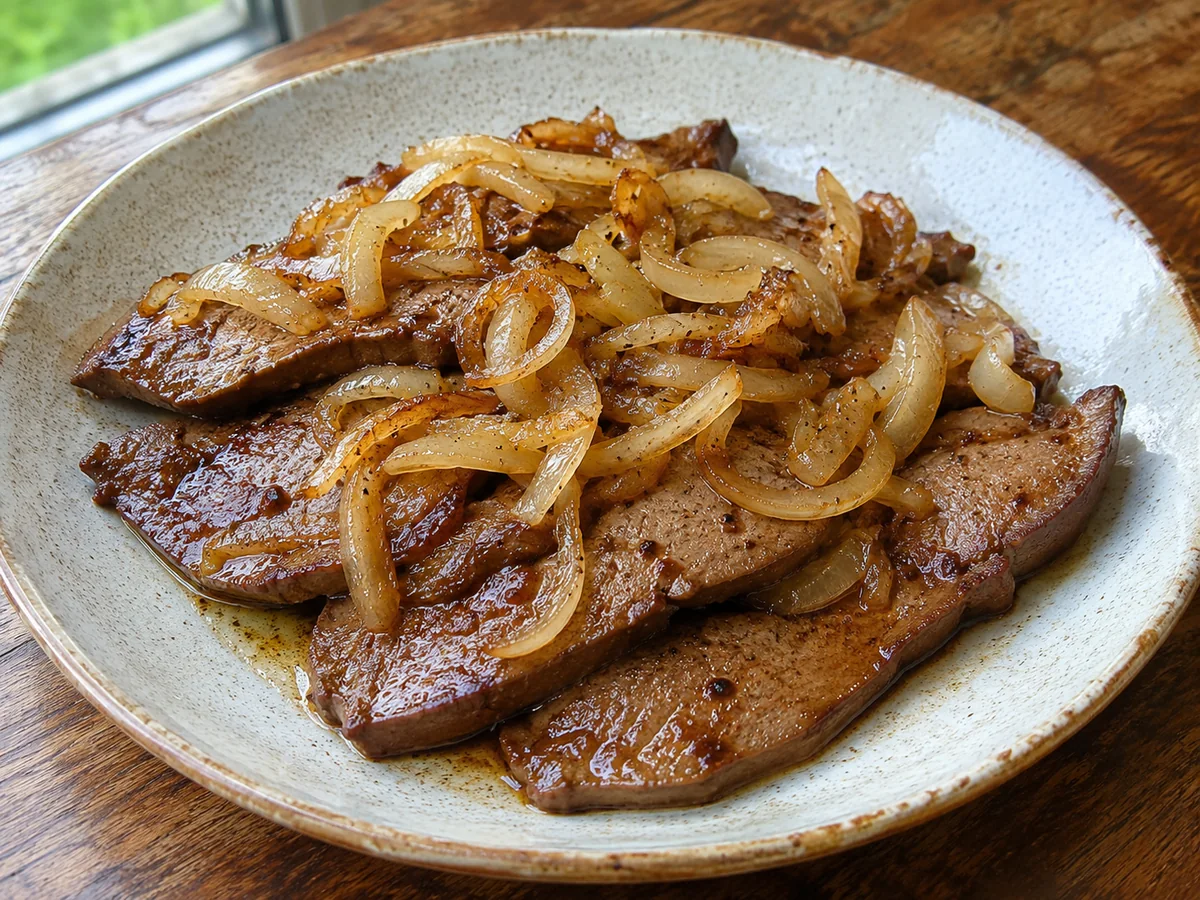
Ingredients
- 600 g beef liver strips
- 350 g sliced onion
- 8 g minced garlic
- 20 ml lemon juice
- 20 ml vegetable oil
- 2 g salt to taste
- 1 g ground black pepper
Preparation
Remove any remaining thick membranes from the liver and slice it into even strips. Finely chop the 350 grams of onion. Mince the garlic, squeeze the lemon, and measure the juice before starting the fire.
Heat about half the oil in a wide pan over medium-low heat. Add the onions and cook them for about twelve minutes, stirring occasionally. They should become soft and lightly browned, without burning at the edges.
Add the garlic and cook for another minute. Remove the mixture to a clean plate. Keep the cooking juices in the pan, as long as they aren't black; a few golden brown bits will contribute to the final sauce.
Pour in the remaining oil and increase the heat slightly. Arrange the liver in a single layer, in batches if necessary. Let the slices cook before turning them over: constantly moving them prevents even browning and releases too much juice.
Allow approximately six to eight minutes depending on the thickness, then check that the internal temperature reaches at least 71°C. The surface alone is not enough to judge the doneness of a thick slice. Avoid leaving the meat on the heat simply to wait until serving time.
Return the onions to the pan and add the 20 milliliters of lemon juice. Stir for a minute to warm everything through and gently deglaze the pan. Season gradually with salt and pepper, after tasting a piece of onion with the juice.
Divide immediately into four portions. If some of the meat has cooked through during the previous stages, combine it only at the end to avoid overcooking it. Serve the pan juices with the onions.
Introduction
Beef liver with onions relies on a simple contrast: firm, flavorful meat and slowly softened, almost sweet onions. The cooking process is done in two stages so the onions have time to melt without making the liver wait too long in the pan. A touch of lemon enhances the flavors just before serving.
This dish does not have a proven exclusively Congolese origin. Pan-fried liver and onion are used together in many cuisines; Alioune's recipe is a domestic version included in the contemporary section of the Congo-Brazzaville collection. This explicit editorial origin allows us to provide a usable recipe without inventing a local name for it. The choice of beef liver, rather than a mixture of offal, also makes the quantities and nutritional calculations more precise. The method should not be automatically applied to kidneys or tripe.
Cultural context
Offal requires a different culinary approach than cuts intended for braising. A long cooking time is not a guarantee of tenderness: an overcooked slice will become tough, while an undercooked onion will remain sharp. Liver constitutes a distinct portion of meat, which should be clearly explained to guests who do not eat it. In this presentation, onions are distributed with the meat, not reserved for one side of the dish. The side dishes should be simple to allow the liver's own flavor to shine. The high levels of certain micronutrients in liver, particularly preformed vitamin A, should not be presented as a reason to serve it in large portions.
Tips
Ask for a fresh liver that is properly prepared and use it quickly according to the seller's instructions; its freshness is as important as the precision of the cooking.
Slices of the same thickness are easier to cook evenly than large, irregular pieces, the center of which remains difficult to appreciate.
Don't overcrowd the pan: when the pieces overlap, they release juices and cook mostly by steaming rather than on the surface.
Make sure the onions are completely softened before searing the liver. Adding them raw at the end of cooking would unnecessarily prolong the cooking time for the meat.
The lemon should enhance the juices, not marinate the liver for hours. Use a measured amount so as not to overpower its flavor.
For a neat presentation, first arrange the slices then the onions, and finish with the juice rather than aiming for a very thick sauce.
This dish is best served immediately: prolonged reheating is less favorable to its texture than to that of stewed meat.
Variations
Calf's liver doesn't have the exact same texture or composition as beef liver; substituting it requires a new nutritional assessment. A milder version can use slightly less lemon, adjusted after tasting. Adding flour to thicken the sauce would also change the allergens and carbohydrates: this basic recipe doesn't contain any and doesn't need a coating for color.
Accompaniments
Serve with a small portion of rice, steamed yam, or simple mashed potatoes, along with a green vegetable or seasoned tomatoes on the side. Avoid serving a second offal dish in the same meal. Liver already provides a significant concentration of several micronutrients; side dishes primarily serve to vary textures and complement the main course, without being included in the nutritional values calculated for the main dish.
Nutrition notes
Liver provides protein, iron, and vitamin B12, with a significant amount of preformed vitamin A. It's not a food to be consumed frequently to systematically enrich meals. Onions complete the vegetable portion.