Lemon and ginger chicken
Lemon and ginger chicken: Alioune's contemporary recipe for four people.
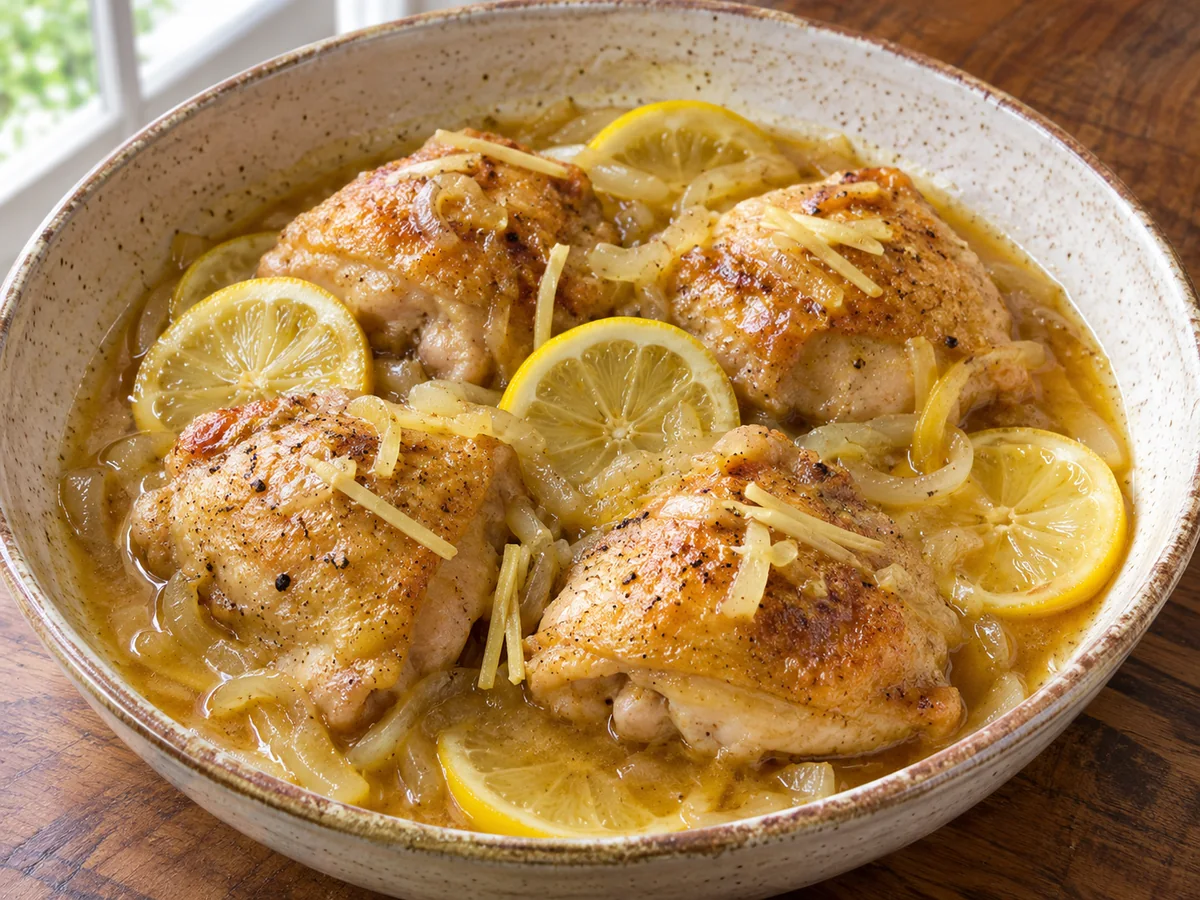
Ingredients
- 700 g boneless chicken pieces
- 180 g sliced onion
- 20 g grated fresh ginger
- 8 g minced garlic
- 45 ml lemon juice
- 400 ml drinking water
- 20 ml vegetable oil
- 2 g salt to taste
- 1 g ground black pepper
Preparation
Peel the onion, garlic, and ginger. Slice the onion into thin half-rings, mince the garlic, and grate the ginger. Squeeze the lemon and measure out 45 milliliters of juice; set it aside for the final part of cooking.
Cut the boneless chicken into even pieces. Pat the surface dry without washing the raw meat, then prepare a large enough casserole dish. Keep a separate cutting board and knife to avoid putting the vegetables back in contact with the raw chicken.
Heat the oil over medium heat. Fry the chicken pieces for five minutes, turning them to brown several sides. Light browning is enough: the goal is not to form a dry crust on the already small pieces of meat.
Add the onion and let it soften for four minutes. Stir to loosen any browned bits from the bottom of the pan, then stir in the garlic and ginger. Continue cooking for one minute, until fragrant, but be careful not to let the garlic brown.
Pour in the 400 milliliters of water. Bring to a simmer, cover, and reduce the heat. Let it simmer for 25 minutes, checking once to ensure it's not sticking to the bottom. Add a spoonful of hot water only if the liquid is really low.
Pour in the lemon juice and simmer for another five minutes, this time with the lid slightly ajar. Check that the temperature reaches at least 74°C in the center of a thick piece; continue cooking if necessary, as the size of the pieces affects the cooking time.
Taste the juice, then gradually add salt and pepper. If desired, crush a few slices of onion against the side of the pan to thicken the sauce. Serve four portions with the lemon juice, without adding any more lemon until you've tasted it.
Introduction
This lemon and ginger chicken features a light sauce, fragrant with softened onion and freshly grated ginger. The lemon is added at the end of cooking: it enhances the juices without overpowering the chicken. The result is a dish that is both delicate and vibrant, and pairs perfectly with plain rice or simply cooked vegetables.
This dish belongs to Alioune's contemporary repertoire for Congo-Brazzaville. While simmered chicken and fresh herbs are part of a widely shared culinary vocabulary, no source consulted allows us to attribute this precise combination to a particular Congolese community. Its origin is therefore clearly found in this collection. Its antiquity is not to be fabricated: its appeal lies in the balance of ingredients and a method achievable with an ordinary casserole dish. The choice of adding lemon juice at the end distinguishes this preparation from a chicken that has been marinated for a long time and then grilled.
Cultural context
Lemon and ginger are found in many African, Asian, and European cuisines. Their presence in a contemporary recipe illustrates this exchange of flavors, without establishing an exclusive origin. In the dish presented here, ginger is a culinary herb, not an ingredient to which one would attribute a therapeutic effect. The onion, more abundant than in a simple marinade, adds substance to the sauce. The dish lends itself to family servings: the starchy side dish is presented separately, allowing each person to add their own sauce. A neutral garnish allows the lemon to shine through, whereas a strongly flavored sauce would overpower the aromatics.
Tips
Grate the ginger just before cooking: a root that has already been grated and then left exposed to the air loses some of its aroma.
Remove the thick fibers of the ginger if they wrap around the grater; they should not end up as threads in the sauce.
Measure the juice after pressing. The size and acidity of lemons vary too much to guarantee a consistent result based solely on the measurement of one fruit.
The onion should melt without burning: too dark a color would alter the taste of the juice and compete with the lemony freshness.
A sauce that is too thin can be reduced for a few minutes without a lid, after temporarily removing the chicken to preserve its tenderness.
Don't automatically add sugar if the lemon seems bright. Check the salt first and serve with a mild accompaniment.
Keep leftovers cooled quickly in the refrigerator; when reheating, avoid a large reduction which would further concentrate the acidity.
Variations
For a milder flavor, start with 30 milliliters of lemon juice, then adjust the remaining 15 milliliters when serving. Some of the onion can be replaced with scallions, reserving the green parts for last. Oven cooking would require a different ratio of liquid, dish surface area, and cooking time: the water quantities used in this casserole dish should not be automatically transferred to a large, uncovered dish.
Accompaniments
White rice absorbs the juices without masking their flavors. Mashed yam or steamed sweet potato adds a pleasant sweetness, while quickly sautéed cabbage provides a more vegetal contrast. Avoid pairing this dish with a second, very lemony sauce. Side dishes are not included in the nutritional estimates, which are calculated based on only one-quarter of the chicken and sauce portion.
Nutrition notes
Chicken is the main source of protein; oil provides some of the fat. Lemon and ginger primarily serve an aromatic purpose, depending on the quantities used. Cooking notably alters the vitamin C content.