Chicken and okra stew
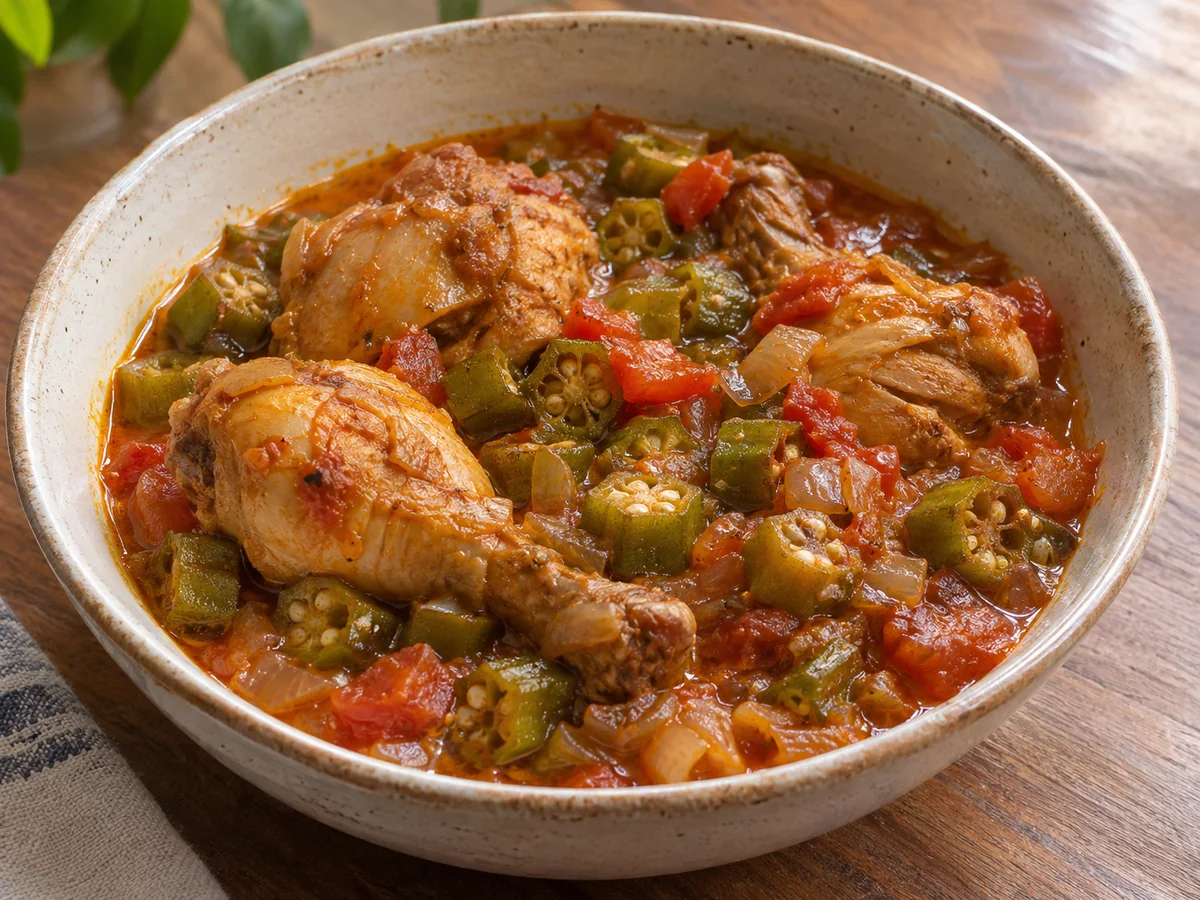
Chicken with okra: Alioune's contemporary recipe for four people.
Ingredients
- 700 g boneless chicken pieces
- 350 g sliced okra
- 300 g diced tomatoes
- 120 g sliced onion
- 8 g minced garlic
- 450 ml drinking water
- 20 ml vegetable oil
- 2 g salt to taste
- 1 g ground black pepper
Preparation
Gather only the necessary equipment: a heavy-bottomed pot, a cutting board for the vegetables, and another for the chicken. Wash the tomatoes and okra. Slice the onion, mince the garlic, and cut the chicken into pieces about three centimeters in size. Do not rinse the raw poultry; pat it dry with paper towels if necessary.
Dry the okra before removing the stems. Cut them into fairly thick slices, then keep them separate from the tomatoes. This separate preparation will allow you to add them after the simmering has begun, rather than cooking them for as long as the chicken.
Heat 20 milliliters of oil in the casserole dish over medium heat. Place the chicken in a single layer and brown it for five minutes, turning it occasionally. It should begin to color without sticking; cook in two batches if the dish is narrow.
Add the onion and stir for four minutes. Stir in the garlic for the last minute, then add the tomatoes. Gently scrape up any browned bits with a wooden spatula, being careful not to brown the garlic too much.
Pour in 450 milliliters of water and bring to a simmer. Cover, reduce the heat, and simmer for 15 minutes. The liquid should move gently, without a vigorous boil that would toughen the meat and cause the juices to evaporate too quickly.
Add the okra and continue cooking for 15 minutes with the lid slightly ajar. Stir gently, lifting the pieces without beating the sauce. Check that the chicken reaches an internal temperature of at least 74°C; continue cooking if necessary.
Taste before using all the salt, then add the pepper. If the sauce is too thick, add a tablespoon or two of hot water. Immediately divide into four portions, keeping the side dishes out of the pot.
Introduction
Chicken with okra combines a light tomato sauce, tender pieces of chicken, and okra slices that bind the dish without the need for flour. The result should remain smooth: the vegetables and chicken should be distinct, while the sauce coats the spoon. The onion softens the acidity of the tomatoes, and the garlic adds a clean, bold note, without any complicated spice blend.
The combination of chicken and okra is documented in the cuisines of the Congo Basin, particularly through recipes featuring smoked chicken published in the local press. Alioune's version uses fresh, boneless chicken and a measured amount of oil. It thus adapts a regional combination to an accessible home cooking method, without exactly replicating a specific family recipe. This distinction is important: smoked chicken already has a different flavor and level of doneness, and cannot be substituted here gram for gram without revising the method.
Cultural context
Okra is one of those vegetables that both structures and complements a sauce. Its mucilage becomes noticeable when it's cut and then heated in liquid. In this preparation, a slightly stringy texture is desired, compatible with plain rice or cassava paste served separately. Texture preferences vary among diners: some like a more pronounced consistency, while others prefer larger slices. The meal can be presented in a communal dish, but the four portions are divided with a comparable amount of chicken, vegetables, and sauce. The chili pepper is a matter of personal choice, best served separately rather than adding it to the entire pot.
Tips
Choose small, firm okra: large, fibrous specimens remain unpleasant even after prolonged cooking.
Avoid cutting okra very finely if you want a moderately stringy sauce; a larger exposed surface area accentuates their binding.
A very watery tomato requires a few minutes of reduction before adding liquid, rather than overcooking the okra at the end.
The casserole dish must offer enough space to turn the chicken over; an overloaded container mainly causes the pieces to boil during browning.
Add the pepper gradually. The optional chili pepper is served separately to preserve the vegetal flavor of the okra in the basic version.
To reheat a portion, add a small spoonful of water and stir gently so as not to crush the already softened slices.
Cool leftovers quickly in a shallow container, then refrigerate them. Reheat only the amount intended for the next meal.
Variations
A variation using smoked chicken is possible, but its salt content, potential pre-cooking, and storage requirements necessitate a specific method. For a more vegetable-based sauce, slightly increase the amount of tomato and reduce the water initially. Adding peanut paste would significantly alter the texture, allergens, and nutritional values: it would be a completely different version, requiring recalculation, rather than simply an invisible seasoning.
Accompaniments
Serve with white rice, boiled plantain, or ready-to-eat chikwangue, prepared separately. A small salad of lemony cucumber adds a touch of crunch to the rich sauce. The amount of starchy foods is at the table's discretion and is not included in the nutritional values below. Use a serving spoon large enough to distribute the chicken without breaking it up.
Nutrition notes
Chicken is the main source of protein. Okra and tomato contribute fiber and plant-based micronutrients. Oil provides additional fat; rice or chikwangue served alongside are not included in the nutritional count.