Sweet potato and mackerel patties
Sweet potato mash binds cooked, carefully deboned flaked mackerel. Eight flat patties are pan-cooked and served with lemon.
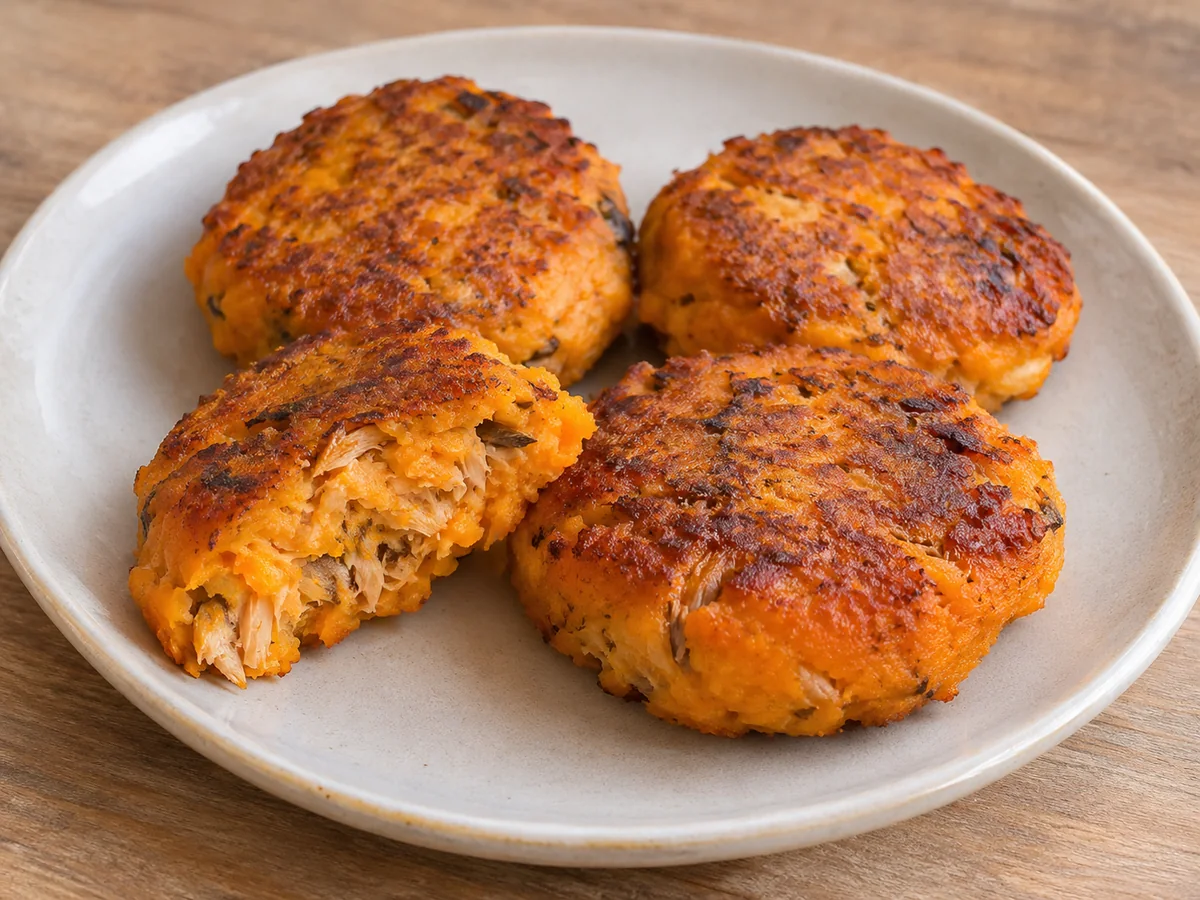
Ingredients
- 650 g — raw sweet potato, edible weight
- 400 g — raw Atlantic mackerel fillet with skin and without bones
- 100 g — raw egg without shell (about 50 g per medium egg)
- 70 g — plain white wheat flour, not self-raising
- 80 g — peeled raw onion
- 30 g — sunflower oil
- 25 g — fresh lemon juice
- 1300 g — drinking water
- 2 g — salt
Preparation
Peel sweet potatoes and dice 2 cm. Simmer in water 15–20 minutes, drain and let steam-dry 5 minutes. Mash without added liquid. Finely chop onion.
Cook mackerel fillets in a pan with 10 g oil 8–10 minutes until 63°C inside. Remove all bones and flake. Cool fish and mash 15 minutes, then mix with eggs, flour, onion and salt.
Shape eight flat patties 1.5 cm thick. Cook in two batches in remaining 20 g oil, 5 minutes each side, until 74°C inside and flour cooked. Serve two per person with lemon juice.
Introduction
Sweet potato mash binds cooked, carefully deboned flaked mackerel. Eight flat patties are pan-cooked and served with lemon.
This preparation is a contemporary creation for Botswana à table, rather than a transcription of a traditional dish bearing this name. Its combination and method broaden the first volume’s repertoire. The ingredient list is the complete formula: a suggested accompaniment is not automatically included. Set out equipment before starting so that cooking does not require improvised weighing over a hot pan. The stated times are guides; the textures and cooking signs described in the steps remain decisive.
Cultural context
The Botswana Agricultural Marketing Board lists sorghum among the country’s grains and mosutlhane among its processed products, and also markets pulses. This agricultural context informs ingredient choices; it does not establish every combination here as an ancient dish or a speciality of every Botswana household. This recipe belongs to the contemporary section of volume 2 and does not replace the first volume’s heritage recipes. Salad, gratin or baking methods can circulate across countries without becoming an exclusive national tradition. The descriptive title names what is actually cooked; no Setswana name has been invented to suggest authenticity. Product substitutions and regional influences remain explicit. Institutional agricultural context: https://bamb.co.bw/products
Tips
For bites shape sixteen smaller thinner patties; check centre doneness rather than blindly using same time.
Contains allergens: fish, egg, wheat (gluten).
Planning
Read the steps through to serving, then divide the ingredients between small containers. Weigh edible portions in the stated condition: a peeled vegetable is not the same as its purchased weight with skin, and dry grain cannot be replaced gram for gram by cooked grain. Wash produce before cutting and use a clean board. Keep perishable ingredients chilled until needed.
Measure fat and salt separately. Where an amount is divided between stages, set each portion aside before the first addition to avoid using the full quantity twice. Have a little drinking water ready to correct excessive evaporation without replacing the specified liquid with salty stock. Adjust water in small additions after observing texture rather than suddenly filling the vessel. Lower excessive heat first if the bottom begins to catch.
For tubers, aim for pieces of similar thickness rather than mixing tiny fragments with large blocks. Remove damaged areas before weighing and rinse cut surfaces. Flesh intended for mashing should yield easily to a fork; flesh for salad may remain in pieces but must no longer have a hard centre. Test several pieces because one against the bottom may not represent the others. Drain as soon as the desired point is reached and let steam escape rather than immediately enclosing hot pieces in a box. Surface water can soak a filling, prevent a patty holding together or dilute an egg mixture. Precooking is therefore not interchangeable with the final roasting stage.
Choose chilled fillets of the specified species and feel for remaining bones. Remove with clean tweezers and pat the surface dry. Similar thicknesses cook more evenly than very different portions. Prepare vegetables first and reserve a separate board for raw fish; clean surfaces and wash hands afterwards. Do not return liquid that has touched raw fish to cooked food without cooking it. Check the thickest part: the centre temperature guide is 63 °C. Flesh should be cooked and separate with a fork, without needless further cooking. Oven times depend on thickness, not only total fillet weight.
First shape a small test portion with two spoons or clean slightly damp hands. The mixture should sit without flowing and maintain a reasonably even thickness. If still hot, wait the stated rest rather than forcing firmness with unmeasured extra flour. Divide all the mixture into similar pieces for even cooking. Space on baking paper, apply only the reserved oil and use a broad spatula when turning is required. A light crust develops better when the surface is not constantly moved. Wait a few minutes after baking before lifting fragile pieces; they firm as some steam escapes.
Serving
Divide into even portions, sharing the pieces as well as the cooking liquid or bound mixture. One portion should not receive only the driest elements while another gets all the sauce. Choose plates or bowls suited to the consistency without unnecessarily compressing ingredients. Taste before final adjustments. A condiment offered separately is easier to control than an addition poured over the whole dish; distinguish extra accompaniments from the calculated quantities.
Storage
Take portions intended for storage with a clean utensil before leaving the dish on the table for long. Cool promptly in shallow containers and refrigerate at 4 °C or below before two hours at room temperature. Then follow the recipe-specific storage period below. Reheat only the amount to be eaten, once, until thoroughly hot throughout; stir thick preparations to avoid a cold centre. For food served cool, keep fragile elements separate where possible. Lemon, sugar and spices do not replace refrigeration.
Refrigerate no more than 24 hours at 4°C or below.
Variations
Preserve the dish’s logic when adapting it: changing a principal ingredient may require different liquid, cooking and nutritional estimates. Do not add variations on top of the original formula as though they were uncounted garnishes. Begin with one change to understand its effect on texture. A suggested variation is not a second traditional recipe and is not counted as another entry in this collection.
Accompaniments
Serve accompaniments separately according to appetite and the dish’s place in the meal; they are excluded from this ingredient list and nutrition values.
Nutrition notes
Values are estimated per serving according to the stated number of portions, without unspecified accompaniments. The calculation adds foods in their stated weighing condition, then divides the complete preparation; it does not assume a measured final weight. All fat, including that used for a tin or tray, and all salt are included. Available carbohydrate is distinguished from fibre. Where USDA reports carbohydrate by difference, fibre is subtracted before energy is calculated. Sodium is shown separately from salt; salt equivalent equals sodium multiplied by 2.5.
Actual losses through cooking, draining, juices or food left in the vessel are not analysed. A local variety may differ from the reference food; matches and particular limitations are explained in the method. These rounded figures are ingredient-based estimates, not an analysis of the served dish, composition certification or medical effect. Recalculate if portions or ingredients change.
Conclusion
The result depends first on preparing the ingredients, controlling moisture and reaching the right doneness, before adding a garnish. Return to the texture markers in the steps if equipment or variety changes. This formula is offered to be cooked and is not presented as already kitchen-tested. Enjoy your meal!
Enjoy your meal
Enjoy your meal!