Savoury corn and okra loaf
Precooked drained okra is distributed through a corn and wheat batter baked in a loaf tin.
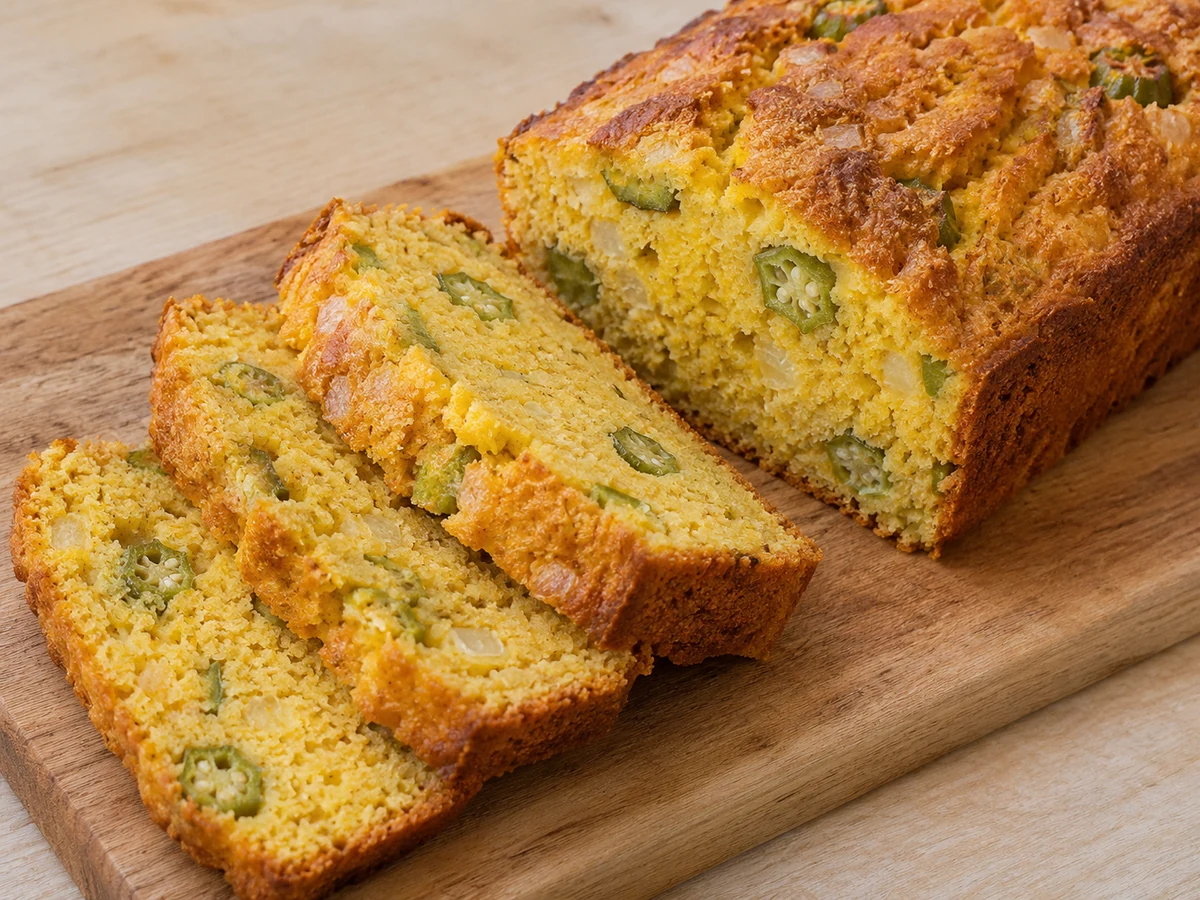
Ingredients
- 300 g — washed trimmed fresh okra
- 120 g — finely milled whole-grain yellow corn flour, not masa or starch
- 100 g — plain white wheat flour, not self-raising
- 150 g — raw egg without shell (about 50 g per medium egg)
- 200 g — pasteurised whole milk
- 80 g — peeled raw onion
- 45 g — sunflower oil
- 8 g — double-acting baking powder
- 3 g — salt
Preparation
Wash and trim okra before weighing 300 g, then slice. Soften onion in 10 g oil 5 minutes, add okra for 5 minutes and cool in a thin layer 15 minutes.
Preheat oven to 180°C. Oil a 22 cm loaf tin with 5 g oil and line base. Mix flours, baking powder and salt; use corn flour rather than starch.
Beat eggs with milk and remaining 30 g oil. Briefly fold in dry ingredients, then all cooled okra and onion. Fill tin no more than three-quarters.
Bake 45–50 minutes until a skewer shows no raw batter and centre reaches 74°C. Rest 10 minutes, unmould and cool on a rack 20 minutes. Cut eight slices, two per serving.
Introduction
Precooked drained okra is distributed through a corn and wheat batter baked in a loaf tin.
This preparation is a contemporary creation for Bénin à table, rather than a transcription of a traditional dish bearing this name. Its combination and method broaden the first volume’s repertoire. The ingredient list is the complete formula: a suggested accompaniment is not automatically included. Set out equipment before starting so that cooking does not require improvised weighing over a hot pan. The stated times are guides; the textures and cooking signs described in the steps remain decisive.
Cultural context
FAO’s nutritional profile of Benin describes diverse regional eating patterns. It provides general context for the collection, without establishing the origin of this contemporary formula. No ceremonial, ethnic or historical story is attributed to this ingredient combination without evidence. Institutional context source: https://www.fao.org/4/ap830f/ap830f.pdf
Tips
Add okra after cooking and cooling; raw okra contributes different moisture.
Contains allergens: wheat (gluten), egg, milk.
Planning
Read the steps through to serving, then divide the ingredients between small containers. Weigh edible portions in the stated condition: a peeled vegetable is not the same as its purchased weight with skin, and dry grain cannot be replaced gram for gram by cooked grain. Wash produce before cutting and use a clean board. Keep perishable ingredients chilled until needed.
Measure fat and salt separately. Where an amount is divided between stages, set each portion aside before the first addition to avoid using the full quantity twice. Have a little drinking water ready to correct excessive evaporation without replacing the specified liquid with salty stock. Adjust water in small additions after observing texture rather than suddenly filling the vessel. Lower excessive heat first if the bottom begins to catch.
Weigh flours separately and confirm their type before mixing. Whole flour, meal and starch do not give the same structure; baking powder is not bread yeast. Distribute salt and raising powder through dry ingredients to avoid very salty or bitter spots. Set aside tin or tray oil from the stated total before mixing the remainder into the preparation. Incorporate dry ingredients without unnecessary beating afterwards. Respect the planned size and thickness: a large thin cake, a small thick one and separate cookies need different times. Cool as directed before moving or cutting; a hot structure may seem fragile but firm during resting.
Wash vegetables before cutting, then dry them carefully enough not to dilute the seasoning. Remove damaged parts rather than hiding them in the preparation. Aim for an even size within each vegetable: two different species do not necessarily need the same cut or cooking time. Prepare a piece intended to stay crisp separately from one meant to soften. For salad, use a board that has not touched raw fish or meat. For hot dishes, test several pieces, including those in the centre of the vessel. Colour alone does not determine doneness: resistance under a knife tip indicates cooking progress. Add fresh herbs at the specified stage to preserve their aroma.
Crack eggs individually into a small cup before combining; this lets you remove shell or an abnormal egg without compromising the entire mixture. Weigh without shell when grams are specified. Beat to combine white and yolk without necessarily whipping into foam. Let precooked ingredients cool slightly before adding to eggs so they do not coagulate immediately. Excessive heat browns the bottom while the middle remains liquid: moderate the heat or check the oven rather than only extending cooking. For egg dishes, aim for a set centre and 71 °C. The stated rest helps cutting but does not replace insufficient cooking.
Serving
Divide into even portions, sharing the pieces as well as the cooking liquid or bound mixture. One portion should not receive only the driest elements while another gets all the sauce. Choose plates or bowls suited to the consistency without unnecessarily compressing ingredients. Taste before final adjustments. A condiment offered separately is easier to control than an addition poured over the whole dish; distinguish extra accompaniments from the calculated quantities.
Storage
Take portions intended for storage with a clean utensil before leaving the dish on the table for long. Cool promptly in shallow containers and refrigerate at 4 °C or below before two hours at room temperature. Then follow the recipe-specific storage period below. Reheat only the amount to be eaten, once, until thoroughly hot throughout; stir thick preparations to avoid a cold centre. For food served cool, keep fragile elements separate where possible. Lemon, sugar and spices do not replace refrigeration.
Refrigerate no more than 48 hours at 4°C or below.
Variations
Preserve the dish’s logic when adapting it: changing a principal ingredient may require different liquid, cooking and nutritional estimates. Do not add variations on top of the original formula as though they were uncounted garnishes. Begin with one change to understand its effect on texture. A suggested variation is not a second traditional recipe and is not counted as another entry in this collection.
Nutrition notes
Values are estimated per serving according to the stated number of portions, without unspecified accompaniments. The calculation adds foods in their stated weighing condition, then divides the complete preparation; it does not assume a measured final weight. All fat, including that used for a tin or tray, and all salt are included. Available carbohydrate is distinguished from fibre. Where USDA reports carbohydrate by difference, fibre is subtracted before energy is calculated. Sodium is shown separately from salt; salt equivalent equals sodium multiplied by 2.5.
Actual losses through cooking, draining, juices or food left in the vessel are not analysed. A local variety may differ from the reference food; matches and particular limitations are explained in the method. These rounded figures are ingredient-based estimates, not an analysis of the served dish, composition certification or medical effect. Recalculate if portions or ingredients change.
Conclusion
The result depends first on preparing the ingredients, controlling moisture and reaching the right doneness, before adding a garnish. Return to the texture markers in the steps if equipment or variety changes. This formula is offered to be cooked and is not presented as already kitchen-tested. Enjoy your meal!
Enjoy your meal
Enjoy your meal!