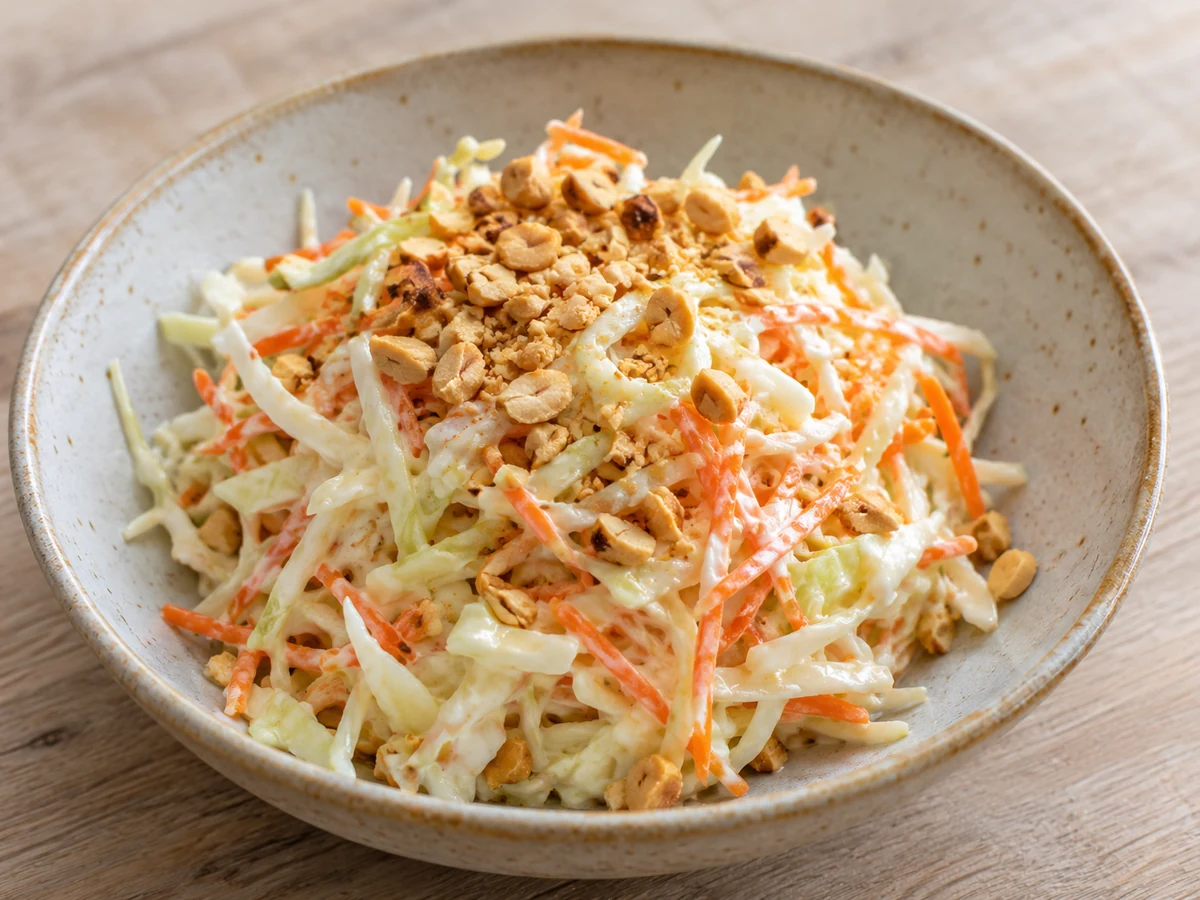
Cabbage salad with yogurt and peanuts
Finely shredded cabbage is softened with salt, drained and coated in yogurt and lemon dressing.
Ingredients
- 600 g — raw white cabbage without hard core
- 200 g — trimmed raw carrot
- 200 g — plain whole-milk yogurt
- 50 g — shelled dry-roasted peanuts without salt
- 30 g — fresh lemon juice
- 15 g — sunflower oil
- 3 g — salt
Preparation
Wash cabbage, remove core and weigh 600 g leaves. Shred finely. Add 3 g salt and massage 2 minutes with clean hands; refrigerate 15 minutes.
Squeeze cabbage over a sieve without rinsing; nutrition counts all salt despite possible loss in juices. Wash, trim and grate 200 g carrot.
Toast unsalted peanuts in a dry pan over low heat 3–4 minutes, cool and chop. Whisk plain yogurt, lemon and oil in a large clean bowl.
Coat cabbage and carrot in dressing. Refrigerate 20 minutes, stir and add peanuts just before serving. Divide into four portions. Flag milk and peanut allergens; the formula contains no mayonnaise.
Introduction
Finely shredded cabbage is softened with salt, drained and coated in yogurt and lemon dressing.
This preparation is a contemporary creation for Bénin à table, rather than a transcription of a traditional dish bearing this name. Its combination and method broaden the first volume’s repertoire. The ingredient list is the complete formula: a suggested accompaniment is not automatically included. Set out equipment before starting so that cooking does not require improvised weighing over a hot pan. The stated times are guides; the textures and cooking signs described in the steps remain decisive.
Cultural context
FAO’s nutritional profile of Benin describes diverse regional eating patterns. It provides general context for the collection, without establishing the origin of this contemporary formula. No ceremonial, ethnic or historical story is attributed to this ingredient combination without evidence. Institutional context source: https://www.fao.org/4/ap830f/ap830f.pdf
Tips
Use plain unsweetened yogurt; a flavoured dairy drink does not make the same dressing.
Contains allergens: milk, peanut.
Planning
Read the steps through to serving, then divide the ingredients between small containers. Weigh edible portions in the stated condition: a peeled vegetable is not the same as its purchased weight with skin, and dry grain cannot be replaced gram for gram by cooked grain. Wash produce before cutting and use a clean board. Keep perishable ingredients chilled until needed.
Measure fat and salt separately. Where an amount is divided between stages, set each portion aside before the first addition to avoid using the full quantity twice. Have a little drinking water ready to correct excessive evaporation without replacing the specified liquid with salty stock. Adjust water in small additions after observing texture rather than suddenly filling the vessel. Lower excessive heat first if the bottom begins to catch.
Food served warm or cool does not benefit from long waits on the worktop. Prepare raw ingredients during cooking, keeping them clean and covered. Let intense steam disperse before mixing a cooked element with raw vegetables; excessive heat softens pieces and releases more water. Drain carefully without pressing into a mash. Mix dressing in the bowl first, then lift ingredients with two spoons, stopping once evenly distributed. If serving later, cool cooked elements promptly and refrigerate them. Chilling for later service is different from briefly cooling to warm for immediate eating.
Wash vegetables before cutting, then dry them carefully enough not to dilute the seasoning. Remove damaged parts rather than hiding them in the preparation. Aim for an even size within each vegetable: two different species do not necessarily need the same cut or cooking time. Prepare a piece intended to stay crisp separately from one meant to soften. For salad, use a board that has not touched raw fish or meat. For hot dishes, test several pieces, including those in the centre of the vessel. Colour alone does not determine doneness: resistance under a knife tip indicates cooking progress. Add fresh herbs at the specified stage to preserve their aroma.
Weigh seeds before toasting and check they are food-grade, clean and unsalted. Spread in a small dry pan without adding more fat. Stir or shake gently and stop when the aroma becomes more noticeable and colour starts changing. Toasting continues off the heat if seeds remain in a burning-hot pan, so transfer to a clean plate. Share the intended quantity across portions rather than putting it all on the first plate. Adding last preserves contrast better than prolonged immersion. Seeds remain fully counted ingredients even when decorative; sesame must be identified for guests concerned by this allergen.
Serving
Divide into even portions, sharing the pieces as well as the cooking liquid or bound mixture. One portion should not receive only the driest elements while another gets all the sauce. Choose plates or bowls suited to the consistency without unnecessarily compressing ingredients. Taste before final adjustments. A condiment offered separately is easier to control than an addition poured over the whole dish; distinguish extra accompaniments from the calculated quantities.
Storage
Take portions intended for storage with a clean utensil before leaving the dish on the table for long. Cool promptly in shallow containers and refrigerate at 4 °C or below before two hours at room temperature. Then follow the recipe-specific storage period below. Reheat only the amount to be eaten, once, until thoroughly hot throughout; stir thick preparations to avoid a cold centre. For food served cool, keep fragile elements separate where possible. Lemon, sugar and spices do not replace refrigeration.
Refrigerate no more than 24 hours at 4°C or below.
Variations
Preserve the dish’s logic when adapting it: changing a principal ingredient may require different liquid, cooking and nutritional estimates. Do not add variations on top of the original formula as though they were uncounted garnishes. Begin with one change to understand its effect on texture. A suggested variation is not a second traditional recipe and is not counted as another entry in this collection.
Nutrition notes
Values are estimated per serving according to the stated number of portions, without unspecified accompaniments. The calculation adds foods in their stated weighing condition, then divides the complete preparation; it does not assume a measured final weight. All fat, including that used for a tin or tray, and all salt are included. Available carbohydrate is distinguished from fibre. Where USDA reports carbohydrate by difference, fibre is subtracted before energy is calculated. Sodium is shown separately from salt; salt equivalent equals sodium multiplied by 2.5.
Actual losses through cooking, draining, juices or food left in the vessel are not analysed. A local variety may differ from the reference food; matches and particular limitations are explained in the method. These rounded figures are ingredient-based estimates, not an analysis of the served dish, composition certification or medical effect. Recalculate if portions or ingredients change.
Conclusion
The result depends first on preparing the ingredients, controlling moisture and reaching the right doneness, before adding a garnish. Return to the texture markers in the steps if equipment or variety changes. This formula is offered to be cooked and is not presented as already kitchen-tested. Enjoy your meal!
Enjoy your meal
Enjoy your meal!