Whole cowpea adowè with soft golden onions
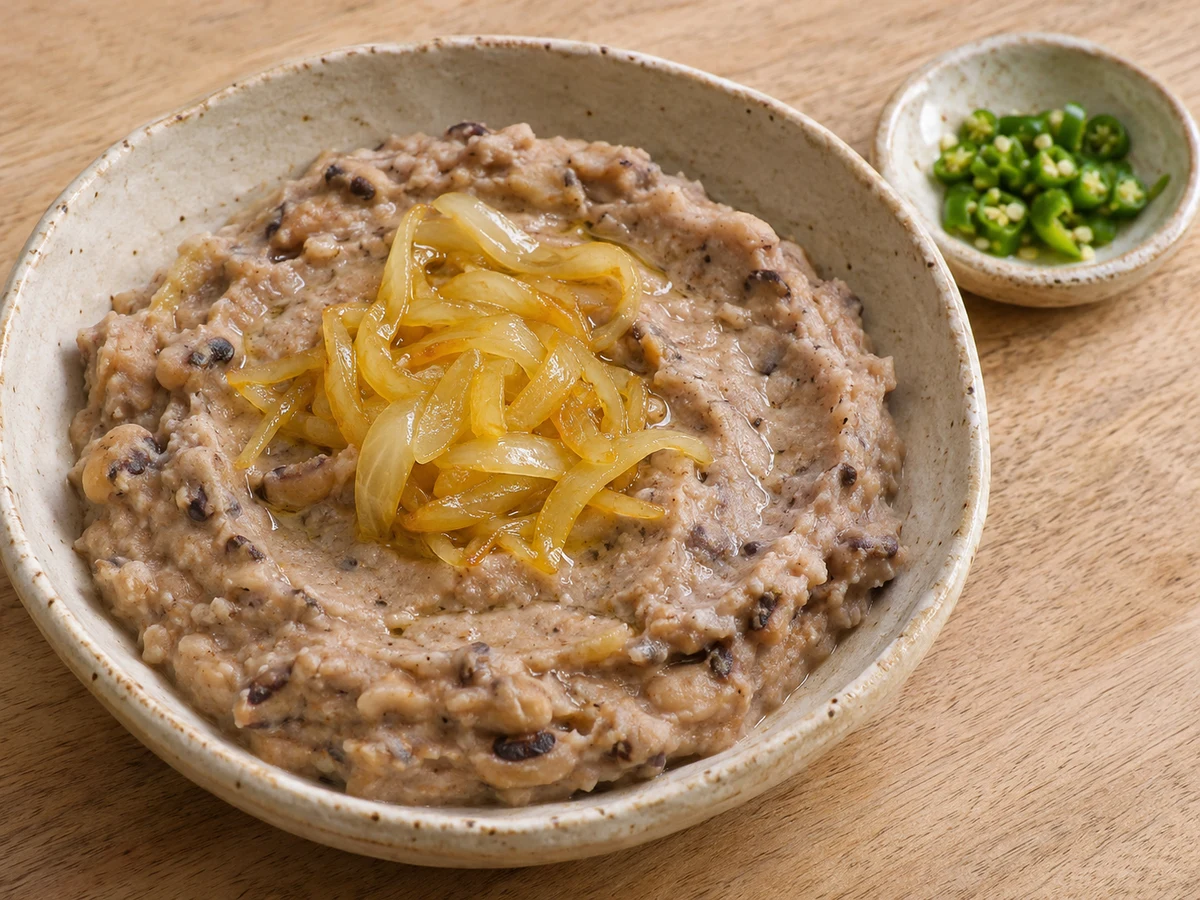
An adaptation of adowè using whole cowpeas mashed into a soft purée and topped with gently browned onions.
Ingredients
- 320 g dried whole cowpeas, not dehulled
- 200 g peeled onions
- 30 g sunflower oil
- 3 g salt, divided between purée and onions
- 5 g fresh green chilli, served separately
- 1 litre drinking water for soaking, then discarded
- 1.2 litres drinking water for cooking, plus a little hot water if needed
Preparation
Sort and rinse 320 g whole cowpeas. Cover with 1 litre water and refrigerate for an 8-hour soak.
Discard the soaking water, rinse and cook in 1.2 litres fresh water: bring to a boil, then simmer for 45–60 minutes or until completely tender. Top up with hot water as needed.
Add 2 g salt during the final 10 minutes. Check that several beans crush without a hard centre.
Slice 200 g onions and cook for about 15 minutes in 30 g oil with the remaining gram of salt over medium-low heat.
Reserve 200 ml cooking liquid and drain the beans. Mash without removing the skins, adding about 100 ml of that liquid.
Adjust gradually with the reserved liquid, reheat gently if necessary and rest for 5 minutes.
Divide the purée and all the onions with their oil between four plates. Offer the 5 g chopped chilli separately.
Introduction
Adowè puts the mild flavour of beans first. This version uses whole cowpeas, recognisable by their small dark eye, and turns them into a soft purée. Onions cooked separately provide a contrast of flavour and colour. Chilli remains a garnish everyone can add at the table: it should neither hide the beans nor make every guest eat a fiercely seasoned dish. The purée should hold a spoon mark while still spreading easily in a shallow bowl.
Using whole seeds is an explicitly identified editorial adaptation. Their skins remain, giving a slightly speckled colour rather than the whiter result obtained with dehulled beans. This is therefore not a new method presented as the only traditional form of adowè. The four portions are generous starters or components of a meal. Bread, gari, an egg or another topping are not included in the quantities or nutritional estimates.
Cultural context
Bénin Excellence describes adowè as a bean purée accompanied by onion and chilli, served with bread or gari, in connection with a competition organised in 2026. This first-hand association source documents the name and one serving style, without establishing exclusive origin or fixed proportions. This whole-cowpea formula is an explicitly identified culinary adaptation. It complements the first volume’s beans with gari and beans with red oil through a puréed texture and a distinct method. Source: https://fr.linkedin.com/posts/benin-excellence_r%C3%A9trospective-juin-%C3%A0-ao%C3%BBt-2026-%C3%A0-b%C3%A9nin-activity-7502697268857200640-v5S5
Tips
Weigh the cowpeas dry before soaking and the onions after peeling.
Retain every skin in this whole-seed version.
Loosen the purée with its cooking liquid in several small additions.
Do not confuse soft onions with burnt or crisp onions.
Keep chilli separate so everyone controls their seasoning.
Planning
Sort the beans on a light-coloured tray to spot stones and debris. Remove damaged seeds and rinse the rest in a sieve. Put them in a container large enough to accommodate expansion, add the litre of soaking water and cover. Refrigerate for eight hours. Cold storage is preferable to leaving them for many hours in a warm kitchen. Soaking is part of the organisation and total time, not extra minutes spent working at the stove.
After soaking, discard all the water and rinse the beans. Put them in a heavy saucepan with the 1.2 litres of cooking water. Bring to a proper boil, then adjust the heat to maintain a steady simmer. Skim if necessary and leave the lid slightly ajar. Allow forty-five to sixty minutes, sometimes longer for an older batch. Every fifteen minutes, check that the beans remain submerged. Add hot water in small amounts if the level drops too far: an almost dry saucepan will not finish cooking them properly.
The useful test is their texture. Take out several beans, let them cool slightly, then press them with the back of a spoon. The centre should collapse without a hard kernel. Visible skin is normal because it has not been removed. Floury flesh with a dry centre, however, needs more cooking. Add two grams of salt during the last ten minutes, once the beans are almost tender. Neither stock cubes nor bicarbonate are needed in this formula.
While the beans cook, halve the onions and cut into fine, even slices. Warm the thirty grams of oil in a frying pan, add the onions and the remaining gram of salt. Cook over medium-low heat for about fifteen minutes, stirring often. The slices should soften and turn pale golden, with a few browned edges. This is not a dry, crisp fried topping: it should remain soft. If the onions colour before becoming tender, lower the heat and add a spoonful of water from the saucepan.
When the cowpeas are very tender, collect two hundred millilitres of cooking liquid in a clean container, then drain the beans. Return them to the saucepan off the heat with about one hundred millilitres of the reserved liquid. Mash with a potato masher or a food mill with a plate wide enough to retain the skins in the purée. For a finer texture, briefly use an immersed hand blender, without prolonged whipping. Do not sieve afterwards: that would remove some ingredients and change the calculated values.
Add the remaining reserved liquid gradually, only as needed. The purée should be cohesive, neither stiff like a sliceable paste nor liquid like soup. If it has cooled, stir over low heat for two or three minutes. Rest for five minutes before judging the final consistency, because the beans continue to absorb moisture. Wash the chilli, remove its stalk and chop it on a separate board. Wash your hands after handling it and avoid touching your eyes.
Serving
Spoon the hot purée into four shallow bowls and make a slight hollow with the back of a spoon. Divide the onions and all the oil from the pan between the portions. Put the chilli in a small separate dish. A clean spoon dedicated to this garnish prevents accidental seasoning of the entire dish. If serving bread or gari, identify it as an additional accompaniment. For a meal with several dishes, divide into six smaller portions and adjust the nutritional figures per portion accordingly.
Storage
Transfer leftovers promptly to shallow containers and refrigerate at 4 °C or below before they have spent two hours at room temperature. Eat within forty-eight hours. Keep the chilli separate. To reheat, add a little drinking water and stir over low heat until the whole purée is thoroughly hot, reheating only the amount you will eat. Steam at the surface alone is insufficient if the bottom is still cold.
Variations
Dehulled cowpeas produce a paler purée, but require different weighing and nutritional calculation: the numbers in this recipe must not automatically be carried over. Red palm oil can replace sunflower oil at the same weight, giving a different colour and fat profile. This is another interpretation of the garnish; the oil is a replacement, not an extra addition. For less golden onions, simply stop cooking once they are translucent and tender.
Nutrition notes
The estimate covers one quarter of the preparation, without bread, gari or egg. Whole cowpeas are counted dry; all the oil and three grams of salt are included. The composition reference specifically concerns whole seeds and does not automatically apply to a dehulled version. Absorbed water changes the served weight, not the initial ingredient quantities. Losses in discarded cooking liquid are not measured: the figures remain approximate, not an analysis of the prepared dish.
Conclusion
For this adaptation, bean tenderness matters more than blender power. The seeds should crush before being made into purée. Gradual additions of water and unhurried onion cooking provide the intended contrast. This formula is offered for home cooking and is not declared kitchen-tested. Enjoy your meal!
Enjoy your meal
Enjoy your meal!