Sorghum flour cake with papaya and ginger
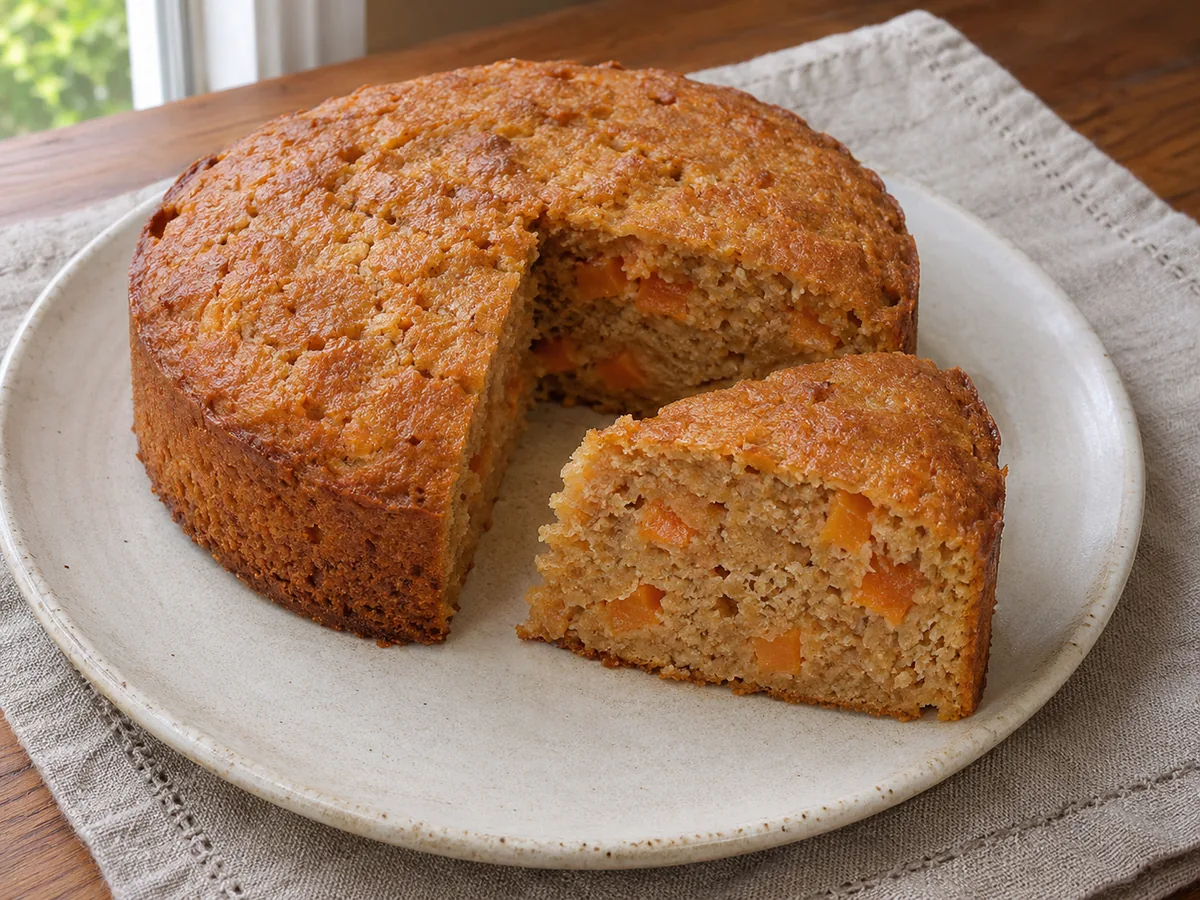
A small, compact, moist cake made with whole-grain sorghum flour, diced papaya and fresh ginger. A contemporary creation without added baking powder, for four slices.
Ingredients
- 180 g whole-grain sorghum flour
- 250 g ripe but firm raw papaya flesh, without skin or seeds
- 150 g raw eggs without shells, approximately 3 eggs adjusted by weighing
- 60 g white sugar
- 40 g mild-tasting extra virgin olive oil
- 10 g peeled fresh ginger
- 1 g salt
Preparation
Weigh 250 g peeled, deseeded raw papaya; cut into 1 cm dice and grate 10 g ginger.
Cook the papaya without added oil for 5–7 minutes; retain fruit and remaining juice, then cool for 10 minutes.
Preheat a conventional oven to 180 °C; line an 18 cm round tin with baking paper.
Mix 180 g whole-grain sorghum flour and 1 g salt. Weigh 150 g eggs without shells.
Whisk the eggs with 60 g sugar for 3 minutes; incorporate 40 g oil, then the ginger.
Fold in the flour in two batches, then the cooled papaya and its juice; transfer to the tin and level.
Bake for 40–45 minutes. Check a set centre, no raw batter on the blade and at least 74 °C at the centre; extend by 3–5 minutes if necessary.
Cool for 15 minutes in the tin, then 45 minutes on a rack; cut into four slices. Plan 150 minutes overall, excluding any extension.
Introduction
Whole-grain sorghum flour gives this cake a cereal flavour and a fairly close crumb. It is used as flour, rather than whole grains coarsely ground at the last moment. Eggs provide the binding; fruit brings moisture and some tender pieces. Without baking powder, the mixture is not designed as a tall, airy sponge. Expect modest height, slices that hold together after cooling and a moist texture without a raw centre.
This formula is a contemporary creation for Angola à table, with no claim to regional tradition or an ancestral recipe. The papaya is weighed raw after removing skin and seeds, then briefly precooked to control its water better. This step and the final cooling are part of the stated time. The quantities make an eighteen-centimetre round cake, divided into four; no topping, finishing sugar or accompaniment enters the calculation.
Cultural context
This combination of sorghum, papaya and ginger is presented as a current editorial proposal. It receives no invented regional name, family transmission story or status as a traditional Angolan cake. Ingredient choice alone does not document the history of a particular cake.
The country’s agricultural and food context can be consulted through FAO: https://www.fao.org/angola. This institutional source does not attest to this formula’s origin. USDA FoodData Central reference 168943 documents the composition of the whole-grain sorghum flour actually chosen.
Tips
Weigh sorghum in its whole-grain flour form, without confusing it with grain.
Use raw papaya as the reference weight and keep all its juice after precooking.
Let the fruit cool before adding it to the eggs.
Use baking paper rather than additional uncounted oil.
Check the centre has set, then wait for complete cooling before slicing.
Planning
Choose a ripe papaya whose flesh is firm enough to form small cubes. Wash the skin before cutting the fruit, remove skin and seeds, then weigh exactly 250 g raw flesh. Cut into dice about one centimetre across. A very soft papaya would become a purée and require another formulation. Finely grate the ten grams of peeled ginger to avoid long, pungent fibres in a mouthful.
Place the papaya in a nonstick frying pan without added fat. Heat over medium-low heat for five to seven minutes, stirring gently, until some free liquid evaporates. The aim is neither to dry out nor caramelise the fruit. Keep all the dice and all remaining juice: do not drain or blot on paper. The starting weight remains that of the raw fruit, and water loss is not treated as a measured nutrient loss.
Spread the papaya on a clean plate and let cool for ten minutes. It must no longer be scalding when it joins the eggs. During this time, preheat a conventional oven to 180 °C and line the base and sides of an eighteen-centimetre round tin with baking paper. The paper avoids an additional unmeasured quantity of fat. A much wider tin would create a thinner layer and require different baking.
Check that the packet really says “whole-grain sorghum flour”. Whole grain, coarse meal and a flour blend do not match the retained nutritional reference. Stir the flour to break up small lumps; a fairly broad sieve may help without deliberately removing the bran. Mix the one hundred and eighty grams of flour with the gram of salt. Do not add baking powder out of habit: this recipe plans a compact crumb and makes no promise of rising.
Crack the eggs into a separate container, check for shell fragments and weigh 150 g actually used. If necessary, beat an additional egg and take only the missing quantity. Whisk the eggs with the sixty grams of sugar for about three minutes until lighter in colour and slightly foamy. This aeration remains modest and does not guarantee a risen cake. Pour in the forty grams of oil in a thin stream while whisking, then incorporate the grated ginger.
Add the flour in two batches with a spatula, scraping the bottom so no dry pocket remains. Then gently fold in the cooled papaya and its remaining juice. The batter should be thick but spreadable, with distributed cubes rather than a fruit soup. Do not taste the raw batter, which contains flour and eggs. Transfer it all to the prepared tin and level the surface without banging hard to drive out all the incorporated air.
Bake on the middle rack for forty to forty-five minutes. Check from forty minutes: the centre should no longer ripple like liquid batter, and a blade should emerge with a few moist crumbs, without sticky raw batter. Avoid testing only in a piece of papaya, which is naturally wetter. A clean probe can check at least 74 °C at the centre for egg cooking, but this minimum does not replace checking that the crumb has set. Extend in three-to-five-minute stages if necessary, protecting the top if it becomes too dark.
Leave the cake in its tin for fifteen minutes, then carefully lift it out using the paper and continue cooling on a rack for forty-five minutes. Do not cut it scalding hot: the still-fragile crumb could seem pasty and fall apart. The one-hundred-and-fifty-minute schedule includes twenty-five minutes of preparation, fifty-five minutes allowed for precooking fruit and baking, and seventy minutes of cooling overall, including the ten minutes reserved for papaya. Any baking extension increases this time.
Serving
Cut the completely cooled cake with a clean knife, wiping the blade between slices if papaya pieces stick to it. Divide into four quarters as evenly as possible. The crumb should be moist and cohesive, rather than elastic like a cake rich in wheat flour. Serving alone lets the ginger be appreciated without masking the fruit’s sweetness. An unsweetened drink may accompany it, but is not included in the serving values.
Storage
After the planned cooling, put the cake in a clean, closed container in the refrigerator at no more than 4 °C. Do not exceed two hours at room temperature after removal from the oven, including cooling. The presence of moist fruit and eggs means this cake should not be left on the worktop for several days. Consume within forty-eight hours. Remove only the slices needed; they may stand for five minutes before eating. Avoid repeated reheating and cooling cycles.
Variations
For a milder batch another time, reduce the ginger, knowing that exact values change slightly. Replacing whole-grain flour with refined sorghum flour would require a new nutritional reference and could alter liquid absorption. Adding mashed banana or more papaya is not a neutral substitution: the extra moisture may prevent the centre setting. No egg replacement is proposed without reworking the binding and timings. Check labels if allergen restrictions apply; the recipe contains egg.
Nutrition notes
Flour and sugar contribute carbohydrates; eggs provide protein and binding, while oil supplies most of the added fat. Whole-grain flour also contributes fibre. The calculation uses the actual USDA reference “Sorghum flour, whole-grain”, with reported sodium, and papaya weighed raw. Available carbohydrates are distinguished from fibre when applying USDA data. All oil, sugar and salt quantities are included. Values per quarter remain estimates and carry no therapeutic promise.
Conclusion
The cake depends on measured binding, controlled moisture and baking checked at the centre. Gentle papaya precooking limits free liquid while preserving the pieces, and cooling lets the crumb stabilise. The compact texture is part of this version’s intention without baking powder. This editorial formula is not claimed to have been kitchen-tested.
Enjoy your meal
Enjoy your meal!