Pan-seared pineapple with ginguba and lime
Fresh pineapple pieces lightly browned in a pan, coated with their lime-flavoured juices and scattered with unsalted roasted peanuts. A contemporary creation for Angola à table.
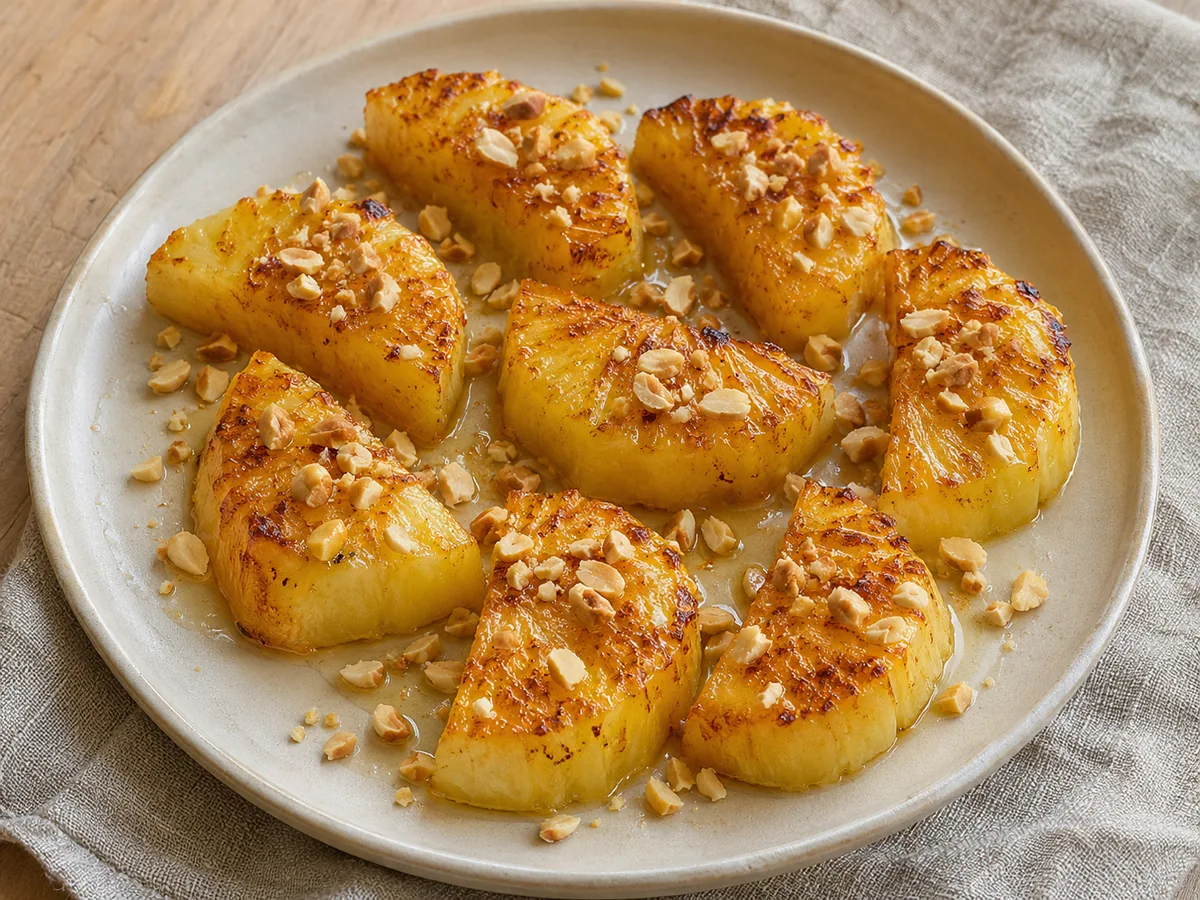
Ingredients
- 600 g fresh raw pineapple flesh without peel or tough core, including cutting juices
- 40 g already roasted shelled peanuts without added salt
- 20 g pure seedless lime juice
- 10 g olive oil
- 15 g white sugar
- 20 ml drinking water for the coating
- Salt: none added
Preparation
Prepare 600 g pineapple flesh and recovered juice without peel or tough core; divide flesh into 8 comparable pieces about 2 cm thick.
Chop 40 g unsalted roasted peanuts. Weigh 20 g lime juice, 10 g oil and 15 g sugar; measure 20 ml water.
Sear half the pineapple in 5 g oil for approximately 3 minutes per face, or 6 minutes, then reserve on a clean dish.
Cook the second half in remaining 5 g oil, also 3 minutes per face, or 6 minutes.
Lower heat; add 20 ml water, all recovered juice and 15 g sugar. Stir approximately 2 minutes to dissolve sugar and release pan juices.
Off the heat, fold in 20 g lime juice and turn all pieces in the coating.
Cool to lukewarm for 5 minutes, divide into four portions of 2 pieces with juices and share peanuts at the last moment.
Introduction
Pineapple is seared in pieces thick enough to keep juicy flesh beneath golden contact faces. Juices recovered from the pan become a light coating with a small measured quantity of sugar. Ginguba, here unsalted roasted peanuts, is added at the last moment to preserve crunchy fragments. Lime finishes off the heat without prolonged cooking that would lose its freshness.
This recipe is a contemporary creation for Angola à table. It claims no ancient regional origin and does not make the combination of fruit and peanut into a documented tradition. Quantities provide four desserts, with two comparable pieces per serving. Sorbet, cream, biscuits and additional garnishes are outside the nutritional calculation.
Cultural context
Ginguba refers to peanuts in the Angolan context. The proposed format, pan-seared fruit with lime coating, remains a contemporary editorial creation. Ingredients encountered in a country do not by themselves establish a traditional history for a precise combination.
FAO in Angola provides an institutional starting point for agricultural and food context: https://www.fao.org/angola. This resource documents general surroundings without certifying the recipe. The name therefore describes fruit, technique and finishing ingredients without inventing a local designation.
Tips
Weigh usable flesh after peeling, retaining cutting juices.
Do not overcrowd the pan: piled pieces release water and brown less.
Turn with a wide spatula to keep pieces intact.
Dissolve sugar in finishing liquid, not dry at the start.
Disclose peanuts to diners and distribute the 40 g across the whole dessert.
Planning
Choose pineapple with sound, fragrant flesh firm enough to turn. Wash the rind before cutting, then remove peel, eyes and tough core. Work over a clean plate to collect juices. Weigh 600 g usable flesh and recovered juice together, excluding waste. Divide flesh into eight similarly thick pieces, around two centimetres, in half-rounds or quarters depending on fruit size.
Let pieces stand briefly on a plate and retain all released liquid. If faces are very wet, lightly blot with clean paper without squeezing flesh. The aim is not to extract juice but to limit splashes when touching the hot pan. Thin pieces would tear when turned; very uneven thickness would require removing the first before the last are golden.
Check peanuts are already roasted, unsalted and sound. Chop on a stable board into small pieces rather than grinding into paste. Keep dry until serving. Squeeze and strain lime, then weigh 20 g juice. Separately measure 10 g oil, 15 g sugar and 20 ml water. No salt is added; nutritional salt comes only from the reference ingredients.
Use a large heavy-based frying pan that holds four pieces without overlapping. Heat over medium-high heat, add 5 g oil and spread over the base. Put in half the pineapple and cook approximately three minutes on one face without constantly moving. Turn with a wide spatula and cook three minutes on the other face. Seek localised golden colouring and still juicy flesh, not blackened areas or dried-out slices.
Reserve cooked pieces on a clean serving dish. Add remaining 5 g oil and cook the second half similarly, three minutes per face. Heat intensity depends on equipment: lower it if juices darken before fruit colours. Twelve minutes total searing assumes two batches. Do not add sugar at the start to an almost dry pan, where it could burn before pineapple is properly seared.
Lower heat and carefully pour in 20 ml water with juice recovered during cutting and resting. Add 15 g sugar, stir and release pan juices with a spatula for approximately two minutes. Sugar should dissolve in a mobile liquid. Remove the pan from heat before incorporating 20 g lime juice. Return pineapple pieces and turn in the coating without crushing. Discard neither liquid nor edible pan juices, since both are included in the formula.
Cool to lukewarm for five minutes, then divide pineapple and juices into four portions. Add chopped peanuts just before serving. The stated fifteen minutes includes both batches and quick coating preparation; adapt if the pan cannot hold four pieces at once. Uneven colouring is normal with fresh fruit and does not justify overcooking pieces already ready.
Serving
Serve lukewarm rather than burning hot to appreciate fruit and avoid overly hot coating in the mouth. Divide two pieces per person, then share liquid and peanut fragments equally. A portion containing half the peanuts does not have the nutrients of one quarter of the recipe. The dessert stands alone; ice cream or cream may be offered separately but changes serving quantities and values.
Storage
If keeping some, promptly cool fruit and juices in a shallow container, then refrigerate at no more than 4 °C within two hours of cooking. Consume within forty-eight hours. Keep peanuts intended for an unserved portion dry and add when eating. Reheat fruit only if needed without letting sugar burn; it may also be eaten cold. Do not store a dish left for a long time on a warm table.
Variations
For softer texture, choose naturally riper but sound fruit rather than substantially extending searing. Pineapple in syrup is not a direct replacement: sugar and liquid differ from fresh flesh. Reducing added sugar is possible to taste, but the consumed formula and estimate then change. Replacing or omitting peanuts changes allergens, crunch and nutrients; clearly present this other version.
Nutrition notes
The calculation includes all weighed pineapple flesh, recovered juice, peanuts, oil, sugar and lime. Liquid does not become energy-free because it sits at the bottom of the pan: it should be divided with dessert. Values cover one quarter of the complete preparation. They remain approximate according to fruit ripeness and actual losses and carry no therapeutic promise.
Conclusion
Uniform pieces, two spaced batches and coating prepared after searing provide simple guides. Peanut goes in late for texture and lime off the heat to finish. Sharing juices as carefully as pieces makes servings more consistent. This editorial proposal is not represented as kitchen-tested.
Enjoy your meal
Enjoy your meal!