Small corn cakes with mango
Eight low, tender cakes made with fine corn flour and mango, for four servings of two pieces. A contemporary creation without added raising agent.
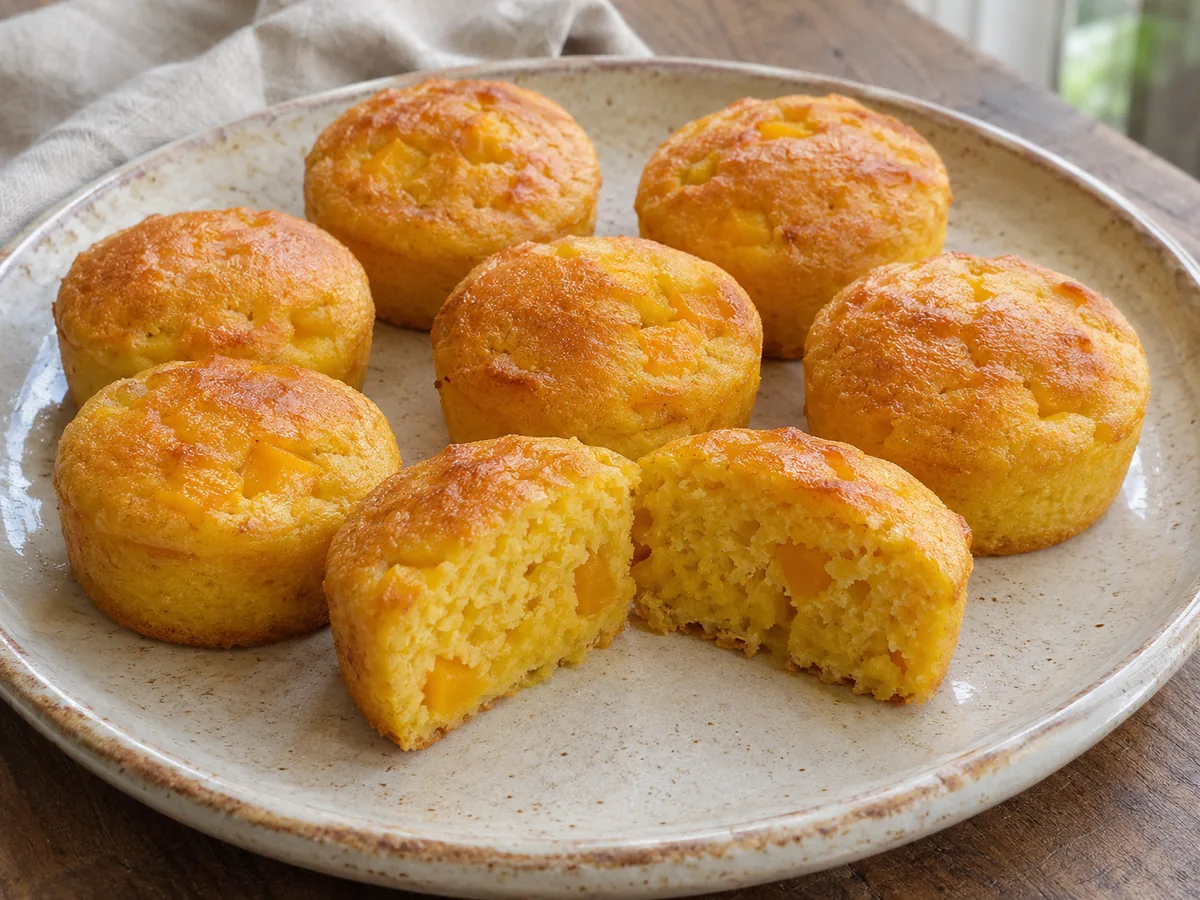
Ingredients
- 200 g fine yellow corn flour, raw, not precooked or nixtamalised, not corn starch
- 300 g raw ripe mango flesh without skin or stone: 200 g puréed and 100 g finely diced
- 100 g raw whole egg without shell, approximately two eggs, weighed after mixing
- 120 g unsweetened coconut milk, homogenised
- 20 g sunflower oil, all mixed into the batter
- 30 g white sugar
- 1 g salt
Preparation
Prepare eight 150–180 ml silicone moulds on a tray; weigh ingredients, including 100 g shell-free egg.
Purée 200 g mango and cut the remaining 100 g into 5 mm dice.
Mix 200 g fine raw corn flour with 30 g sugar and 1 g salt; separately combine purée, egg, 120 g coconut milk and 20 g oil.
Combine mixtures, fold in dice and hydrate 15 minutes in the refrigerator; preheat a conventional oven to 170 °C.
Divide between eight moulds and bake 30–35 minutes, until the crumb is cooked rather than doughy and several centres reach at least 72 °C; extend if needed.
Cool 10 minutes in moulds then 20 minutes on a rack, 30 minutes included in the total.
Serve two pieces per person. Approximate total: 100 minutes, including rest and cooling.
Introduction
These small cakes combine finely ground corn flour with mango flesh, eggs and a little coconut milk. Their intended texture is moist, close and slightly crumbly around the edges, with a cooked crumb that holds when cut. They are not designed as tall airy muffins. No raising agent is used, so the recipe promises no dramatic rise. Mango should provide fragrance without turning the centre into raw purée.
The chosen flour is fine yellow corn flour, raw and not precooked, rather than corn starch. Coarse polenta meal, nixtamalised flour or an instant product would not necessarily absorb in the same way. These distinctions matter more than the packaging colour. This contemporary Angola à table proposal makes eight pieces, two per person, and claims no documented traditional pastry.
Cultural context
Corn and mango come together here in a contemporary editorial creation. Their presence is not enough to attribute the cake to an Angolan province, ceremony or family heritage. The individual format mainly helps divide batter and cook centres.
FAO in Angola offers a way to explore national agricultural and food context: https://www.fao.org/angola. General raw-flour precautions are documented by the FDA: https://www.fda.gov/food/buy-store-serve-safe-food/handling-flour-safely-what-you-need-know. Never taste raw batter; clean utensils and hands after handling. These resources do not validate this recipe as a local tradition.
Tips
Read “corn flour” and check for a fine, non-precooked grind rather than relying on yellow colour.
Weigh eggs without shells and mango without waste.
Keep the 15-minute rest chilled, then divide batter evenly.
Distinguish a moist fruit trace from a pocket of uncooked floury batter.
Let crumb firm before unmoulding and transporting.
Planning
Provide eight individual food-grade silicone moulds, each holding 150–180 ml, on a rigid baking tray. They avoid adding uncounted greasing fat. Use clean moulds, suitable for the oven and in good condition. One deep mould would change the time required at the centre. Set out scales and a clean small probe; with this fruit and flour mixture, a golden surface alone does not describe the inside.
Wash the whole mango before cutting. Remove skin and stone, then weigh 300 g usable flesh. Finely mash 200 g with a fork or blender; cut the remaining 100 g into approximately five-millimetre dice. Choose ripe fruit without fermentation or damaged areas. Keep all edible juice with the weighed amounts. A fibrous mango benefits from careful puréeing, without subsequently discarding part of the flesh.
Crack eggs into a separate small container, mix them and take exactly 100 g without shell. Two eggs are only a buying guide; weight determines the formula. Refrigerate any excess for another use. Wash hands after touching shells and clean surfaces in contact with raw egg. Homogenise coconut milk in its container before weighing 120 g, as the fatty part may have separated.
Mix flour, sugar and the gram of salt in a bowl. In another, combine mango purée, weighed eggs, coconut milk and the twenty grams of oil. Whisk just enough to make a uniform liquid, without trying to whip eggs into foam. Pour liquid over powders, stir with a spatula until no dry pockets remain, then fold in diced fruit. Scrape the sides so none of the flour remains outside the batter.
Let the batter hydrate for fifteen minutes in the refrigerator. This rest forms part of the total time; it is not fermentation. Meanwhile preheat the oven to 170 °C conventional heat with a shelf in the middle. The intended batter is thick but spoonable. Very coarse or precooked flour would need different development: do not randomly correct with lots of water or flour while retaining this sheet’s figures.
Divide batter equally between eight moulds, scraping the bowl. Lightly smooth the tops without pressing firmly. Bake approximately thirty to thirty-five minutes. Edges should be set and centres offer soft resistance; a skewer should emerge without liquid floury batter, although a moist mango trace is possible. Also check at least 72 °C at the centres of several cakes, without touching the mould. This temperature checks eggs but does not replace complete flour cooking. Extend in short increments if the centre remains doughy.
Leave cakes in their moulds for ten minutes outside the oven, then carefully turn out onto a rack for another twenty minutes. This thirty-minute cooling is included in the indicative hundred minutes, together with twenty minutes preparation, fifteen hydration and thirty-five baking. Crumb firms as heat dissipates; immediate unmoulding encourages breakage. Serve then, or refrigerate without waiting for prolonged countertop cooling.
Serving
Present two pieces per person, without topping added to the calculation. Small dice make the fruit visible without requiring decoration. These cakes suit fingers or a small fork while the crumb remains delicate. A drink may accompany them but is not included in the stated values. Declare egg; check flour packaging for any other possible allergens.
Storage
This moist bake contains fruit and egg: do not automatically apply dry biscuit storage rules. Place cooled cakes in a clean container in the refrigerator at no more than 4 °C, within two hours after baking, or one hour if the surroundings exceed 32 °C. Eat within forty-eight hours, cold or after briefly bringing only the serving portion towards room temperature. Do not keep a batch left for a long time on a warm table.
Variations
Another mango variety changes acidity, water content and sweetness, even at equal weight. Keeping quantities gives a starting point without guaranteeing identical results. Replacing flour with starch, polenta or precooked flour would require a new formula; these are not silent substitutions. Adding raising agent, nuts, chocolate or icing would also change texture and nutritional values.
Nutrition notes
The formula counts dry raw flour, all mango flesh, shell-free eggs, homogenised coconut milk, oil, sugar and salt. One serving is two cakes out of eight, one quarter of the entire batch. The generic coconut milk reference may differ from an actual brand. Fruit does not make the bake sugar-free, and no health promise accompanies the calculated estimates.
Conclusion
Clearly defined flour, a short rest and checked baking establish these modest-height cakes. Mango adds moisture that calls for attention both to storage and unmoulding. This creation is offered for cooking without being declared kitchen-tested.
Enjoy your meal
Enjoy your meal!