Kid goat stew with aubergine and tomato
Boneless kid goat gently cooks in tomato, then meets previously roasted aubergine. A contemporary creation.
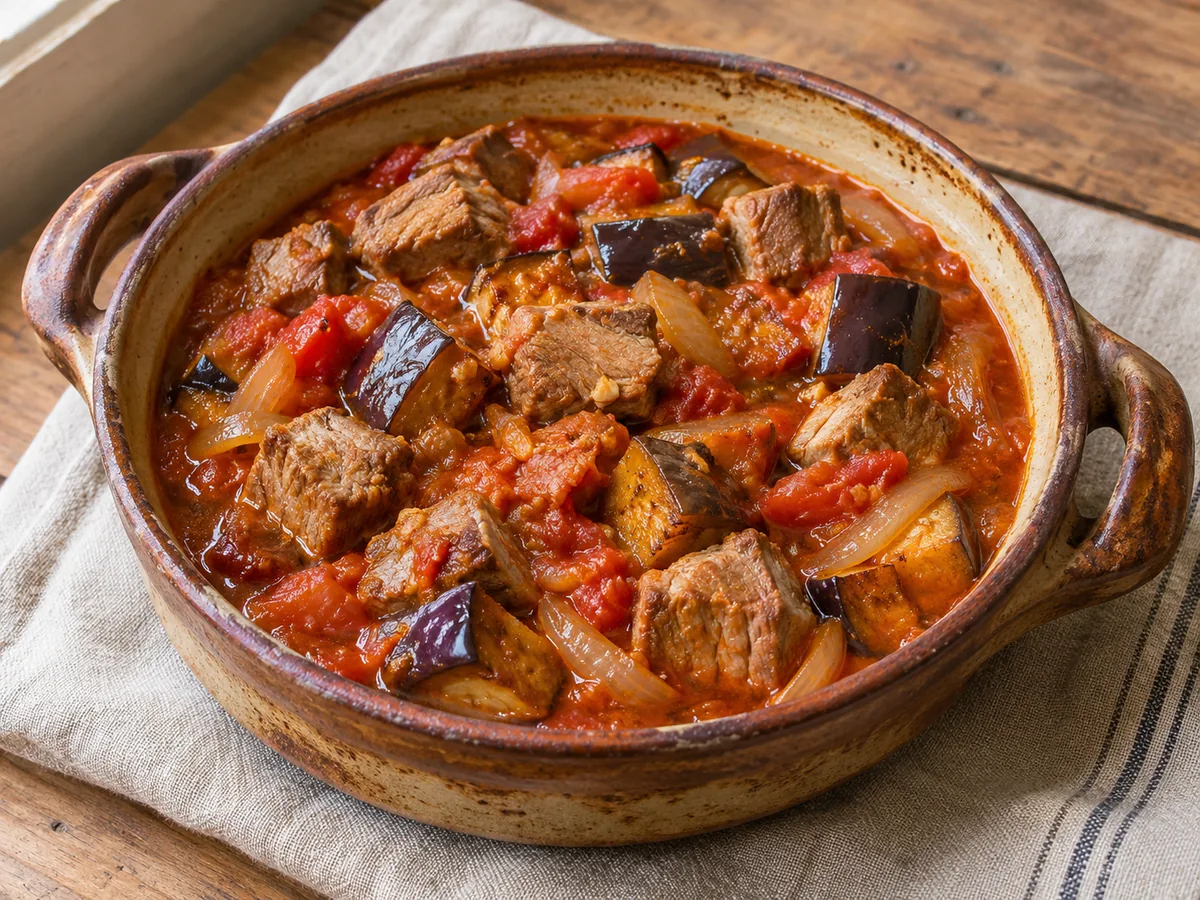
Ingredients
- 600 g raw boneless kid goat for stewing, edible weight
- 600 g raw aubergine with skin, stalk removed
- 500 g raw tomatoes with their juice
- 200 g peeled onion
- 10 g peeled garlic
- 15 g peeled fresh ginger
- 25 g olive oil, 10 g for casserole and 15 g for aubergines
- 300 ml drinking water, plus a small hot reserve if needed
- 3 g salt
Preparation
Prepare 600 g aubergine in 3 cm cubes, 500 g tomatoes with their juice, 200 g onion, 10 g garlic and 15 g ginger.
Bone and weigh 600 g raw kid goat, cut into 3 cm cubes and pat dry; clean raw-meat utensils.
Brown meat in 10 g oil in two approximately 4-minute batches, then reserve.
Soften onion for 8 minutes, add garlic and ginger for 1 minute, then tomatoes for 5 minutes. Return meat, 300 ml water in total and 3 g salt.
Cover and simmer for 50 minutes, watching liquid; extend kid goat alone in 10-minute intervals if still firm.
In parallel toss aubergine with 15 g oil and roast at 200 °C for 25–30 minutes, turning halfway.
When meat starts becoming tender, add roasted aubergines and cook for 15 minutes. Check at least 74 °C at the centre and tenderness, rest for 5 minutes and serve four portions.
Introduction
Aubergines are not fried in a large amount of oil: they are coated with a measured share and roasted before joining the casserole. Their flesh becomes tender while retaining some recognisable cubes. The kid goat starts separately in a tomato, onion, garlic and ginger base. Final assembly is brief so vegetables do not all turn into purée.
This contemporary creation belongs to Angola à table without claiming to be an identified traditional Angolan recipe. Kid goat is a young animal, distinct from an adult goat whose cooking time and composition may differ. The formula and nutritional reference therefore specifically concern raw boneless kid goat. Four portions are planned; no cereal or additional garnish is counted.
Cultural context
This proposal uses young goat meat and vegetables in a contemporary stew. Angola identifies the editorial setting without attributing unproven age or regional origins to the mixture. The name specifies kid goat to remain faithful to the chosen product and composition reference, not to relabel adult meat.
The FAO representation in Angola provides institutional access to the country's agricultural and food context: https://www.fao.org/angola. That context is not validation of this specific recipe. A new creation can be described clearly while leaving room for documented traditional preparations.
Tips
Weigh aubergines after removing stalks and meat after boning.
Distribute fifteen grams of oil over all aubergine cubes before roasting.
Avoid an overcrowded tray that would steam aubergines.
Check meat before assembly to avoid unnecessarily extending vegetable cooking.
Correct sauce volume with a little hot water rather than unmeasured oil.
Planning
Wash aubergines and tomatoes before handling meat. Remove aubergine stalks and weigh 600 g with skin. Cut uniform approximately three-centimetre cubes. Skin helps pieces hold their shape; small dice would disappear faster into the sauce. Dice tomatoes with all their juice, then separately chop onion and garlic. Grate ginger and prepare measured water and salt.
Prepare kid goat on a board reserved for raw meat. Remove bone fragments and readily detachable thick membranes, then weigh 600 g edible meat. Pieces must be boned before weighing, not counted with bones later left on plates. Cut approximately three-centimetre cubes and pat dry. Thoroughly clean hands, knife and board before returning to vegetables. Do not rinse meat under the tap, to avoid splashes around the sink.
Heat ten grams of oil in a heavy casserole holding about four litres. Brown kid goat in two batches of approximately four minutes each, then reserve in a clean container. Lower heat and add two hundred grams of onion. Soften for eight minutes, loosening browned juices with a spoonful from the measured water if needed. Add garlic and ginger for one minute, then tomatoes and their juice. Cook for five minutes, stirring.
Return meat, pour in the remainder of the three hundred millilitres of water and three grams of salt, then bring to a gentle simmer. Cover and cook over low heat for fifty minutes. Check halfway that the bottom remains moist and nothing sticks. Add a little hot water if sauce becomes too thick before meat is tender. Tomato contributes liquid, but ripeness and pot width change evaporation.
During simmering, preheat a conventional oven to 200 °C. Toss aubergine cubes with the reserved fifteen grams of oil, distributing evenly. Spread in a single layer on a baking-paper-lined tray and roast for twenty-five to thirty minutes, turning halfway. They should be soft and lightly coloured, neither burnt nor dry. Time roasting during the second half of simmering so aubergines arrive hot for assembly.
After fifty minutes, test a large meat cube with a fork. If strongly resistant, continue cooking kid goat alone in ten-minute intervals, keeping aubergines separate. When meat begins to yield easily, fold in roasted cubes and any edible tray juices and simmer for fifteen minutes. Stir by lifting without crushing aubergines. Check at least 74 °C at the centre of a large piece with a clean probe and tender flesh. The stated hundred-minute cooking time includes casserole operations; the oven runs in parallel. Rest off the heat for five minutes.
Serving
Use a broad ladle or serving spoon to share meat, then aubergines and sauce. Keeping cubes visible makes presentation clearer than prolonged stirring. Use deep plates to retain tomato and juices. Rice, bread or another base can be served separately, but this accompaniment is outside the stated quantities and values.
Storage
Promptly divide leftovers between several shallow containers, keeping meat with sauce. Refrigerate at no more than 4 °C within two hours of cooking and consume within forty-eight hours. Reheat only the amount needed until evenly hot, stirring gently. Aubergines will be softer after reheating; longer cooking will not restore their original firmness. Do not leave the casserole lukewarm outside refrigeration all evening.
Variations
Slightly larger aubergine pieces retain more shape but require checking tenderness in the oven. Changing size without observing cooking is insufficient. Adult goat does not automatically replace kid goat: timing, cutting and nutritional estimation would require revision. Adding coconut milk, tomato concentrate or peanuts also changes the formula; those variations are excluded from the calculation.
Nutrition notes
Kid goat provides most of the protein, while aubergines, tomato and onion contribute particularly to fibre and carbohydrates. Data use raw edible weights and all oil, for both oven and casserole. Consumed juices remain included. Actual fat varies with cut and trimming; an average reference is not a measurement of the served dish. Figures justify no medical promise.
Conclusion
Parallel cooking prepares aubergines while kid goat softens, then brings them together without a long final cooking stage. Moisture at the bottom, checking meat before vegetables are added and gentle mixing protect texture. Carefully sharing solids and sauce gives four comparable portions. This contemporary editorial formula is not declared kitchen-tested.
Enjoy your meal
Enjoy your meal!