Braised beef with chickpeas and lemon
Beef chuck slowly simmered with an onion base, then cooked chickpeas and a lemon finish. A contemporary creation.
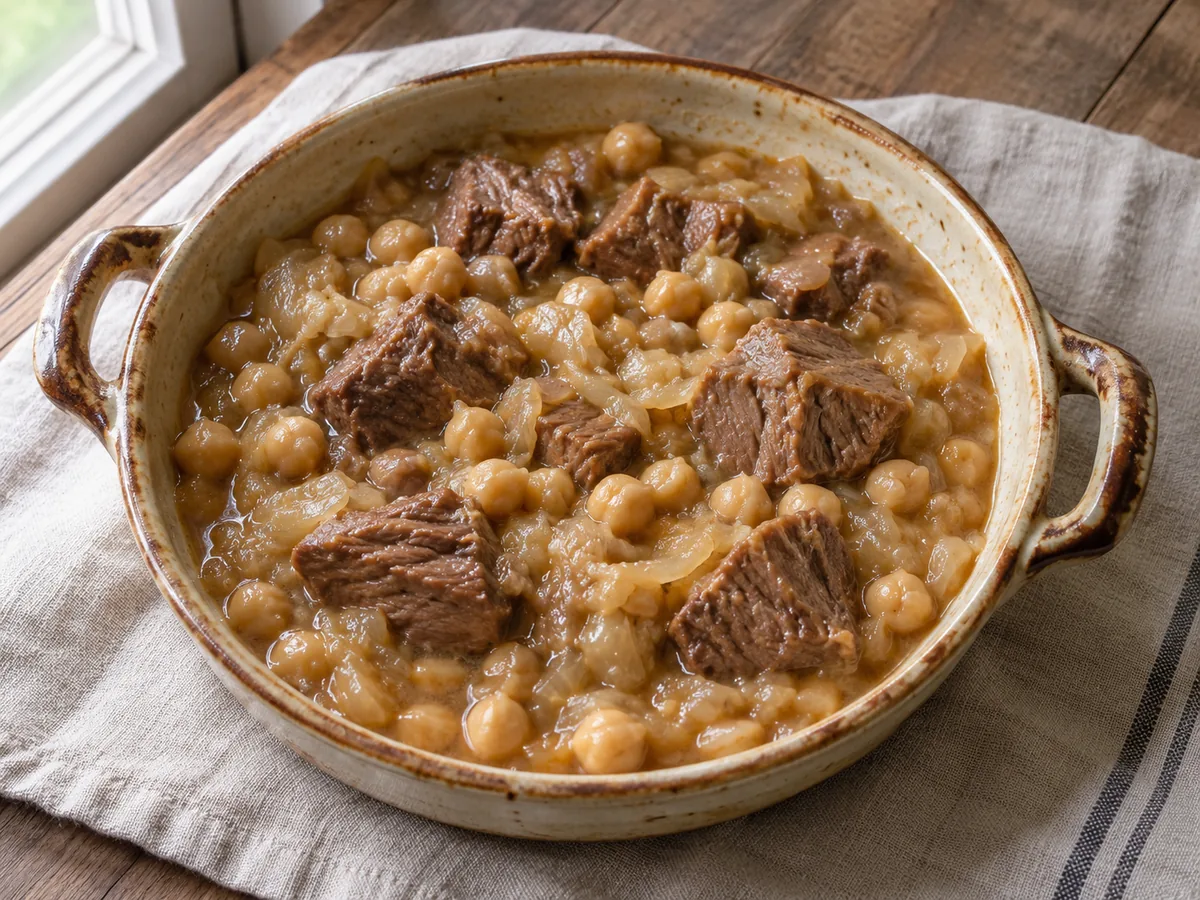
Ingredients
- 600 g raw boneless beef chuck, edible weight
- 500 g chickpeas already boiled without added salt, drained
- 200 g peeled onion
- 10 g peeled garlic
- 25 g olive oil
- 30 g pure strained lemon juice
- 500 ml drinking water, plus a small hot reserve if needed
- 3 g salt
Preparation
Thinly slice 200 g onion, chop 10 g garlic, prepare 30 g strained lemon juice and drain 500 g chickpeas cooked without added salt.
Cut 600 g chuck into 3 cm cubes and pat dry; clean utensils that touched raw meat.
Heat 25 g oil and brown meat in two batches of about 4 minutes; reserve.
Cook onion for 8 minutes, add garlic for 1 minute, then return meat, 500 ml water in total and 3 g salt.
Cover and simmer for 120 minutes, checking juices every 30 minutes. Extend beef alone in 15-minute intervals if still firm.
Add chickpeas when meat is nearly tender and gently cook for 20 minutes; check heat and tenderness, at least 74 °C at the checked centre.
Off the heat fold in lemon, rest for 5 minutes and divide into four portions.
Introduction
This dish separates two stages: a braising cut of beef must become tender, whereas already-cooked chickpeas only need heating and taking on the juices' flavour. Adding them from the beginning would make them break down while the meat remained firm. Lemon is added off the heat for a clean finish to onion juices, with neither tomatoes nor cream in this formula.
The recipe belongs to Angola à table's contemporary creations. It is not presented as a named traditional Angolan dish or documented family recipe. Chuck is chosen for long, gentle cooking; a lean steak behaves differently. Quantities provide four portions of meat and pulses, without bread, rice or another accompaniment in the calculation.
Cultural context
Braising allows certain meat cuts to be cooked differently from quick methods. This combination of chuck, chickpeas and lemon is a contemporary proposal within a collection devoted to Angola; it receives no invented regional name. Referencing the country does not prove every proposed ingredient combination's historical origin.
The FAO representation in Angola is an institutional starting point for the country's agriculture and food: https://www.fao.org/angola. It documents context without certifying the age or provenance of this particular braise.
Tips
Weigh boneless meat before cooking and cooked chickpeas after draining.
Brown in two batches so meat does not boil in its own water.
Check tenderness before pulses are added.
Keep hot water for correcting juices without a lengthy interruption to simmering.
Add lemon only after cooking finishes, and do not confuse acidity with insufficient salt.
Planning
Prepare onion and garlic on a clean board before handling meat. Thinly slice onion so it gradually melts into the juices, and chop garlic. Squeeze and strain lemon, then weigh thirty grams of seed-free juice. Refrigerate until finishing. Check chickpeas: their centres should be tender, and they are weighed after draining. Prior cooking from dried seeds is excluded from the stated times.
Prepare chuck on a board reserved for raw meat. Remove readily detachable thick membranes and any small bone fragments, then weigh the 600 g actually used. Cut approximately three-centimetre cubes. Uniform size makes it easier to assess several pieces without finding a large firm cube among smaller disintegrating ones. Pat surfaces dry and clean hands, knife and board before returning to other ingredients.
Heat twenty-five grams of oil in a heavy casserole holding at least three litres. Brown meat in two batches, about four minutes each, turning without constant stirring. Reserve in a clean container. Browning develops juices but does not constitute complete cooking. Lower the heat, add onion and cook for eight minutes. If it sticks, loosen with a spoonful from the five hundred millilitres of water; do not pour in additional oil.
Add garlic for one minute, return meat and pour in remaining water with three grams of salt. Gently loosen browned juices with a wooden spoon, then bring to a quiet simmer. Cover and cook over low heat for two hours. Check the bottom about every thirty minutes: juices should remain, without vigorous boiling or meat drying against the sides. Add a little hot water if needed. A very wide pot or poorly fitting lid can lose more liquid.
Test a large cube with a fork before adding chickpeas. The flesh should already yield fairly easily. If still firm, continue cooking beef alone in fifteen-minute intervals, adding water if needed. Older meat or a different cut may require this extra time. When tenderness approaches the desired result, fold in chickpeas and simmer gently for twenty minutes, stirring once or twice to avoid crushing them.
Check tender beef and chickpeas hot at the centre; a clean probe can check at least 74 °C in a large meat piece and the reheated preparation. Turn off heat and fold in thirty grams of lemon juice. Mix by lifting and rest for five minutes. If juices look excessive before lemon is added, temporarily remove solids and reduce liquid for a few minutes; do not boil chickpeas for a long time to thicken. The 165-minute cooking time is a guide including browning and heating.
Serving
Distribute meat first, then chickpeas and finally lemon juices between four deep plates. This avoids one portion mostly pulses and another nearly all meat. Soft onion belongs in the juices and is not strained out. Present any accompaniment separately because the stated values cover only the braise. Taste everything together before adding salt or another squeeze of lemon.
Storage
If previously chilled chickpeas are reheated in this braise, plan to eat immediately rather than organise another cooling and reheating cycle. With chickpeas freshly cooked for this preparation, promptly divide leftovers into shallow containers, refrigerate at no more than 4 °C within two hours and consume within forty-eight hours. Reheat only required portions until uniformly hot. Keep meat with its juices to reduce drying.
Variations
For lightly thickened juices, mash a small spoonful of the specified chickpeas before adding; keep the remainder whole. This still differs from a flour-thickened sauce. Using less lemon gives a less acidic finish but slightly changes the exact nutritional formula. Replacing chuck with tenderloin or using already-cooked meat requires a complete reassessment of timing rather than repeating two hours of simmering.
Nutrition notes
Chuck and chickpeas both contribute protein; pulses also provide fibre and carbohydrates. Calculation uses cooked drained chickpeas, not the same dry weight. All oil and salt are included, along with consumed cooking juices. Actual fat in the meat may differ from the composition reference. Values per quarter remain dietary estimates without therapeutic claims.
Conclusion
Patience benefits the meat first; chickpeas arrive later to preserve shape. A quiet simmer, a continually moist bottom and checking a large cube are more useful than violent reduction. Lemon finishes the dish once tenderness is achieved. Carefully distributing meat, grains and juices gives four consistent portions. This editorial formula is not declared kitchen-tested.
Enjoy your meal
Enjoy your meal!