Turkey with cabbage, sweetcorn and ginger
Boneless turkey breast pieces cook gently with white cabbage, sweetcorn and fresh ginger in light juices. A contemporary creation for Angola à table.
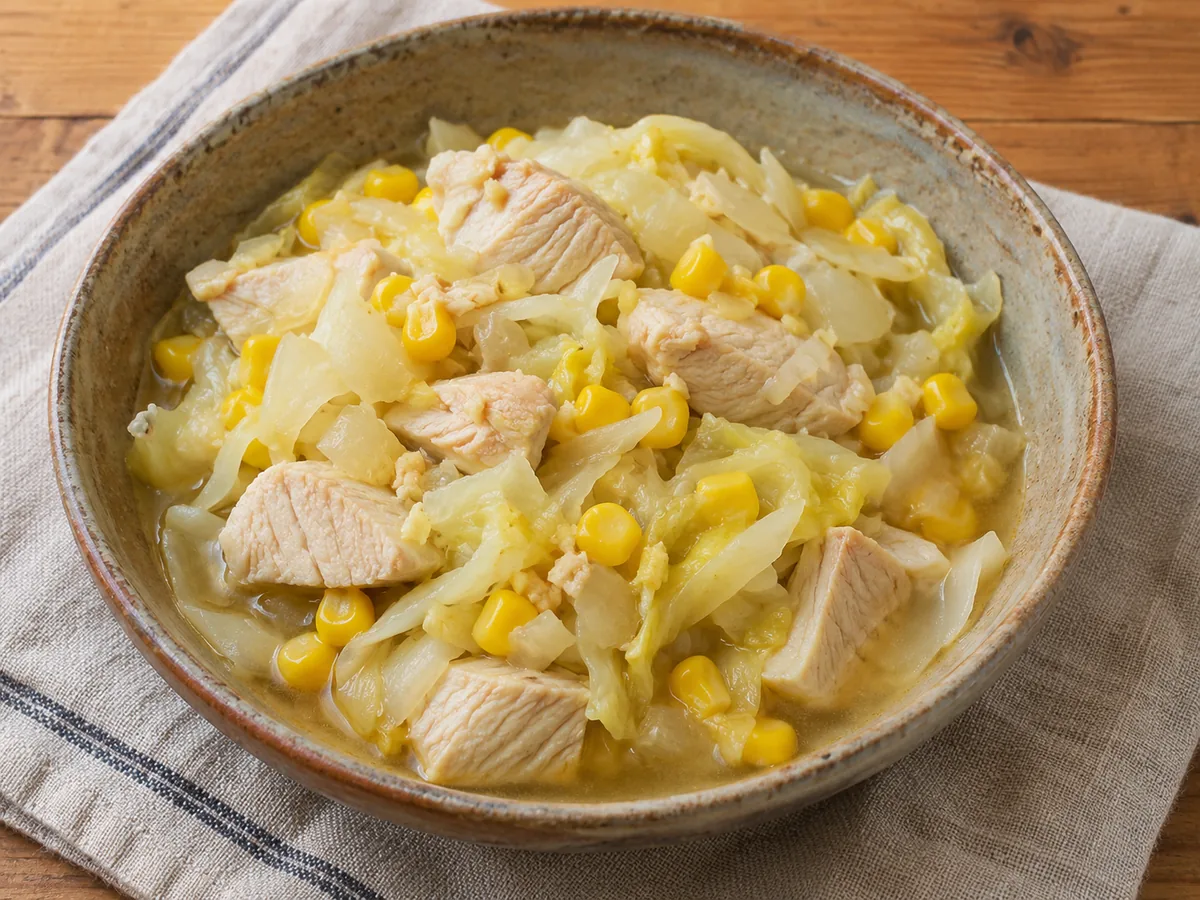
Ingredients
- 600 g raw skinless boneless turkey breast cutlet, in 3 cm pieces
- 600 g raw white cabbage, weight without core or damaged leaves
- 300 g raw frozen sweetcorn kernels without sauce or added salt
- 150 g peeled raw onion
- 15 g peeled fresh ginger
- 10 g peeled raw garlic
- 20 g olive oil
- 300 ml drinking water, with a small hot reserve if needed
- 3 g salt
Preparation
Wash and trim cabbage; weigh 600 g and cut 1 cm ribbons. Chop 150 g onion, 15 g ginger and 10 g garlic; weigh 300 g raw frozen corn.
On a separate board, cut 600 g skinless boneless turkey cutlet into 3 cm pieces. Refrigerate and clean hands and utensils.
Soften onion in 20 g oil for 8 minutes, add garlic and ginger for 1 minute, then turn cabbage for 6 minutes.
Add 300 ml water and 3 g salt; simmer covered for 15 minutes. Check cabbage begins becoming tender and extend before adding meat if needed.
Add turkey and frozen corn, resume simmering and cook partly covered for approximately 15 minutes, turning meat halfway through.
Check at least 74 °C in the centre of several turkey pieces and very hot corn; extend if needed according to thickness and corn directions.
Adjust juices with a little hot water if necessary, rest off the heat for 5 minutes and divide into four comparable portions.
Introduction
This dish preserves different textures in cabbage ribbons, corn kernels and turkey pieces. The juices remain light, neither thickened with flour nor made creamy. Turkey is added after cabbage has first softened so lean meat does not undergo all the vegetables' cooking. Ginger is chopped very finely to distribute aroma without leaving long fibres in the mouth.
The recipe is a contemporary creation for Angola à table. It uses raw skinless boneless turkey breast cutlets, not a whole bird or processed turkey meat. The corn is plain raw frozen kernels without sauce or added salt. These details define weights and nutritional references. Four portions are calculated without rice, bread or other additional accompaniments.
Cultural context
Turkey, cabbage, corn and ginger are offered as a contemporary formula without an invented regional story. An ingredient occurring in African cuisines cannot by itself establish national origins for a precise combination. The name therefore describes the contents rather than attributing an unverified heritage designation.
For general agricultural and food context, consult FAO's representation in Angola at https://www.fao.org/angola. Poultry cooking guidance is available from USDA-FSIS: https://ask.fsis.usda.gov/article/What-is-a-safe-internal-temperature-for-cooking-meat-and-poultry. These references illuminate context and safety without certifying the recipe.
Tips
Remove core before weighing cabbage to retain the amount actually eaten.
Keep corn frozen until adding it rather than thawing on the table.
Wait for simmering to resume after cold ingredients before timing the final stage.
Check a thick turkey section with the probe without touching the vessel's base.
If cabbage needs more cooking, give it that time before poultry goes in.
Planning
First prepare vegetables to avoid transferring raw poultry juices to a board already used for ready-to-cook foods. Remove damaged leaves and cabbage core, wash usable leaves and weigh 600 g. Slice into ribbons about one centimetre wide, shortening very long strips. Thick ribs may be sliced more finely to soften at the same rate as leaves.
Chop the 150 g onion and 10 g garlic separately. Grate or very finely chop the 15 g ginger, removing the toughest fibres. Weigh the 300 g corn still frozen; add it directly when cooking rather than leaving it on the worktop. Check these are plain raw kernels, not a sauced mixture. Drained canned corn has already been processed and may contain more salt; it does not exactly match this formula.
On a separate board, prepare turkey cutlets. Remove any small cartilage fragments before weighing 600 g usable meat. Cut approximately three-centimetre pieces, keeping the cutlets' natural thickness, generally less than their width. Do not rinse meat under the tap. Refrigerate, then clean hands, knife, board and worktop before returning to vegetables.
Heat the 20 g oil in a casserole or deep sauté pan holding at least three litres. Add onion and soften over medium heat for eight minutes without strong browning. Add garlic and ginger for one minute, stirring. Fold in cabbage in batches if its initial volume rises above the rim; gently turn for six minutes as it starts wilting. Do not add a second amount of oil simply because leaves initially look dry.
Pour in 300 ml water and three grams of salt. Bring to a simmer, cover and cook over low heat for fifteen minutes. Stir once halfway through, lifting cabbage from bottom to surface. Check sufficient liquid remains to prevent sticking. If cabbage is still very firm, extend this stage before adding turkey, because extra meat cooking is not the best way to soften thick ribs.
Add turkey pieces and frozen corn. Gently mix to spread meat through the juices and wait for steady simmering to return. Partly cover and continue for approximately fifteen minutes, turning meat halfway through. Check several thick turkey pieces with a clean probe: they must reach at least 74 °C in the centre. Corn kernels should also be very hot; follow a longer minimum time if specified on the package. Extend if needed without vigorous boiling.
Meat must be completely cooked, cabbage supple and corn kernels still distinct. If juices have evaporated too much, add a little hot water. If less liquid is preferred, serve solids with a slotted spoon and divide juices rather than drying turkey with excessive reduction. Rest off the heat for five minutes before sharing. The stated forty-five minutes is a guide, adapting to actual meat thickness and cabbage tenderness.
Serving
Divide turkey between four shallow bowls before adding cabbage, corn and juices. This avoids a mostly vegetable first portion and a meat-heavy last one. Light juices accompany vegetables; cream or butter is unnecessary to make them presentable. Accompaniments may be offered separately, but their quantities and nutrients add to the dish's calculation.
Storage
Promptly divide leftovers into shallow containers and refrigerate at no more than 4 °C within two hours of cooking, sooner in high heat. Consume within forty-eight hours. Reheat only the amount wanted, mixing until 74 °C in the centre. Cabbage becomes softer after storage, which does not justify repeated reheating cycles. Use clean utensils separate from those that touched raw turkey.
Variations
For less ginger flavour, reduce its quantity at the start rather than trying to remove taste by prolonged turkey cooking. Finer cabbage ribbons cook faster; watch them to preserve recognisable texture. Replacing frozen corn with canned or turkey with already cooked meat changes weight, salt and timing assumptions. Such versions require adaptation and are not automatic equivalents.
Nutrition notes
Turkey contributes mainly protein, while corn contributes particularly carbohydrates. Cabbage provides fibre and vegetable mass. The calculation uses raw turkey cutlet and raw frozen corn, not cooked weights. All oil and salt are counted. Values cover one quarter of everything without accompaniment and remain estimates rather than an analysis of the dish actually served.
Conclusion
Giving cabbage an initial cooking stage before turkey better manages two ingredients with different needs. Calm simmering, very hot corn kernels and thermometer checks complement texture guides. Divide solids evenly, then juices, for four comparable portions. This editorial creation is not represented as kitchen-tested.
Enjoy your meal
Enjoy your meal!