Octopus braised with onions and sweet potato
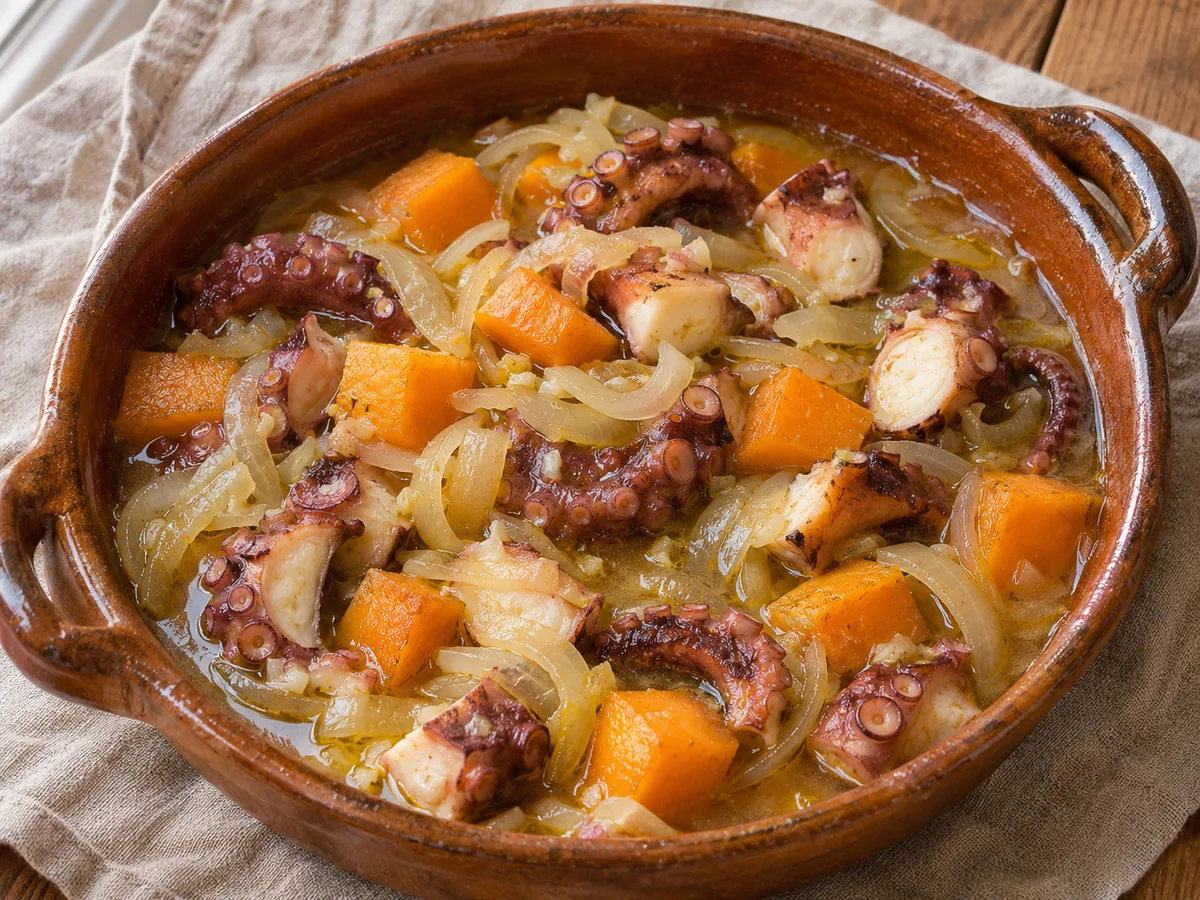
Already cooked, tender octopus is gently reheated with soft onions, sweet potato cubes and a lemon finish. A contemporary creation for Angola à table.
Ingredients
- 600 g already cooked, plain, tender octopus without marinade or added oil, drained edible weight
- 600 g raw sweet potato, peeled weight
- 300 g peeled raw onion
- 10 g peeled raw garlic
- 15 g olive oil
- 25 g freshly squeezed strained lemon juice
- 300 ml drinking water, with a small hot reserve if needed
- 1 g salt
Preparation
Start with already fully cooked tender octopus; its preliminary cooking is not included in this method. Keep chilled before use.
Cut 600 g peeled raw sweet potato into 2 cm cubes; slice 300 g onion, chop 10 g garlic and reserve 25 g lemon juice.
Soften onions in 15 g oil for 8–10 minutes; add garlic for 1 minute.
Add sweet potato, a total of 300 ml water and 1 g salt; cover and simmer 20–25 minutes until cube centres are tender.
Drain and weigh 600 g edible cooked octopus; remove any hard parts and cut into 3 cm sections.
Add octopus, cover and gently reheat about 6–8 minutes; check 70 °C at the centres of thick pieces and maintain for 2 minutes, extending if necessary.
Off the heat, fold in lemon, rest 5 minutes and divide into four portions with all juices. Approximate total: 80 minutes, starting only with already cooked octopus.
Introduction
This recipe starts with already cooked, plain, tender octopus. It does not cook a raw animal within the stated time: preliminary octopus cooking is explicitly excluded from this sheet's eighty minutes. The 600 g is a cooked, drained, edible weight. A professionally prepared ready-to-use product may suit, provided its composition, storage and use-by date are checked. Raw octopus of the same weight is not a direct substitution.
Here braising means a short covered finish in a moist base. Onions and sweet potato cook first, then octopus joins them only to heat through without another long simmer. Orange cubes retain their shape and the broth stays fluid enough to serve with them. This combination is a contemporary creation for Angola à table without claiming to reproduce an identical heritage recipe. Four servings are intended, without additional accompaniments.
Cultural context
This finish combines an already cooked mollusc with onions and sweet potato in a contemporary editorial approach. Braising describes the chosen finishing technique without fabricating a local tradition or ancient history. Using an already cooked product is declared to make method and timings understandable.
FAO in Angola is an institutional resource for exploring national agricultural and food context: https://www.fao.org/angola. General cooking and reheating references can be consulted at the Food Standards Agency: https://www.food.gov.uk/safety-hygiene/cooking-your-food. These sources do not certify an identical traditional recipe.
Tips
Read the label to distinguish fully cooked octopus from a merely partly cooked product.
Weigh 600 g octopus after draining, not a raw animal or a bag with its liquid.
Wait until sweet potato is tender before reheating pieces.
Maintain a gentle simmer to preserve cubes and limit octopus toughening.
Check several pieces with a probe, not just the pan liquid.
Planning
Check that the octopus is fully cooked, not merely blanched. Its flesh must already yield to fork pressure and suit short reheating. Exclude oil-marinated or heavily seasoned products, which do not match the calculated ingredients. Keep refrigerated at no more than 4 °C until adding. If a frozen cooked product is used, thaw in the refrigerator according to its packaging and drain before weighing; this optional waiting is outside the eighty minutes. Follow any stricter manufacturer's instruction.
Prepare vegetables before taking octopus out. Wash and peel sweet potato and weigh 600 g usable flesh. Cut even cubes approximately two centimetres across. A mixture of small fragments and large blocks would produce both purée and firm pieces. Peel onions, weigh 300 g and cut into thin slices about three millimetres thick. Chop garlic separately. Wash lemon before squeezing, strain juice and weigh 25 g; keep covered for finishing.
Heat fifteen grams of oil in a wide deep sauté pan holding at least three litres. Add onions and soften over medium heat for eight to ten minutes, stirring. They should become supple and lightly golden without burning. Their initial volume may seem large but decreases during this stage. Add garlic for one minute. If cooking juices catch, use a small spoonful of measured water to release them without adding more oil.
Add sweet potato cubes, a total of 300 ml water and one gram of salt. Stir onions around the cubes, bring to a simmer and cover. Cook gently twenty to twenty-five minutes. Halfway through, check that the bottom remains moist and add a little hot water if needed. Pierce a large cube: it must be tender to the centre without falling apart when lifted. Extend this stage before adding octopus if the vegetable remains firm.
As vegetable cooking nears its end, drain cooked octopus and weigh 600 g. Check for beak or other hard inedible parts, then cut tentacles or mantle into approximately three-centimetre sections. Tender skin and suckers may remain. Use a clean knife and board because this is already ready-to-eat food. Do not leave it waiting long at room temperature. Add pieces to the hot base only once sweet potato is ready.
Stir gently, cover and simmer about six to eight minutes to reheat. Use a clean probe to check the centres of several thick pieces: reach 70 °C and maintain that temperature for two minutes. Extend briefly if needed, following any stricter packaging instruction. Already cooked octopus colour does not adequately indicate temperature. Avoid vigorous boiling that breaks cubes and may toughen octopus. The indicative fifty-minute cooking time includes onion, vegetable and reheating stages with usual adjustments.
Turn off the heat, add 25 g lemon juice and gently lift ingredients to coat. Rest five minutes, loosely covered, before serving hot. If liquid has reduced too far, add a little hot water rather than more fat. If plentiful, serve in deep plates instead of cooking everything longer to remove it. Juice belongs to the formula: share it with the pieces rather than draining.
Serving
Share octopus between four deep plates first, then distribute sweet potato cubes, onion and liquid. This is more consistent than taking a ladleful only from the surface. The dish already contains a starchy vegetable; an accompaniment is possible but excluded from the quantities. Tell diners that molluscs are present, an allergen group distinct from crustaceans. Serving should follow the short rest rather than a long wait on a lukewarm buffet.
Storage
Plan to eat the dish after this finishing reheat. If leftovers must be kept, promptly divide into small shallow containers and refrigerate at no more than 4 °C within two hours. Eat cold within twenty-four hours without another reheating cycle for octopus already reheated in this recipe. Do not retain a portion that waited too long at room temperature, and respect a shorter period if the label requires it. Lemon replaces neither refrigeration nor hygiene.
Variations
Red onions may change flavour and colour, but their composition does not exactly match the generic reference. For a thicker texture, mash a few sweet potato cubes in the liquid before adding octopus. Using raw octopus would require separate preliminary cooking, a different yield and newly organised timings; this sheet does not provide that procedure. Commercial marinade added to octopus cannot be ignored in a new calculation.
Nutrition notes
Octopus is counted cooked and drained; sweet potato and onion are counted raw at edible weights. All oil, lemon juice and the added gram of salt are included. Cooked octopus already contains sodium: a small addition does not mean a salt-free preparation. A commercial product may differ from the generic reference, especially if seasoned. Values describe one quarter of the entire dish with liquid, without accompaniments, and remain estimates without medical promises.
Conclusion
Sweet potato cooking precedes reheating already tender octopus. This staging, temperature checking and lemon finishing structure the dish without imposing another long simmer on the mollusc. Sharing pieces and liquid gives four more consistent portions. This contemporary creation is offered for cooking without being declared kitchen-tested.
Enjoy your meal
Enjoy your meal!