Shrimp with okra and coconut milk
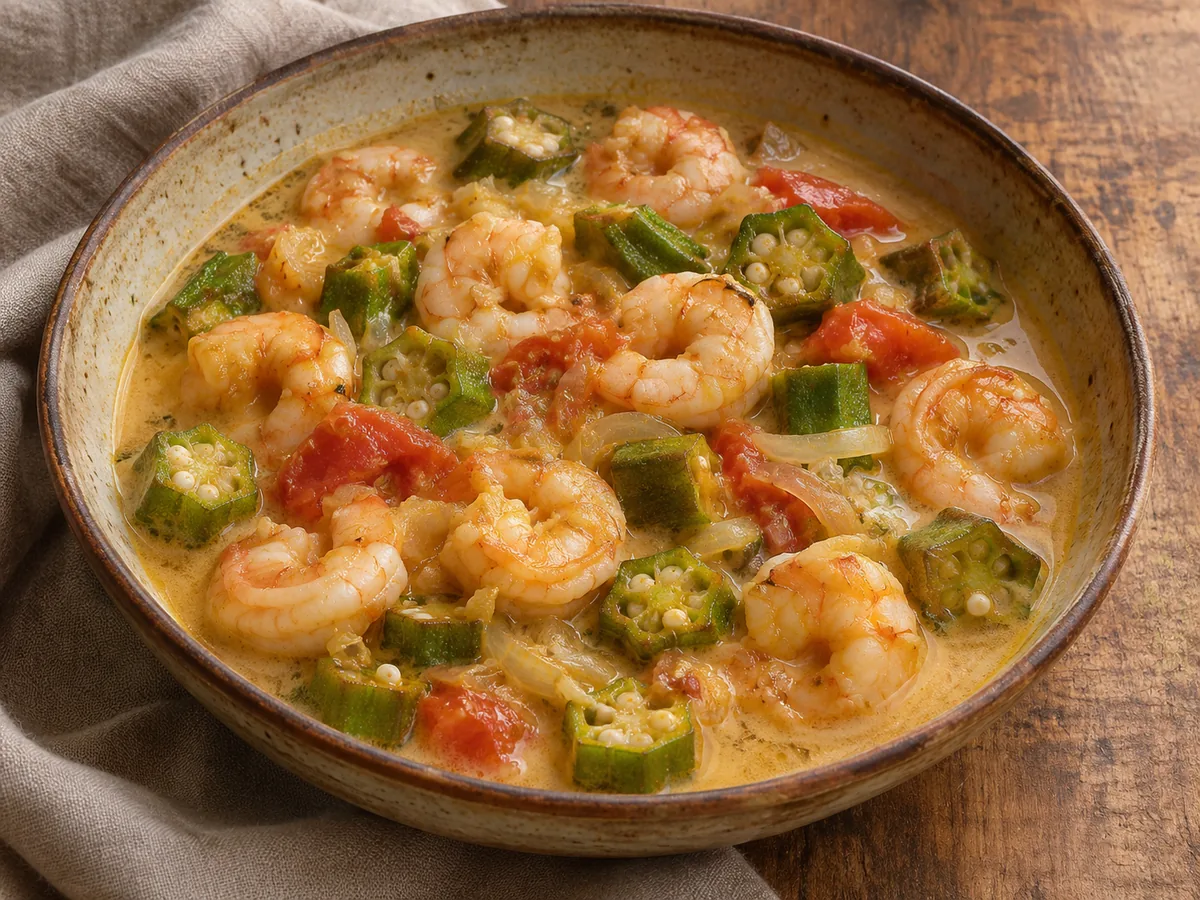
Raw peeled shrimp are added at the end of cooking to an okra, tomato and coconut milk sauce. A contemporary creation for Angola à table.
Ingredients
- 600 g raw peeled shrimp without heads or tails, visible digestive vein removed, edible weight
- 400 g fresh raw okra, weight after trimming hard ends
- 300 g raw tomatoes
- 200 g unsweetened coconut milk, thoroughly mixed
- 150 g peeled onion
- 10 g peeled garlic
- 10 g peeled fresh ginger
- 15 g olive oil
- 200 ml drinking water, with a small hot reserve if needed
- 2 g salt
Preparation
Prepare and weigh 600 g raw shrimp without heads, shells or tails and without visible digestive veins; keep chilled.
Wash, dry and trim okra; weigh 400 g and cut into 1 cm rounds. Prepare 300 g tomatoes, 150 g onion, 10 g garlic and 10 g ginger.
Soften onion in 15 g oil for 6–7 minutes; add garlic and ginger for 1 minute, then tomato and juice for 6–7 minutes.
Add okra, a total of 200 ml water and 2 g salt; simmer partly covered for 10–12 minutes until tender.
Pour in 200 g thoroughly mixed coconut milk and simmer 3 minutes; adjust only with a little hot water if needed.
Add shrimp and cook gently for about 4–6 minutes; verify at least 63 °C at the centre of several pieces and non-translucent flesh.
Turn off the heat, divide shrimp, okra and all sauce into four servings and serve immediately.
Introduction
Okra naturally gives the sauce some body, while coconut milk makes its texture more enveloping. Shrimp go in at the end so they do not undergo the vegetables' entire cooking time. The intended result keeps recognisable green rounds, soft tomato pieces and opaque but still tender shrimp. The aim is neither a completely smooth sauce nor eliminating okra's own texture.
This formula uses 600 g raw shrimp flesh without heads, shells or tails, with the visible digestive vein removed. This edible weight does not mean 600 g purchased whole shrimp. The four servings exclude rice or other accompaniments. The recipe belongs to a contemporary approach inspired by a collection devoted to Angola; it is not assigned to a particular regional tradition without evidence. The title simply describes its main ingredients.
Cultural context
Bringing together okra and coconut milk is a contemporary culinary proposal here. It comes with neither a fabricated local name nor an assumed ancient history. Okra's particular texture is respected rather than called a defect to remove, but that technical choice does not prove the formula's national origin.
Food and agricultural context can be explored through FAO in Angola: https://www.fao.org/angola. General seafood handling advice is available from FDA: https://www.fda.gov/food/buy-store-serve-safe-food/selecting-and-serving-fresh-and-frozen-seafood-safely. These institutional references do not certify an identical traditional recipe.
Tips
Wash okra before cutting and dry before forming rounds.
Wait until the vegetable is tender before adding shrimp.
Stir gently to preserve pieces, without whisking sauce.
Weigh genuinely edible shrimp meat rather than whole animals.
To increase quantities, widen the pan and check several pieces rather than mechanically doubling time.
Planning
Buy shrimp from a reliable supplier and keep chilled until use, at no more than 4 °C. If frozen, thaw in the refrigerator in a covered container according to the packaging, then drain before weighing; this preliminary waiting is not included in the stated sixty minutes. Do not thaw on the worktop. Remove heads, shells, tails and visible digestive veins if not already prepared. Then weigh 600 g usable flesh and refrigerate while starting the sauce.
Choose firm okra without large softened areas. Wash whole and dry carefully before cutting. Trim only hard ends and weigh 400 g edible portions. Cut into rounds approximately one centimetre thick. Very large fibrous pods can remain unpleasant even after longer cooking; select a suitable product instead of trying to rescue it by cooking shrimp longer. Slightly stringy juice appearing when cut does not, by itself, indicate spoilage.
Wash and finely dice tomatoes, retaining all juice. Chop onion and garlic separately. Finely grate ginger, discarding long fibres that would be awkward to eat. Stir coconut milk in its container before weighing 200 g to distribute fat. Prepare a wide covered sauté pan holding at least three litres. Use separate utensils for raw shrimp and ready-to-serve ingredients, then wash hands and equipment after handling raw seafood.
Heat fifteen grams of oil over medium heat. Soften onion for six to seven minutes, stirring without strong browning. Add garlic and ginger for one minute, then tomatoes with juice. Cook six to seven minutes until pieces begin collapsing. If the base catches, use a spoonful of the measured water rather than adding oil. Fold in okra, remaining water and two grams of salt. Partly cover and simmer ten to twelve minutes, stirring gently once or twice.
Check a thick okra round: it should be tender while holding its shape. Extend this stage if necessary before introducing shrimp. Add coconut milk and return to a simmer for three minutes. The sauce should flow; its body depends on cutting and the product. Do not add starch to correct a texture not planned by this formula. If too thick, fold in a little hot water while still sharing every ingredient between four servings.
Distribute cold shrimp through the hot sauce and gently immerse them. Cover and simmer gently for about four to six minutes, turning once. Check several thick pieces with a clean probe: the centre must reach at least 63 °C and the flesh must no longer be translucent. Follow any stricter manufacturer's instructions. Do not rely only on a pink exterior. Remove from the heat once cooked and divide without prolonged boiling to thicken sauce. Timings are indicative; the stated thirty-five minutes cooking covers this sequence with reasonable adjustments.
Serving
Divide shrimp before distributing vegetables and liquid to avoid an almost seafood-free portion. Gently stir between ladlefuls if rounds remain at the bottom. Bowls or deep plates suit this dish better than a flat plate because all sauce belongs to the calculated dish. An accompaniment may be chosen separately, but its quantities are additional. Clearly tell diners that crustaceans are present; this allergen group must not be confused with molluscs.
Storage
Preferably serve as soon as cooking finishes. For leftovers, promptly divide into clean shallow containers and refrigerate at no more than 4 °C within two hours. Consume within twenty-four hours. Reheat only the required portion, once, until thoroughly hot, stirring gently and following product instructions. Do not extend storage limits because the dish will be reheated. Already cooked shrimp become firmer during a second heating.
Variations
For a more fluid sauce, cut slightly thicker okra sections and adjust cooking, without promising to eliminate its natural thickening. Reduce ginger at the outset if its aroma is too prominent. Canned or already blanched okra is not interchangeable without reassessing weights, salt and timings. Precooked shrimp also need another method and nutritional reference. A heavily diluted coconut drink does not automatically replace coconut milk.
Nutrition notes
The calculation uses raw peeled shrimp and raw okra rather than references for already cooked or canned products. All coconut milk, oil and added salt are included, along with known intrinsic sodium. Juices remain in the four servings. A coconut milk brand or treated shrimp product may differ from generic references, so figures remain approximate. They describe one quarter of the preparation without accompaniments, not a medical effect.
Conclusion
Okra is prepared before shrimp, and cooking finishes by checking their centres. Flowing sauce, tender rounds and carefully shared seafood create four consistent portions. This contemporary creation is offered with precise guides without being declared kitchen-tested.
Enjoy your meal
Enjoy your meal!