Sardines simmered with black-eyed peas and tomato
Sardine fillets gently cook over tender black-eyed peas in reduced tomato with onion and garlic. A contemporary creation for Angola à table.
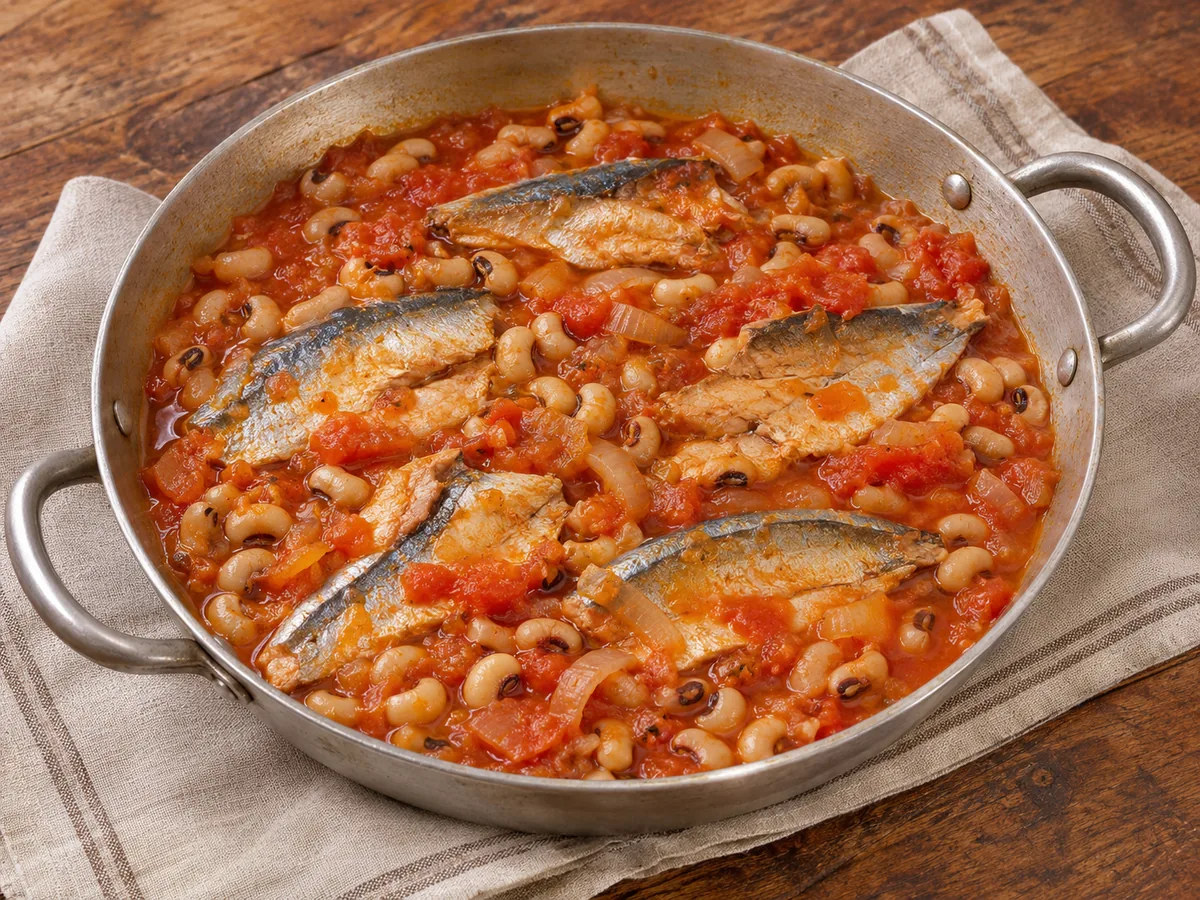
Ingredients
- 600 g raw butterflied sardine fillets with skin, without heads, innards or central backbone, edible weight after preparation
- 450 g black-eyed peas already boiled without salt and drained
- 500 g raw tomatoes with their juice
- 150 g peeled raw onion
- 10 g peeled raw garlic
- 20 g olive oil
- 150 ml drinking water
- 3 g salt
Preparation
Check tenderness of 450 g black-eyed peas already cooked without salt, drain and weigh.
Prepare 600 g edible raw skin-on sardine fillets without heads, innards or central backbone; remove detected small bones and keep chilled.
Dice 500 g tomatoes with juice, thinly slice 150 g onion and chop 10 g garlic.
Soften onion in 20 g oil for 6 minutes; add garlic for 1 minute.
Add tomatoes and juice, then cook uncovered for 12 minutes, stirring to reduce slightly.
Add 150 ml water, 3 g salt and peas; simmer 8 minutes to heat beans evenly.
Lay sardines over the pea bed, skin upwards, cover and gently cook 8–12 minutes without stirring fillets.
Check at least 63 °C at the centre with a clean probe, then divide fish, peas and tomato into four portions.
Introduction
Black-eyed peas form a bed of whole beans that supports the sardines during cooking. Tomato is reduced before fish is added, keeping the dish moist without turning it into soup. Each plate can therefore combine fish flesh, pulses and a vegetable base. The pan is not vigorously stirred after fillets are laid in: their fragility calls for spreading heat without breaking the fish into crumbs.
The recipe uses six hundred grams of edible raw sardine fillets with skin, after removing heads, innards and central backbone. This is not equivalent to six hundred grams of purchased whole fish. The four hundred and fifty grams of black-eyed peas are weighed already boiled without salt and drained. Their preliminary cooking is excluded from the stated times. This distinction prevents confusion between dry weight, weight including waste and the amount actually shared at the meal.
Cultural context
Sardine, black-eyed pea and tomato are combined here as a contemporary creation in a collection devoted to Angola. It receives no invented traditional name and does not claim to represent all coastal practices. Opened fillets rather than whole fish respond to the need for explicit weighing and portions.
FAO in Angola offers an institutional starting point for national food and agricultural questions: https://www.fao.org/angola. It does not attest to the formula. Institutional fish-temperature guidance is available from FoodSafety.gov: https://www.foodsafety.gov/food-safety-charts/safe-minimum-internal-temperatures. These references illuminate context and safety, not a historical origin for this dish.
Tips
Always distinguish edible fillet weight from whole-fish weight.
Fully cook peas before beginning: the final tomato stage does not finish dried beans.
Adjust tomato reduction before laying in fish.
Keep a quiet covered simmer without large bubbles that break flesh.
Divide quantities between two vessels if needed, also dividing oil and salt.
Planning
Check the peas before starting. A bean should mash easily beneath a fork without a small hard centre. If prepared earlier, they must have been rapidly cooled, covered and refrigerated, and remain within their storage period. Drain and weigh four hundred and fifty grams. Do not use the same weight of dried beans: they would require separate cooking and produce a very different amount. Salted canned beans do not have the same composition as the intended unsalted reference.
Ask the fishmonger for sardines opened into fillets with the central backbone removed. Check flesh again with a clean hand, remove visible small bones with tweezers, then weigh six hundred grams of edible skin-on portions. Gently pat dry if the surface is very wet, without leaving the fish warm. Keep covered in the refrigerator until added. If frozen, thaw in the refrigerator and drain before weighing; that wait is not included in the indicative seventy minutes.
Wash tomatoes and dice while collecting all juice. Weigh five hundred usable grams without stalks. Thinly slice onion and chop garlic separately. Use a broad lidded sauté pan approximately thirty to thirty-two centimetres across. Its base must hold the beans and leave room for fillets without thick overlapping piles. If too narrow, divide the recipe between two pans, also dividing oil, water and salt rather than doubling seasonings.
Heat twenty grams of oil over medium heat. Add onion and soften for six minutes without strong browning. Add garlic for one minute, then tomatoes and juice. Cook uncovered for twelve minutes, stirring occasionally. Tomato should lose some water and form a base that still moves, not a dry paste. If very watery, extend this phase before adding peas and fish.
Add one hundred and fifty millilitres of water, three grams of salt and the peas. Simmer for eight minutes, gently lifting beans so they become evenly hot. Check a cooled spoonful: sauce should not be excessively liquid but enough moisture must remain for the final cooking. A small amount of hot water can be added if the base catches; do not correct it with a new unmeasured oil addition.
Spread the peas and lay sardine fillets on top, skin upwards, partly pressing into sauce. Cover and maintain a very gentle simmer for eight to twelve minutes. Do not stir between fillets or try to turn all of them; carefully spoon a little hot sauce over upper surfaces if needed. Check at least 63 °C at the centre with a clean probe inserted sideways into a fleshy part. Test several fillets if sizes differ; flesh should be opaque and separate easily.
Turn off the heat once fish is cooked and serve without a long wait. Slide a wide spatula beneath fillets, then share beans and tomato with a spoon. Divide any detached fish fragments between plates rather than leaving them at the bottom. The forty-five-minute cooking allowance leaves time for returning to a simmer; initial bean tenderness remains essential.
Serving
For each person allow one quarter of fish and peas rather than an identical number of fillets if sizes vary. The reference is one hundred and fifty grams of raw flesh and one hundred and twelve and a half grams of cooked peas per portion, before vegetables. Share tomato base, which contains all planned oil. A small bone may remain despite backbone removal; inform diners and help children when sharing. No rice, bread or other accompaniment is included in this formula.
Storage
Keep raw fish between zero and four degrees Celsius and follow the period indicated at purchase. Preferably prepare the quantity for the meal, particularly if peas had already been cooled and reheated. If leftovers must be kept, promptly divide into shallow containers and refrigerate at no more than four degrees Celsius within two hours. Consume within twenty-four hours. Reheat only the needed amount until evenly hot; avoid repeated cycles and do not extend storage because the sauce contains tomato.
Variations
For a slightly thicker base, mash a small spoonful of the planned peas before laying fish on it, without adding other beans. For a more rustic presentation, keep tomato pieces larger but extend their first cooking until juices are suitable. Canned sardines are already cooked and often salted: they do not automatically replace raw fillets in this method. Another bean or fish also changes texture and nutritional references.
Nutrition notes
Sardines and black-eyed peas contribute protein, while beans and vegetables contribute fibre and carbohydrates. Data distinguish edible raw sardine from already-drained peas boiled without salt. All added salt, documented intrinsic sodium and twenty grams of oil are counted. Values for one quarter remain approximate, since juices left in the pan and unequal sharing alter the plate. Fish is an allergen to disclose.
Conclusion
An already-tender pea bed, tomato reduced before fish and gentle final cooking structure this dish. Fillets need neither vigorous stirring nor a long wait after full cooking. Serve beans with all their base, maintaining the distinction between raw and cooked weights. This editorial creation is not declared kitchen-tested.
Enjoy your meal
Enjoy your meal!