Black-eyed pea salad with papaya and lime
Cooked, cooled black-eyed peas, firm ripe papaya cubes and cucumber in a lime and ginger dressing. A contemporary creation.
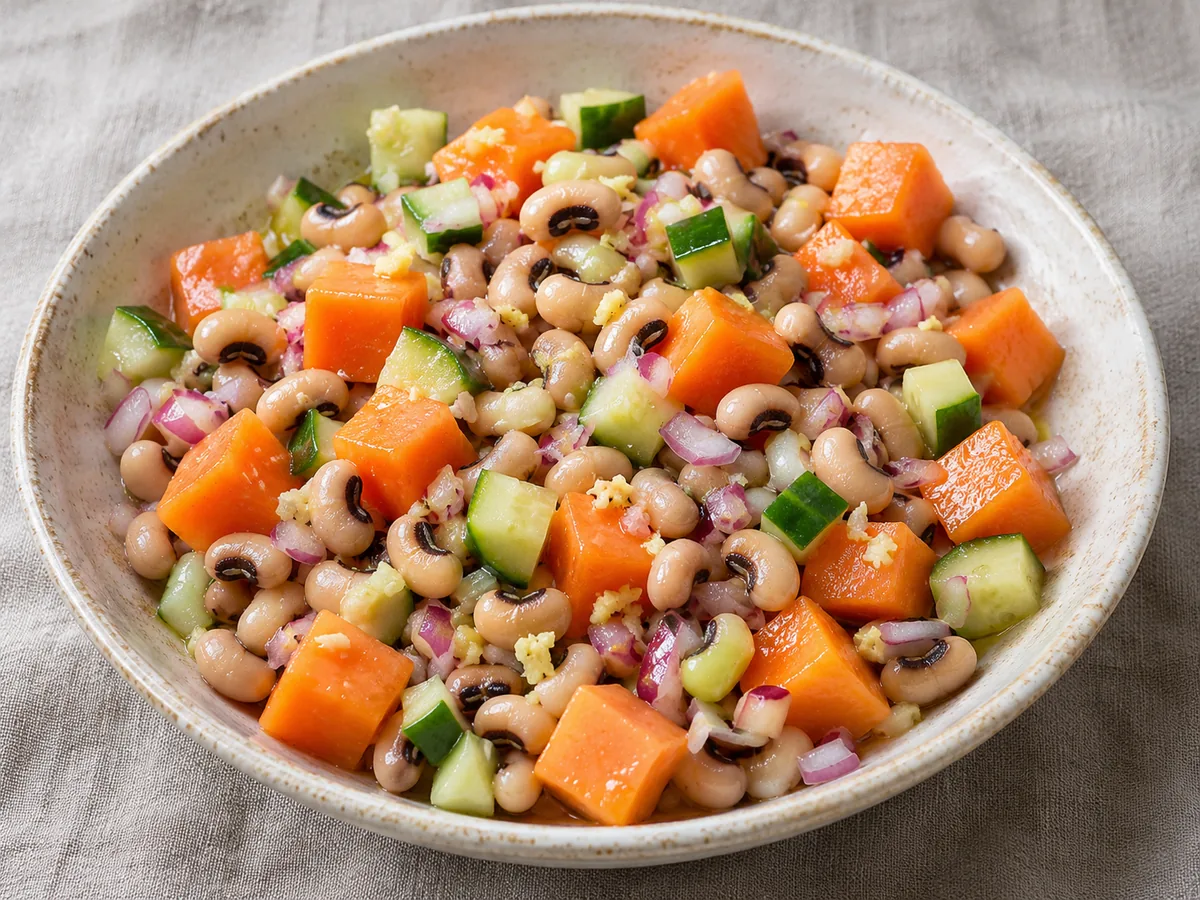
Ingredients
- 500 g black-eyed peas cooked without salt, drained and already cooled
- 300 g firm ripe papaya flesh, without skin or seeds
- 200 g washed raw cucumber, usable weight with skin
- 60 g peeled raw red onion
- 5 g peeled raw fresh ginger
- 35 g freshly squeezed lime juice
- 20 g olive oil
- 2 g salt
Preparation
Check that black-eyed peas are already cooked, tender and cold; drain and weigh 500 g.
Wash and prepare 200 g usable cucumber; dice into 1 cm pieces.
Finely chop 60 g red onion, grate 5 g ginger and squeeze 35 g lime juice.
Whisk juice with 20 g oil and 2 g salt; mix into peas with cucumber, onion and ginger.
Cover and rest for 10 minutes in the refrigerator.
Prepare 300 g firm papaya flesh as 1.5 cm cubes and gently fold in after resting.
Divide into four portions and serve chilled.
Introduction
Black-eyed peas give this salad a base of tender beans that remain whole, while papaya provides soft fruit pieces and cucumber a fresh contrast. Lime dressing is distributed over the pulses first, before fruit is added. This organisation allows the salad to be lifted without crushing papaya. The aim is mouthfuls in which ingredients remain distinct, not a bean purée bound with fruit juice.
The recipe starts with 500 g black-eyed peas already cooked without salt, drained and cooled. This is not the weight of dried seeds. Precooking the pulses is not included in the stated 35 minutes; when starting from dried beans, allow separately for preparation and cooling before beginning. Beans must be tender through the centre and properly refrigerated without a long wait at room temperature.
This combination is a contemporary creation for Angola à table. It does not claim to represent an ancient national salad. The quantities make four starter or side-dish portions with measured light dressing. No bread, rice, fish or other addition is included in the nutritional formula.
Cultural context
Pulses and fruit are brought together here in a contemporary editorial composition. The recipe invents no regional name and does not infer national tradition merely from the presence of a pulse. FAO's representation offers an institutional starting point for Angola's agricultural and food context: https://www.fao.org/angola. It does not certify the origin of this papaya and lime salad. Ingredient inspiration and recipe history remain separate questions.
Tips
Weigh peas after cooking and draining, never dry for this formula.
Prepare papaya with a clean knife after washing the outside of the fruit.
Chop onion finely to avoid mouthfuls dominated by a large raw piece.
Keep the ten-minute rest refrigerated rather than leaving the bowl on the table.
Fold papaya in at the last moment to preserve edges and whole beans.
Planning
Check the cold beans first. Taste several to confirm they are tender without dry or hard centres. If home cooking was done ahead, it must have been followed by prompt cooling and refrigeration at no more than 4 °C. A saucepan forgotten on the table for several hours is unsuitable. Drain thoroughly, then weigh 500 g usable beans. A salted canned product is not equivalent to the unsalted reference selected for calculation.
Wash cucumber, dry and trim its ends. Keep the skin if its texture is pleasant. If the centre is very watery or contains large seeds, remove it before weighing 200 g and make up the weight with another piece. Dice into approximately one-centimetre pieces. Do not draw out water with extra salt: this would change salt quantity and soften the intended contrast. Put the cubes in a clean bowl.
Peel red onion and chop very finely to distribute its raw character. Grate the five grams of ginger, removing the toughest fibres. Squeeze and strain lime, then weigh 35 g juice. Whisk with 20 g oil and 2 g salt until temporarily homogeneous. Dressing need not form a lasting emulsion; simply stir before using.
Pour dressing over cold black-eyed peas, add cucumber, onion and ginger, then combine with two spoons. Lift from bottom to top rather than stirring vigorously in circles. Cover and rest ten minutes in the refrigerator. This brief rest distributes dressing; it is not a marinade that makes refrigeration unnecessary. Do not automatically add liquid if beans seem to absorb some dressing.
During this rest, wash papaya before opening, remove seeds and cavity fibres, then peel. Weigh 300 g ripe but firm flesh and cut into approximately 1.5 cm cubes with a clean blade. Very soft papaya tends to mix into the juice and suits this presentation less well. Add cubes after the ten-minute rest and gently fold in with two or three broad movements. Immediately divide between four plates or keep briefly chilled until serving.
Serving
Divide beans and vegetables, then check that every portion contains papaya pieces. Fruit should not remain only on the surface of the communal platter. Serve chilled without seeking partial freezing that would harden textures. If juice has collected at the bottom, divide it between plates instead of leaving all of it for the final portion. Do not crush beans to make the salad hold in a mould.
Storage
Keep salad covered at no more than 4 °C and consume within 24 hours. For advance preparation, keep prepared papaya separate and chilled and add during the final mixing. Take out only what will be served. Do not save until the next day a dish left at room temperature for more than two hours. Lime acidity replaces neither proper prior cooking of beans nor their prompt cooling and refrigeration.
Variations
For more crunch, cut cucumber slightly larger while maintaining the same usable weight. For milder onion flavour, reduce its quantity rather than adding sugar. Very juicy papaya may be briefly drained before weighing 300 g flesh without squeezing. Replacing black-eyed peas with another bean requires a different nutrition reference and may alter how beans hold together. Variations are not presented as identical substitutions already tested.
Nutrition notes
The black-eyed pea reference is for mature seeds boiled without salt, weighed cooked, and includes their intrinsic sodium. Calculation includes this contribution, all added salt, all oil and all juice. Peas contribute protein, carbohydrate and fibre; fruit and vegetables complete the portion's composition. Values are estimates for four comparable portions without accompaniments. They are neither an analysis of the served dish nor a health promise.
Conclusion
Properly cooked and cooled black-eyed peas, firm papaya and two-stage mixing produce a distinct, supple salad. The brief rest concerns beans and dressing; fruit cubes arrive afterwards to retain their shape. Divide juice and pieces as carefully as pulses. This contemporary editorial formula is not declared kitchen-tested.
Enjoy your meal
Enjoy your meal!