Chicken broth with millet and carrots
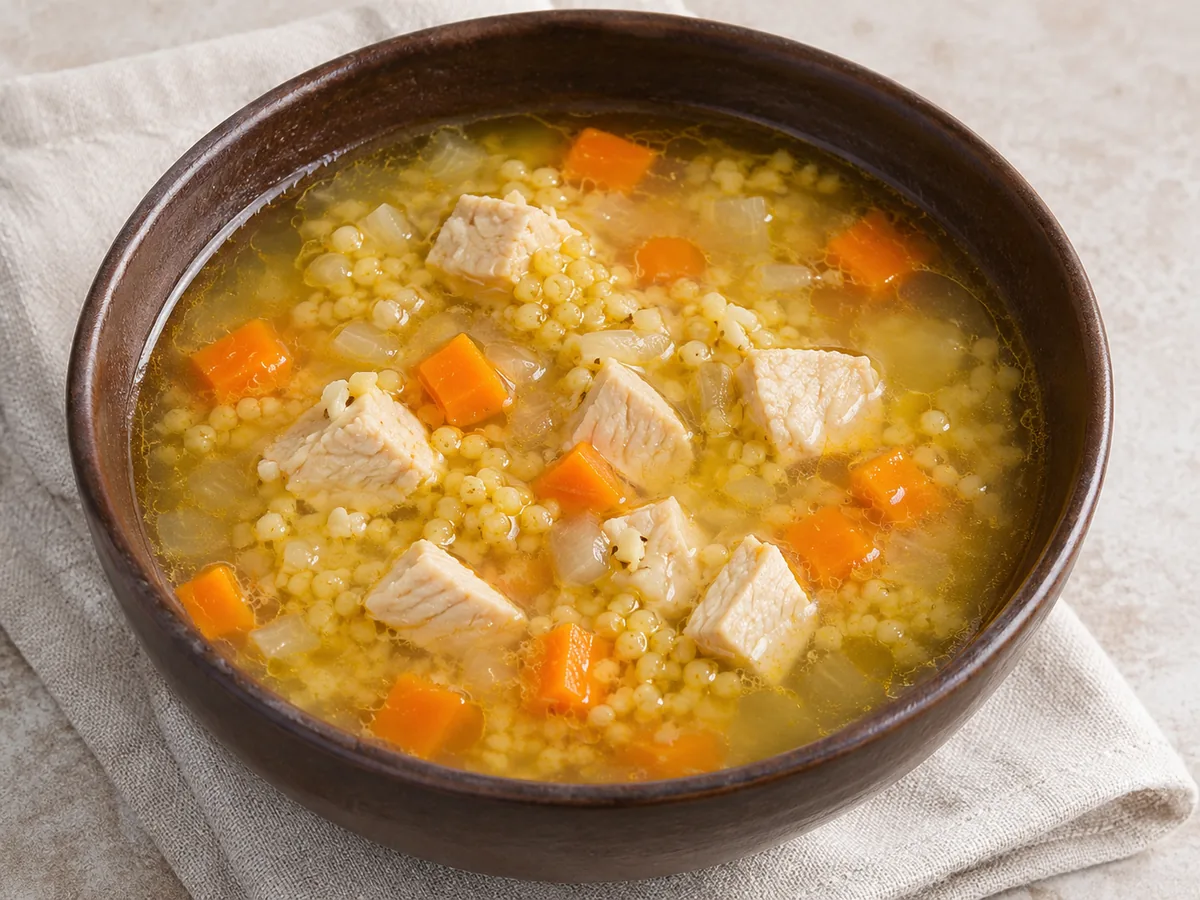
A light broth filled with small millet grains, carrots and chicken cubes cooked near the end. A contemporary creation.
Ingredients
- 400 g raw skinless chicken breast, edible weight
- 120 g dried food-grade hulled millet for cooking as grains
- 400 g peeled raw carrots
- 150 g peeled onion
- 8 g peeled garlic
- 8 g peeled fresh ginger
- 15 g olive oil
- 1,500 ml drinking water, plus a little hot water if needed
- 3 g salt
Preparation
Sort, rinse and drain 120 g dried food-grade hulled millet. Prepare 400 g carrots in 1 cm cubes, 150 g onion, 8 g garlic and 8 g ginger.
Cut 400 g raw chicken breast into 2 cm cubes using separate equipment; keep chilled and clean utensils.
Soften onion in 15 g oil for 7 minutes; add garlic and ginger for 1 minute.
Add carrots, millet, 1,500 ml water and 3 g salt. Bring to the boil, then simmer partly covered for 20 minutes.
Check millet is nearly tender; extend before adding chicken if centres remain hard.
Add chicken, return to a simmer and cook for about 10 minutes; verify at least 74 °C at a large cube's centre and extend if needed.
Rest off heat for 5 minutes, adjust with hot water if needed and divide into four portions.
Introduction
This broth does not begin with a long-simmered carcass: it is built from onion, a little garlic and ginger, carrots and a weighed amount of millet. Cubed chicken enters when grains are nearly tender. This avoids leaving lean breast boiling throughout cereal cooking. Liquid remains abundant enough to ladle; millet provides visible grains rather than a paste for blending.
The recipe is a contemporary creation for Angola à table and is not presented as an attested traditional Angolan broth. It yields four portions with 400 g raw skinless chicken breast and 120 g dried food-grade hulled millet sold for cooking as grains. Use neither millet flour nor sowing seed. Carrots are weighed after peeling. No commercial stock cube, previously salted meat, rice or other accompaniment is included in this formula.
Cultural context
This composition brings whole cereal grains, carrots and chicken together in a contemporary broth. It does not attribute a specific tradition to Angola without documented sourcing. Millet is a clearly named culinary ingredient, not confused with sorghum or flour intended for other preparations.
FAO offers institutional resources on millets and their diversity: https://www.fao.org/millets-2023/en. For national context, see https://www.fao.org/angola. These references situate ingredients and an agricultural environment; they certify neither origin nor age of this particular broth.
Tips
Choose food-grade hulled millet and read the manufacturer's preparation instructions.
Check cereal before adding chicken to avoid unnecessarily extending meat cooking.
Cut chicken cubes to similar sizes to limit cooking differences.
Keep broth in each portion and share solids separately.
Use a clean probe at a thick cube's centre rather than judging exterior colour alone.
Planning
Check millet packaging before starting. This method uses dried hulled grains intended for food, not flour, precooked semolina or an instant preparation. Spread 120 g on a plate, remove debris and rinse in a fine sieve. Drain. If the manufacturer requires particular preparation, follow it and adjust actual cooking time. Dry weight matters: the same amount of already-cooked millet would not provide the same ratio of grains and water in the broth.
Prepare vegetables before handling chicken. Wash and peel carrots, weigh 400 g and cut approximately one-centimetre cubes. Pieces should be small enough to share a spoon with millet without requiring very long cooking. Finely chop 150 g onion. Chop garlic and grate ginger, removing coarse fibres. Keep separate from onion because they will initially be heated for less time. Also measure 1,500 ml water and three grams of salt.
On a separate board reserved for raw poultry, remove any cartilage and weigh 400 g skinless breast. Cut regular approximately two-centimetre cubes. Put in a covered container and refrigerate during the initial cooking stage. Thoroughly clean hands, knife and worktop after handling. Do not wash raw chicken under the tap, which can spread contamination around the sink. Any thawing takes place in the refrigerator according to packaging and is not included in the stated total time.
Heat fifteen grams of oil in a saucepan holding at least three and a half litres. Add onion and soften over medium heat for seven minutes, stirring without deep browning. Add garlic and ginger for one minute, then carrots and drained millet. Pour in 1,500 ml water and salt, stir to loosen the bottom and bring to the boil. Immediately reduce to a gentle simmer. Partly cover and cook twenty minutes, stirring along the bottom once or twice.
Taste several millet grains cooled on a clean spoon. They may retain a little resistance but should no longer have hard or dry centres. Check a carrot as well. If grains remain firm, extend this stage before adding meat. Add a little hot water if absorption and evaporation have reduced the volume excessively; this should remain genuine broth rather than merely damp cereal. Do not correct liquid level with extra oil.
Add chicken cubes and gently stir to separate them. Return to a simmer and cook for approximately ten minutes without vigorous boiling. Times guide organisation but do not replace checking meat. With a clean probe, verify at least 74 °C at the centre of one of the thickest cubes and extend in short intervals if needed. Flesh that has turned white outside does not guarantee cooking at its centre. Once chicken is cooked and grains tender, turn off heat and rest five minutes. Stir before sharing.
Serving
Gently stir from bottom to top just before serving because grains may settle. Divide chicken cubes, carrots and millet first, then fill the four bowls with broth. Each person should receive approximately one quarter of every component rather than merely equal liquid volumes. The preparation thickens while standing; serve after the planned rest rather than keeping it hot for a long time in an attempt to maintain a texture that continues changing.
Storage
Cool leftovers promptly in shallow containers and refrigerate at no more than 4 °C, aiming for refrigeration within one hour of cooking and never exceeding two hours at room temperature. Consume within 24 hours. Cooked cereal makes slow cooling in a large saucepan particularly undesirable. Reheat the amount needed only once until uniformly hot throughout, stirring. Adding a little water to loosen millet does not extend storage.
Variations
For subtler ginger flavour, reduce its quantity before cooking rather than adding sugar afterwards. Carrots may be cut into thin half-rounds, keeping the same weight and checking tenderness. Replacing millet with rice or another cereal changes timing, absorbed liquid and calculation; it is not an automatic substitution. Already-cooked chicken is not interchangeable gram for gram with the stated 400 g raw chicken and would require a different reheating arrangement.
Nutrition notes
Chicken contributes protein and millet contributes carbohydrates and some fibre. The calculation uses millet dry before water absorption, edible raw chicken and prepared raw vegetables. All oil and salt are counted. A serving with more grains or meat does not have the values of an evenly divided quarter. The result remains an estimate without accompaniments, not an analysis of the served broth or a therapeutic promise.
Conclusion
The appropriate order is to begin cereal and carrots, then add chicken only once millet is nearly tender. Keep a gentle simmer, check meat-centre temperature and serve after a short rest. Sharing cubes and grains makes four portions more consistent than simply filling bowls. This editorial formula is not declared kitchen-tested.
Enjoy your meal
Enjoy your meal!