Carrot and ginguba rice pilaf
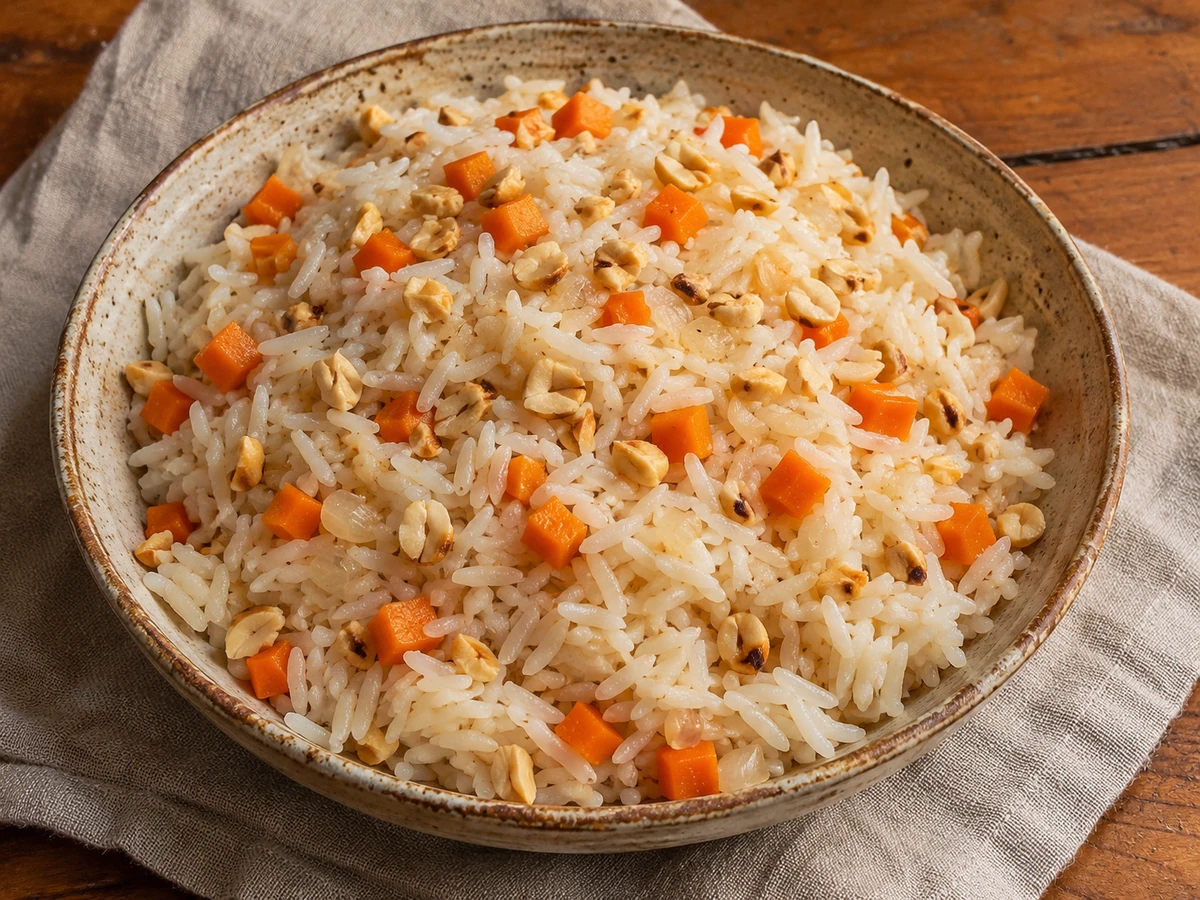
White rice cooked by absorption with diced carrot, onion and ginger, finished with roasted unsalted peanuts. A contemporary creation.
Ingredients
- 240 g raw long-grain white rice, not precooked
- 400 g raw carrot, peeled weight
- 150 g peeled onion
- 10 g peeled fresh ginger
- 60 g already roasted peanuts without added salt, shelled
- 20 g olive oil
- 480 ml hot drinking water, plus a small reserve if necessary
- 3 g salt
Preparation
Weigh 240 g dry rice, rinse and drain for 5 minutes; cut 400 g carrot into 5 mm dice, chop 150 g onion and grate 10 g ginger.
Soften onion in 20 g oil for 6 minutes; add carrot for 6 minutes, then ginger for 1 minute.
Add drained rice and gently coat for 2 minutes without browning.
Pour in 480 ml hot water and 3 g salt, stir once, bring to gentle bubbling, cover and reduce heat.
Cook for 15–18 minutes. If rice remains hard and the bottom is dry, add 1–2 tablespoons of hot water and cook covered for 3 minutes.
Rest off the heat, covered, for 10 minutes. Coarsely chop 60 g roasted unsalted peanuts.
Separate grains with a fork, add peanuts and immediately divide into four portions.
Introduction
This pilaf uses measured cooking with little handling: rice grains are briefly coated in oil with the vegetables, then cook under a lid in a defined amount of water. Carrot is diced finely enough to become tender during the same cooking period. Ginguba, meaning peanuts in this context, is added at the end so its pieces remain distinct rather than disappearing into a sauce.
This formula is a contemporary creation for Angola à table and does not claim Angolan origins for the pilaf technique. The rice is ordinary long-grain white rice, neither precooked nor flavoured. A generic raw white-rice reference is used for composition and cannot predict exactly how each variety behaves in a saucepan. The recipe makes four generous side portions; no meat, fish or other sauce is included.
Cultural context
The word ginguba refers here to peanuts, not a prepared sauce. This pilaf is a contemporary proposal within a collection devoted to Angola; it does not turn a widely shared technique into a documented national speciality. A descriptive title explains the dish without inventing an origin story.
FAO offers an institutional starting point for Angola's agricultural and food context: https://www.fao.org/angola. For cooked-rice precautions, NHS advice specifies cooling within an hour, consumption within twenty-four hours and only one reheating: https://www.nhs.uk/live-well/eat-well/food-types/starchy-foods-and-carbohydrates/.
Tips
Weigh rice dry before rinsing so retained water is not counted as grain.
Keep carrot dice uniform to match their cooking to the rice.
Choose a tight lid and minimise opening.
Add corrective water by spoonfuls, only after checking grains and the bottom.
Fold chopped peanuts in at the end to retain texture and share all 60 g between four portions.
Planning
Rinse rice in a fine sieve under drinking water, then drain for five minutes. The aim is to remove some surface starch without soaking the grains for a long time. Weigh the 240 g before rinsing to keep a clear dry basis. Also read package instructions: parboiled, brown or quick-cooking rice may need a different water ratio and timing and should not be used without adaptation.
Wash and peel carrots, then weigh 400 g usable flesh. Cut approximately five-millimetre dice. Two-centimetre pieces would remain firm after cooking timed for rice; cutting them smaller afterwards would require excessive grain stirring. Finely chop onion and grate ginger. Prepare 480 ml hot water, three grams of salt and a small water reserve so you can intervene without allowing the bottom to burn.
Use a heavy saucepan holding about three litres, with a tight-fitting lid. Heat twenty grams of oil over medium heat. Add onion and soften for six minutes without seeking strong caramelisation. Fold in carrot dice and cook for six more minutes, stirring. Add ginger for one minute, then drained rice and stir gently for two minutes to coat. Grains should remain pale; browning them would not produce the intended result.
Pour in 480 ml hot water and three grams of salt. Stir once to distribute rice and vegetables, then bring to a gentle bubble. Immediately cover and reduce the heat to the lowest level allowing a very quiet simmer. Cook for fifteen to eighteen minutes without continually lifting the lid. Frequent opening loses steam and makes missing water a matter of guesswork; excessive heat dries the bottom before the top grains are cooked.
After fifteen minutes, quickly check a grain and moisture at the bottom. If the rice centre remains hard and no liquid remains, add one or two tablespoons of hot water down the side, cover and cook for three minutes before checking again. Do not suddenly add a large glass of water that turns the pilaf into boiled rice. If rice is tender but still looks slightly moist, turn off the heat and let resting absorb moisture instead of continuing vigorous cooking.
Remove from heat and rest for ten minutes, still covered. Meanwhile coarsely chop sixty grams of already roasted unsalted peanuts. Do not turn them into powder: small pieces give the intended contrast. Then gently separate rice with a fork, lifting from the sides, and fold in peanuts without crushing carrots. Immediately divide into four portions. The stated forty-minute cooking time includes working the vegetables and bringing to temperature, with ten minutes of resting added afterwards.
Serving
Serve as soon as peanuts are incorporated, in a warmed dish or four plates. Scoop to the bottom to distribute carrot dice that settled during cooking. Do not compress rice into a mould: a loose presentation better suits separated grains. The dish contains peanuts, an allergen to disclose. Any accompaniment added at the table must be counted separately in a dietary assessment.
Storage
Cooked rice needs prompt cooling. To keep leftovers, immediately spread in thin layers in small clean containers and refrigerate at no more than 4 °C within one hour of cooking. Consume within twenty-four hours. Reheat only once, stirring if needed, until steaming and hot throughout. Do not keep the saucepan lukewarm for hours or consider reheating a way to correct overly slow cooling.
Variations
For a finer texture, cut slightly smaller carrot dice without changing the weight. A different rice variety requires reassessing water and timing rather than blindly reusing these figures. Omitting peanuts when necessary produces carrot rice without ginguba and changes composition; do not claim identical values. Adding raisins, coconut milk or stock also makes a new formula whose salt and energy must be recalculated.
Nutrition notes
Rice supplies much of the preparation's carbohydrates. Peanuts contribute fat and protein, while carrot contributes particularly to fibre. All sixty grams of peanuts and all oil are included even when visually they seem like small quantities. The roasted no-added-salt peanut reference nevertheless contains intrinsic salt; no added salt does not necessarily mean zero sodium.
Conclusion
Tender separated grains, cooked carrot dice and noticeable peanut pieces guide this pilaf. The lid, moderate heat and final rest matter more than frequent stirring. Carefully sharing vegetables and peanuts gives more comparable portions. This contemporary editorial formula is offered to cook and is not declared kitchen-tested.
Enjoy your meal
Enjoy your meal!