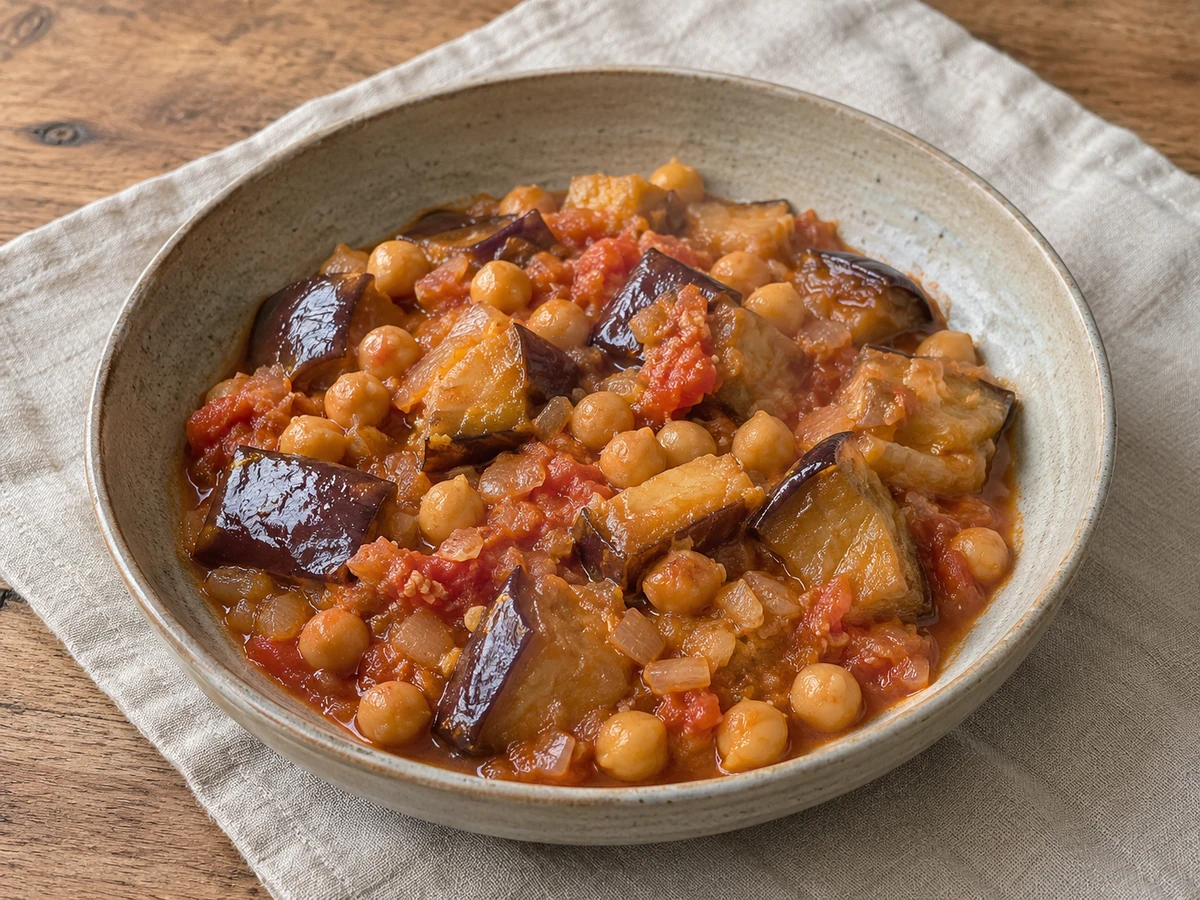
Braised eggplant with chickpeas and lemon
Tender eggplant pieces and whole chickpeas in a light tomato sauce, finished with lemon juice. A contemporary creation for Angola à table.
Ingredients
- 800 g raw eggplant, weight after removing stalk
- 400 g chickpeas already cooked without salt, drained
- 300 g raw tomatoes
- 150 g peeled raw onion
- 10 g peeled raw garlic
- 30 g pure seedless lemon juice
- 25 g olive oil
- 300 ml drinking water, with a small hot reserve if needed
- 3 g salt
Preparation
Wash and trim eggplant; weigh 800 g and cut 3 cm cubes without removing sound skin.
Prepare 300 g diced tomatoes with juice, 150 g onion and 10 g garlic chopped separately. Check 400 g drained chickpeas cooked without salt.
Soften onion in 25 g oil for 8 minutes, add garlic for 1 minute, then tomatoes and their juice for 6 minutes.
Add eggplant and turn for 5 minutes. Add a total of 300 ml water and 3 g salt; simmer covered for 15 minutes.
Fold in chickpeas and continue partly covered for 10 minutes. Check a large eggplant cube is very tender in the centre; extend with a little hot water if needed.
Off the heat, add 30 g seedless lemon juice, stir gently and rest for 5 minutes.
Divide eggplant, chickpeas and sauce into four comparable portions without accompaniment included in the values.
Introduction
Here eggplant is cooked in pieces large enough to keep the skin visible while becoming very tender inside. Chickpeas, cooked before starting, heat through in the sauce without being turned into purée. Lemon is added off the heat for a clear finish without a long reduction that would unnecessarily concentrate salt. The dish remains juicy; it does not aim for an eggplant dip texture.
This recipe is a contemporary creation for the Angola à table collection. It describes an editorial combination of vegetables and pulses without inventing a local name or claiming a regional tradition. The quantities are for four portions without cereal or bread in the nutrition. Measuring oil is especially important: eggplant that quickly absorbs the liquid at the bottom does not automatically require another amount of fat.
Cultural context
The braising method described combines eggplant, chickpea, tomato and lemon in a contemporary formula. Ingredients used in many countries cannot by themselves establish a historical origin for this combination. The name therefore remains descriptive and the text does not present the dish as evidence of one particular Angolan tradition.
FAO's representation in Angola is an institutional resource for exploring the country's agricultural and food context: https://www.fao.org/angola. It documents an environment and general issues rather than the authenticity of this preparation. This distinction makes it possible to propose new recipes while respecting the diversity of documented cuisines.
Tips
Weigh eggplant after trimming and chickpeas after cooking and draining.
Use a lid to help eggplant soften without repeatedly adding oil.
Lift rather than crush pieces as flesh becomes tender.
Taste a spoonful containing chickpea and eggplant, not just sauce.
When scaling up, mainly watch vessel size and simmering recovery; do not automatically double time.
Planning
Wash eggplants, remove stalks and damaged parts, then weigh 800 g usable eggplant. Retain sound skin: it helps the pieces remain identifiable during braising. Cut approximately three-centimetre cubes. Avoid tiny pieces that disappear into sauce before the largest become tender. Salting and draining eggplant beforehand is not planned; the three grams added later are the only deliberately incorporated salt.
Wash tomatoes, dice and keep all their juice. Finely chop the 150 g onion and 10 g garlic, reserving separately. Weigh 400 g cooked, well-drained chickpeas. They should already be tender in the centre before entering the dish. If cooking from dried seeds, do that separately and do not substitute 400 g dried chickpeas for cooked weight. This preliminary time is outside the recipe.
Heat the 25 g oil in a three-to-four-litre casserole or deep sauté pan. Add onion and soften over medium heat for eight minutes, stirring. Add garlic for one minute, then tomatoes and their juice for six minutes. Scrape juices from the bottom without letting them blacken. If it dries, use some of the measured 300 ml water instead of adding a second dose of oil. This moist base then helps eggplant cook evenly.
Fold in eggplant cubes and turn for five minutes to distribute sauce. Not all pieces will brown as in frying; this is normal for braising with measured oil. Pour in remaining water and three grams of salt. Bring to a simmer, cover and cook over low heat for fifteen minutes. Halfway through, gently lift bottom pieces towards the surface. Keep enough liquid to prevent flesh sticking without turning the dish into soup.
Add chickpeas, fold gently and continue partly covered for ten minutes. Pierce a large eggplant cube: the point should enter easily and the flesh should have no resistant spongy centre. If needed, cook several minutes longer with a little hot water. Vegetable weight and maturity and pan width explain variations in timing. Do not use skin colour alone to decide the interior is cooked.
During the last minutes, squeeze lemon and weigh 30 g strained seedless juice. Turn off heat, add juice and stir from the bottom without crushing all the eggplant. Rest for five minutes. The sauce should connect ingredients and remain mobile when the pan is slightly tilted. If too thin, remove solids to a clean dish and briefly reduce before returning them; avoid prolonged boiling after lemon. The stated forty-five minutes is a guide to adjust according to observed tenderness.
Serving
Serve hot or lukewarm after the short rest in four shallow bowls. Divide large eggplant pieces and chickpeas before adding sauce, because a ladleful of liquid alone does not represent one quarter of the recipe. Do not drizzle more oil at the table if preserving the stated formula. Lemon should be noticeable without automatically squeezing a new wedge over each serving.
Storage
Promptly divide leftovers into small shallow containers and refrigerate at no more than 4 °C within two hours of cooking. Consume within forty-eight hours. Reheat only the required amount until chickpeas and eggplant are hot through the centre, stirring gently. Flesh will be softer after storage; prolonged further cooking cannot restore its original texture. Add a little water to loosen sauce if needed.
Variations
For a thicker version, mash a small amount of the chickpeas already included before returning them to sauce. Do not add another mass of pulses without adjusting the calculation. For less lemon flavour, gradually incorporate the measured juice and reserve the rest; the composition actually consumed then changes slightly. Differently shaped eggplants are suitable if prepared weight stays the same, but skin and softening time may vary.
Nutrition notes
Chickpeas contribute protein and fibre. Eggplant and tomatoes add vegetables weighed as prepared raw ingredients; chickpeas, by contrast, are counted cooked. All oil and salt are included. Estimates cover one quarter of the complete casserole contents without accompaniment or extra oil. They describe approximate composition without claims of prevention or treatment.
Conclusion
The useful guide is eggplant flesh that yields easily to a point, whole chickpeas and supple sauce. Measuring oil, covering during softening and adding lemon off the heat provide a more controllable method than repeated improvised additions. Divide solids evenly before liquid. This editorial proposal is not declared kitchen-tested.
Enjoy your meal
Enjoy your meal!