Whole sorghum cream with lemon and coconut
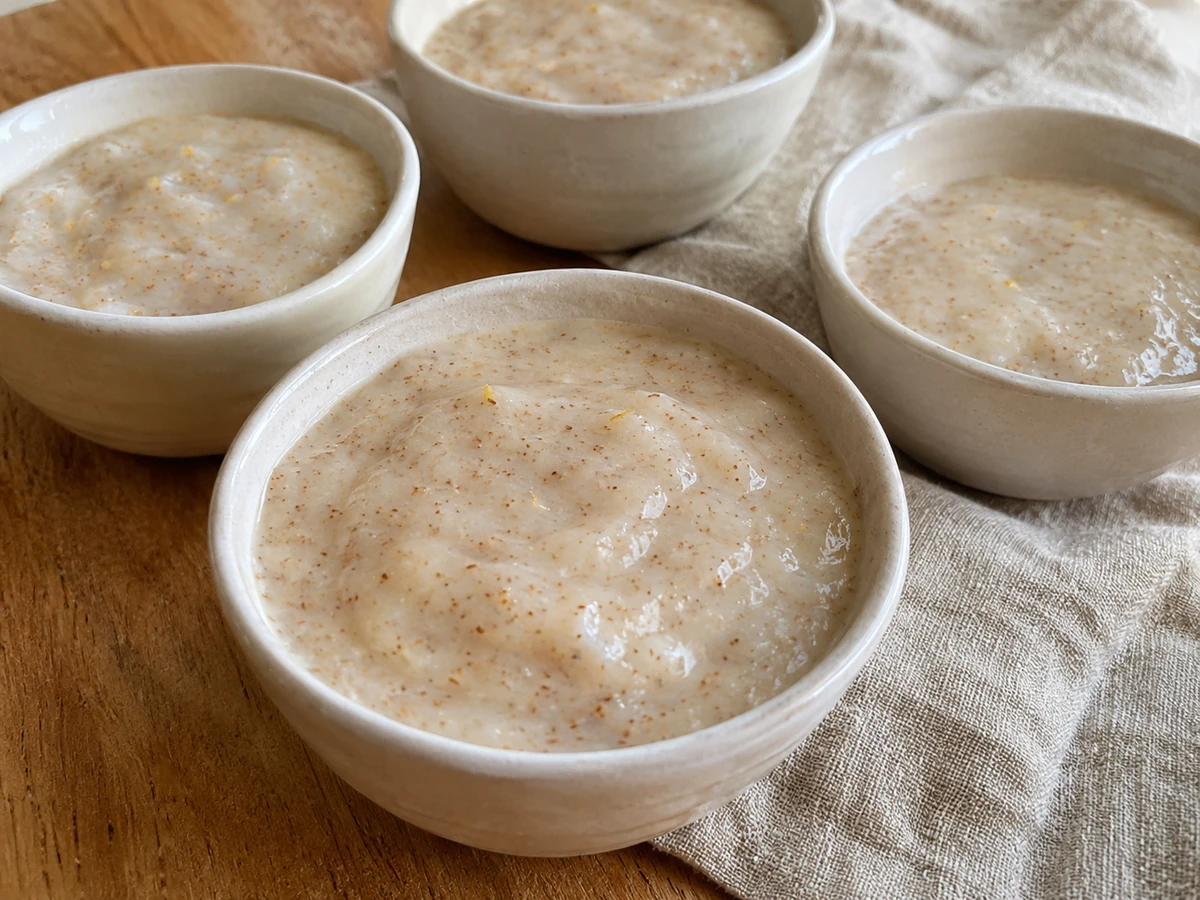
Whole sorghum is cooked thoroughly, then blended with coconut milk, lemon and a little sugar into a chilled cream with a rustic texture.
Ingredients
- 120 g dried food-grade whole sorghum grains
- 1,000 ml drinking water for soaking, discarded afterwards
- 600 ml fresh drinking water for cooking, plus a small hot reserve if needed
- 400 g unsweetened coconut milk, thoroughly mixed
- 30 g white sugar
- 25 g pure lemon juice
- 1 g finely grated washed lemon zest, yellow part only
- 1 g salt
Preparation
Rinse 120 g dried sorghum; cover with 1,000 ml water and soak 8 hours in the refrigerator at no more than 4 °C, extending up to 12 hours if needed.
Discard soaking water, rinse and cook grains in 600 ml fresh water, partly covered at a gentle simmer, for 55–70 minutes.
Check several grain centres; extend and add a little hot water if needed. Retain the liquid, reducing it slightly if very abundant.
Add 400 g thoroughly mixed coconut milk, 30 g sugar and 1 g salt; simmer for 5–8 minutes.
Off the heat, carefully immersion-blend without straining; fold in 25 g lemon juice and 1 g fine zest.
Divide into four shallow containers; release steam for about 20 minutes, then refrigerate promptly, never exceeding 2 hours at room temperature.
Chill at least 120 minutes in the refrigerator and serve cold. After soaking: 250 minutes including 140 minutes cooling. Minimum total: 730 minutes, including 8 hours soaking; approximately 970 minutes if soaking takes 12 hours.
Introduction
This cream begins with whole sorghum grains, not flour or starch. They are soaked under refrigeration, cooked until truly tender, then blended with their liquid and coconut milk. The final texture retains fine bran flecks; it does not try to imitate a smooth egg-set flan. Lemon is added after cooking to retain a fresh aroma without hindering the grain's initial softening. The dessert is then cooled in four small containers.
Allow 8 hours soaking in the refrigerator as the baseline, extending if the product requires it, up to 12 hours. After soaking, allow about 20 minutes preparation, 90 minutes cooking and 140 minutes cooling, including 120 minutes in the refrigerator: this stage takes 250 minutes. The stated minimum total is 730 minutes, including 480 minutes (8 hours) soaking. With 12 hours soaking, allow approximately 970 minutes. This contemporary creation for Angola à table proposes a sweet use for sorghum; it claims neither a traditional name nor a documented regional origin. The four servings include no additional garnish.
Cultural context
Turning a whole cereal into a lemon dessert is a contemporary choice here. The method should not be confused with a particular local porridge, and no Angolan name is invented to give it antiquity. Sorghum remains identified even after blending; the creamy appearance does not mean flour was used.
FAO offers resources on cereal and millet diversity: https://www.fao.org/millets-2023. For national context, see https://www.fao.org/angola. These institutional references open research on ingredients but do not certify this sweet formula.
Tips
Weigh grains before soaking, not after water absorption.
Do not add lemon or sugar before grain centres become tender.
Blend with the head submerged to limit hot splashes.
Retain all grains and their liquid in the cream; do not sieve.
Include soaking and cooling in dessert planning even though active preparation is short.
Planning
Sort the grains to remove any small debris, then rinse in a fine sieve. Put in a clean container with the litre of soaking water, cover and refrigerate at no more than 4 °C for eight to twelve hours. Do not leave soaking overnight in a warm kitchen. Next day, discard that water and briefly rinse the grains. The 120 g was weighed dry before soaking; do not measure the same amount of already swollen sorghum, which would significantly change the cereal proportion.
Put drained grains in a heavy-based saucepan with 600 ml fresh water. Bring to the boil, reduce the heat and cover leaving a small opening. Simmer for fifty-five to seventy minutes. Timing depends on the product, its age and degree of dehulling, so package instructions remain useful. Stir occasionally and check that the bottom does not dry. Add a little hot water if necessary. Before any sweetening stage, crush a cooled grain between two fingers or beneath a spoon: the centre must no longer be hard.
If the grains still resist, continue cooking instead of expecting the blender to remove an undercooked core. Retain cooking liquid with the grains. If much remains, cook uncovered for a few minutes, watching the bottom more closely, to obtain grains surrounded by lightly thickened liquid rather than a very thin soup. There is no need to evaporate until dry. Retained water explains some texture differences; do not compensate with unmeasured extra coconut milk or sugar.
Stir the coconut milk in its container before weighing 400 g. Add to the tender grains with 30 g sugar and one gram of salt. Simmer five to eight minutes, stirring to prevent sticking. Turn off the heat and wait until strong splashing stops. Use an immersion blender in the saucepan, keeping its head fully submerged, and blend in bursts until as even as possible. Do not enclose a scalding mixture in a small airtight blender. Fine bran particles are normal; do not strain, since all grains remain in the calculated formula.
Wash and dry the lemon before finely grating one gram of yellow zest without bitter white pith. Squeeze and strain juice to measure 25 g. Stir juice and zest in off the heat. The cream should remain soft: chilling will thicken it slightly without turning it into a firm gel. Immediately divide between four shallow containers without stacking. Let steam escape for about twenty minutes, then refrigerate promptly. Aim to refrigerate within one hour after cooking and never exceed two hours at room temperature.
Leave at least two hours in the refrigerator at no more than 4 °C before serving. Cover containers with clean protection once steam dissipates. If slight separation appears after cooling, gently stir each serving before presenting. The intended result is a cold cereal cream, lightly grainy and easy to spoon; do not add unplanned flour to obtain a flan's firmness.
Serving
Serve all four portions cold in their small bowls or ramekins. Briefly stirring each cream with a spoon is enough to soften it; do not beat vigorously trying to eliminate every grain particle. This version adds neither grated coconut nor fruit at serving. If a garnish is wanted, present separately and count it additionally. Dividing by weight after thoroughly stirring the saucepan produces more consistent portions than simply filling by eye.
Storage
Keep covered at no more than 4 °C and consume within twenty-four hours. Lemon does not replace rapid cooling or refrigeration. Use clean spoons and take out only the intended servings. This dessert is meant to be eaten cold; reheating is not a means of extending its storage. Do not keep until the next day a cream that has waited more than two hours at room temperature.
Variations
For a more rustic texture, blend for less time while retaining fully cooked grains. For a subtler lemon aroma, reduce zest when formulating rather than adding sugar to mask bitterness. Sorghum flour would require a different liquid ratio and timing; it does not automatically replace the whole grain here. A heavily diluted coconut drink differs in composition from the coconut milk used and would need a new calculation.
Nutrition notes
The calculation uses dried whole sorghum weight before soaking. All grains, coconut milk, sugar, juice, zest and salt are counted. Any losses in discarded soaking water are unmeasured, which limits the estimate. Coconut milk contributes substantially to the serving's fat; the word cereal does not automatically make a dessert light. Values refer to a quarter of the preparation without garnish and are neither an analysis of the chilled product nor a medical promise.
Conclusion
A thoroughly softened grain before blending, lemon added at the end and organised cooling produce a cream consistent with its composition. Accepting a slight bran texture avoids straining away some cereal or multiplying additions. This contemporary creation is offered with precise guides; it is not represented as kitchen-tested.
Enjoy your meal
Enjoy your meal!