Sweet potato loaf cake with cocoa and ginguba
A small, dense and tender sweet potato loaf with unsweetened cocoa and roasted peanuts. A contemporary creation for Angola à table.
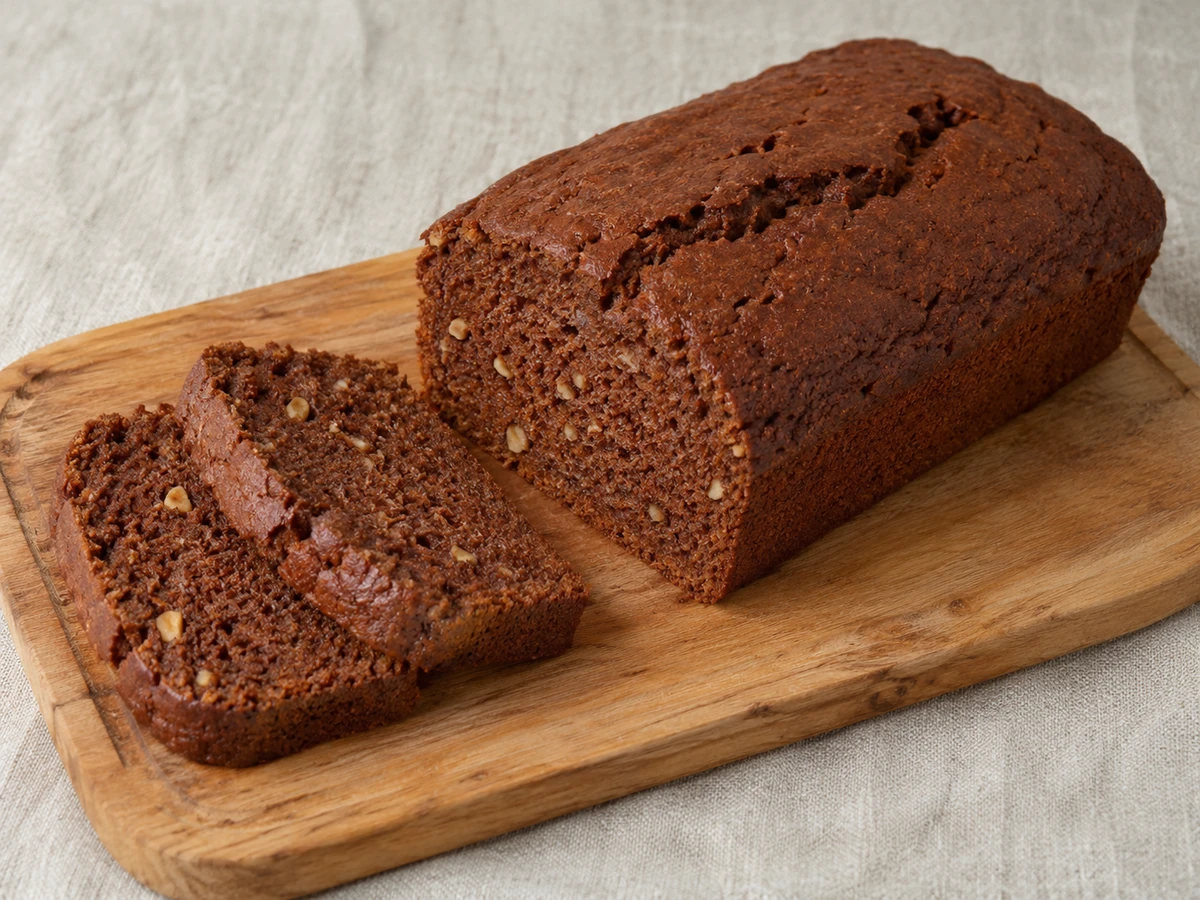
Ingredients
- 350 g peeled raw sweet potato, edible weight before steaming
- 80 g fine uncooked maize flour, not corn starch
- 100 g raw whole egg without shell, approximately 2 eggs confirmed by weighing
- 60 g UHT semi-skimmed milk
- 40 g white sugar
- 20 g unsweetened cocoa powder
- 40 g already roasted unsalted shelled peanuts
- 20 g sunflower oil
- 1 g salt
- Drinking water to produce steam, without contact with the sweet potato
Preparation
Weigh 350 g peeled raw sweet potato, cut into 2 cm cubes and steam 15–20 minutes until tender.
Retain all flesh, release steam for 5 minutes, mash and cool to lukewarm for approximately another 10 minutes.
Preheat the oven to 175 °C and line an approximately 18 × 9 cm, near-one-litre loaf tin with baking parchment.
Chop 40 g roasted unsalted peanuts. Mix 80 g maize flour, 20 g unsweetened cocoa and 1 g salt.
Whisk 100 g egg without shell with 40 g sugar for 2 minutes; incorporate 20 g oil, 60 g milk and all lukewarm mash.
Add dry ingredients and peanuts, transfer to the tin and bake 40–50 minutes; check at least 74 °C at the centre and no liquid batter.
Cool at least 45 minutes after baking, lifting with parchment after the first 20 minutes. Refrigerate within 2 hours. Cut eight slices and serve two per person.
Introduction
Sweet potato forms this cake's moist base, cocoa supplies a pronounced flavour and ginguba contributes small peanut pieces. The recipe does not seek the very airy crumb of a classic pound cake. Fine maize flour and eggs provide structure, but there is no baking powder. Expect a low, tender, dense cake to slice after cooling rather than a tall risen loaf to unmould while hot.
This proposal is a contemporary creation in the Angola à table collection. Ginguba means peanut here; the word is not evidence that this cocoa combination has an ancient origin. The quantities yield eight slices, grouped in pairs for four servings. Nutritional values refer to this quarter of the cake without added cream, icing or drink. Sweetness varies with the sweet potato chosen; forty grams of sugar belong to the formula and are not an amount to pour by eye.
Cultural context
This cake combines sweet potato, cocoa and peanut in an explicitly contemporary formula. Ginguba does not give it a traditional name or demonstrated regional history. The proportions, use of maize flour and choice of a small rectangular tin are editorial decisions.
FAO's institutional resources in Angola provide context for exploring the country's food and agriculture: https://www.fao.org/angola. They do not certify this recipe. Food-composition data used for estimates come from the Anses Ciqual table: https://zenodo.org/records/4770600. These references describe a context or foods, not a baking trial of this loaf.
Tips
Weigh sweet potato raw after peeling and retain all its cooked flesh.
Let mash become lukewarm before adding eggs to prevent local coagulation.
Sift cocoa lumps and scrape the bowl bottom after adding powders.
Use a tin of similar capacity to maintain comparable thickness.
Wait for cooling before judging structure; do not confuse moist crumb with undercooked liquid batter.
Planning
Peel sweet potato and weigh three hundred and fifty grams of raw flesh. Cut into approximately two-centimetre cubes and place in a steamer basket above water without immersing them. Cover and cook for fifteen to twenty minutes until a fork easily passes through the largest pieces. Retain all cooked flesh for the recipe. Avoid boiling in a large amount of water, which would introduce draining and losses different from the stated method.
Let the pieces release steam for five minutes in a clean dish, then finely mash with a fork or potato masher. Do not add milk at this stage unless taken from the planned sixty grams. Spread the mash to become lukewarm for approximately another ten minutes. It should no longer be piping hot when eggs are incorporated. A few small soft sweet potato fragments are acceptable; liquid purée or still-firm cubes do not match the intended texture.
Preheat a conventional oven to 175 °C. Line a small loaf tin approximately eighteen by nine centimetres, with a capacity near one litre, using baking parchment. Parchment replaces additional greasing here. Leave a strip projecting over two sides to help lift the cooled cake. A very large tin produces a thin layer needing different cooking checks; do not seek extra height by choosing a narrow container that overflows.
Check peanuts are already roasted and unsalted, then chop into small three-to-five-millimetre pieces on a stable board. Do not grind into paste. In a separate bowl, mix eighty grams of maize flour, twenty grams of cocoa and one gram of salt. Sift cocoa if lumpy, since lumps would remain bitter and dry within the crumb. Yellow grain flour is not interchangeable with white starch.
Crack eggs into a clean bowl and weigh one hundred grams without shell. Add forty grams of sugar and whisk for approximately two minutes to make a homogeneous, lightly foamy mixture without aiming for sponge-cake volume. Incorporate twenty grams of oil, sixty grams of milk and all lukewarm mash. Add dry ingredients in two additions, scraping the sides, then fold in all peanut pieces. Batter should be thick and spoonable; do not freely thin it with milk to obtain crêpe batter.
Transfer all batter into the tin, smooth and bake for forty to fifty minutes on a rack in the middle of the oven. Begin checking at forty minutes. A clean probe placed in the centre without touching the tin should show at least seventy-four degrees Celsius. A skewer may retain small moist crumbs but not a streak of liquid batter. Cocoa makes colour an unhelpful guide to the centre. If the top darkens too quickly, lay over baking parchment without pressing it onto the batter.
Rest the loaf in its tin on a rack for twenty minutes, then lift using parchment and continue cooling. Allow at least forty-five minutes of cooling after baking, longer if the centre remains too soft for clean slicing. The indicative total includes fifteen minutes to cool the mash to lukewarm and forty-five for the cake. Refrigerate without waiting for hours, no later than two hours after baking. Cut eight slices with a clean knife and serve two per portion.
Serving
Serve cooled, once the sweet-potato-and-egg structure has firmed. Wipe the blade between cuts if moist crumb clings. A dense slice is not a failure to disguise with icing: it is the stated profile of this formula without baking powder. Share eight similarly sized slices, two per person, taking the ends of the tin into account. A drink or additional fruit may accompany the cake separately but is not included in the nutrition.
Storage
Keep covered in the refrigerator at no more than four degrees Celsius and consume within forty-eight hours. Do not shut the piping-hot cake into a deep box; first allow steam to escape on the rack, then refrigerate within two hours. Take out only the slices needed with a clean utensil. Cocoa or sugar does not make this moist cake stable for days at room temperature. Check peanut freshness and do not use a product with a rancid smell.
Variations
The same forty grams of peanuts can be more finely chopped for less distinct texture, without grinding into butter or adding fat. A paler sweet potato changes colour and possibly sweetness but does not automatically justify altering sugar. Replacing unsweetened cocoa with sweetened chocolate powder changes composition. Removing eggs or substituting flour requires reformulation; do not promise identical slicing after simple omission.
Nutrition notes
The calculation includes sweet potato weighed raw, all eggs, milk, flour, sugar, cocoa, peanuts, oil and salt. Steam water adds no macronutrients. The peanut reference is roasted without added salt; a salted version would alter sodium in particular. One quarter of the cake contains milk, eggs and peanut, allergens to disclose. Values are approximate: residue in containers and unequal slicing alter the actual serving without justifying medical promises.
Conclusion
Fine, lukewarm mash, a homogeneous thick mixture and a centre check provide useful guides for this loaf. Resting is essential for clear slicing and belongs to the time required. Expecting a dense texture avoids overbaking in search of lightness the formula does not aim for. This editorial creation is not declared kitchen-tested.
Enjoy your meal
Enjoy your meal!