Maize crêpes with papaya
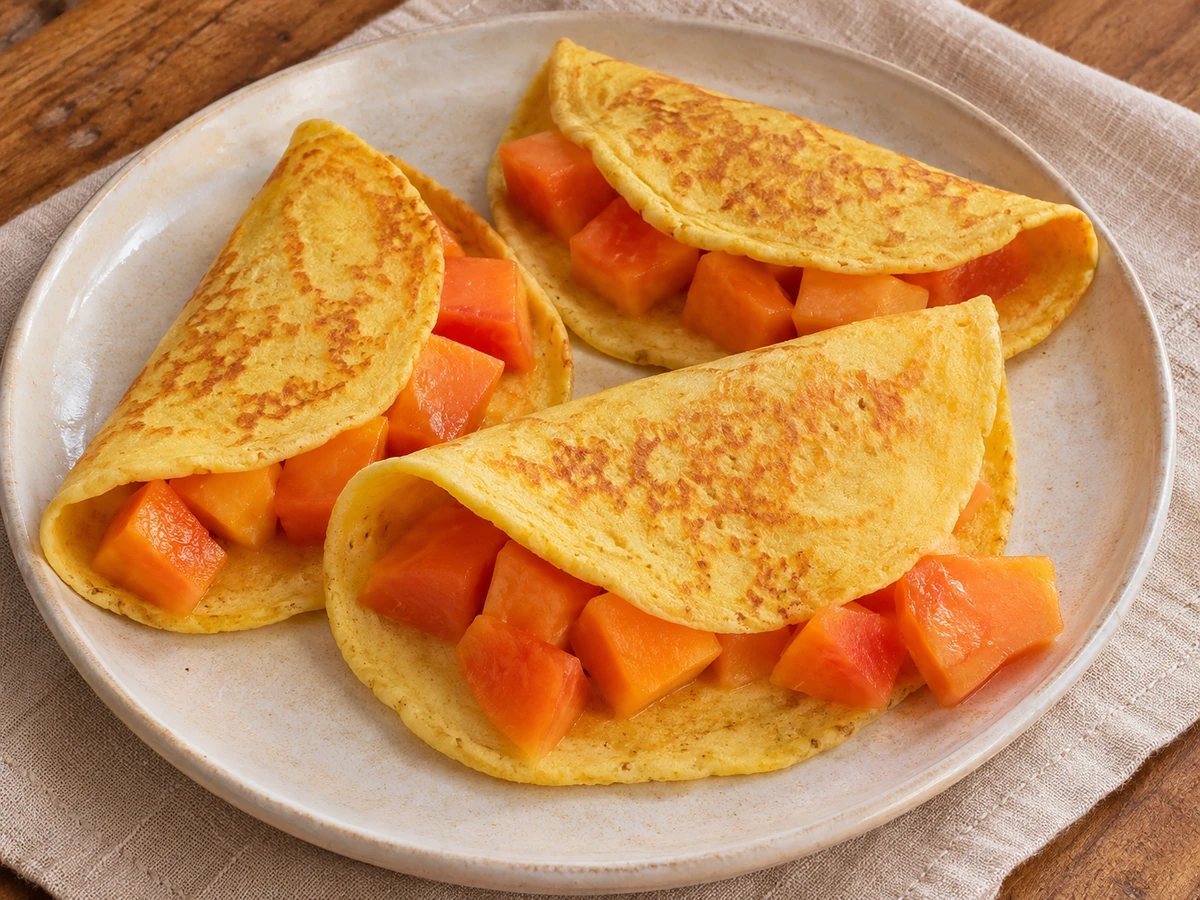
Twelve small maize-flour crêpes filled with fresh papaya and lime. A contemporary creation for Angola à table.
Ingredients
- 120 g fine, uncooked maize flour, not corn starch
- 100 g raw egg without shell, approximately 2 eggs confirmed by weighing
- 240 g UHT semi-skimmed milk
- 80 ml drinking water
- 20 g sunflower oil: 10 g in the batter and 10 g for the pan
- 400 g raw ripe papaya flesh without skin or seeds
- 20 g freshly squeezed and strained lime juice
- 1 g salt
Preparation
Mix 120 g fine maize flour with 1 g salt. Weigh 100 g beaten raw egg without shell.
Gradually incorporate eggs and 240 g milk, then 80 ml water and 10 g oil. Cover and rest 20 minutes in the refrigerator.
Prepare 400 g papaya flesh as cubes and mix with 20 g lime juice; keep chilled.
Heat a non-stick pan over medium heat and very lightly oil it using part of the reserved 10 g oil.
Stir batter and cook twelve small crêpes approximately 16 cm across, about 2 minutes on the first side and 1 minute on the second; check at least 74 °C in the thickest part with a thin probe.
Use all batter and measured oil, then divide papaya and juice among the crêpes. Serve three crêpes per person.
Introduction
These crêpes aim for a flexible texture that is slightly thicker than a very thin wheat crêpe. Maize flour supplies colour and flavour, while eggs provide part of the structure. Milk and water allow the batter to spread without producing a dry flatbread. The papaya stays raw: its pieces are added after cooking to preserve the contrast between warm crêpe and fresh fruit.
The formula makes twelve small crêpes approximately sixteen centimetres across, three per person for four servings. It contains no added sugar; that does not mean sugar-free, since milk and fruit naturally contain sugars. This is a contemporary creation for Angola à table, without claiming to reproduce a traditional speciality. Use finely ground maize flour, not corn starch, coarse meal or an instant polenta mixture.
Cultural context
Maize and papaya meet here in a contemporary proposal whose folding and proportions are editorial choices. Their combination does not prove an identical traditional Angolan crêpe exists. The entry therefore retains a descriptive title without inventing a local name or old story.
FAO's Angola resources provide an institutional framework for exploring the country's agricultural and food questions: https://www.fao.org/angola. They do not certify this formula. FoodSafety.gov can inform precautions when preparing foods containing eggs: https://www.foodsafety.gov/food-safety-charts/safe-minimum-internal-temperatures. A safety reference is not evidence of culinary origin.
Tips
Stir batter regularly to redistribute flour that settles at the bottom.
Wait for the first side to set before turning; a torn crêpe often indicates handling too soon.
Keep the discs modest in size, easier to turn than a very large crêpe without wheat flour.
Weigh papaya flesh after removing skin and seeds.
Share measured oil across all batches and favour a sound pan over repeated oil additions.
Planning
Check the package before beginning: the flour must be fine enough for a pourable batter. White starch does not replace yellow flour, since its composition and behaviour differ. Weigh flour into a large bowl and add one gram of salt. Crack eggs into a separate container, check for shell fragments and weigh one hundred grams of beaten egg. Keep any surplus for another safe use rather than automatically adding it to this formula.
Make a well in the flour. Add eggs and a little of the milk, then gradually whisk from the centre towards the edges to form a thick mixture without dry pockets. Incorporate the rest of the two hundred and forty grams of milk, eighty millilitres of water and ten grams of oil. Scrape the bottom with a spatula, since flour may stick there. Cover and rest for twenty minutes in the refrigerator. This rest hydrates flour; it does not create the gluten network that maize lacks.
During the rest, wash the papaya skin before opening, even though it will not be eaten. Cut on a clean board, remove seeds and skin, then weigh four hundred grams of usable flesh. Choose ripe fruit that is still firm enough to hold approximately one-centimetre cubes. Mix with twenty grams of lime juice, cover and keep chilled. Juice seasons the fruit; it does not disinfect it or replace refrigeration.
Prepare a sound non-stick pan with approximately sixteen to eighteen centimetres of usable base, a small ladle and a thin spatula. Measure the reserved ten grams of oil into a small dish and use a clean brush to take very small amounts between batches. Do not pour an unrestricted drizzle each time, which would greatly exceed the planned oil. Heat over medium heat. Stir batter before the first ladleful and between several crêpes, since maize flour tends to settle at the bottom.
Use all the batter for twelve small crêpes, approximately forty-five grams of batter each. Pour one portion into the lightly oiled pan and tilt to form an even disc. Cook the first side for approximately two minutes, until the surface no longer shows liquid batter and the edges release. Slide the spatula beneath a sufficiently set area and turn gently without pulling a fragile edge. Cook the other side for approximately one minute. A thin probe inserted sideways into the thickest part should show at least seventy-four degrees Celsius; extend cooking when necessary.
Stack cooked crêpes on a clean plate, loosely covered to limit drying without trapping excessive steam. Keep medium heat and reduce it if brown spots appear before the centre sets. Total cooking takes approximately forty minutes for twelve pieces, including handling. Divide papaya and its juice among the crêpes only when serving; gently fold in half rather than rolling tightly, which could split them.
Serving
Serve while the crêpes remain supple, with comparable amounts of fruit in each. Three small pieces make a serving; that count should not lead to very different sizes. Add juice left in the papaya bowl instead of discarding it and pouring on an unplanned sweet sauce. Presentation can be simple, folded in half on a plate. No cream, syrup or icing sugar is included in the recipe or nutritional values.
Storage
The batter contains raw eggs and milk: keep covered and refrigerated during its rest and cook the same day. For leftovers, store crêpes and papaya separately at no more than four degrees Celsius in clean closed containers. Refrigerate within two hours of preparation and consume within twenty-four hours. Reheat only the crêpes needed until hot throughout, then add cold fruit. Do not leave a stack of filled crêpes waiting all afternoon at room temperature.
Variations
A riper papaya can be roughly mashed rather than diced; keep the same flesh weight and its juice. For lighter acidity, serve some lime separately rather than adding sugar. Replacing milk with a plant-based drink or removing eggs requires reformulating the binding and liquid, not an automatically identical substitution. Another flour also changes flexibility: the stated recipe remains the fine-maize-flour version.
Nutrition notes
Flour contributes carbohydrates, eggs and milk contribute some protein, and oil contributes fat. The calculation includes all papaya, lime juice and twenty grams of measured oil. Some oil may remain on the brush or pan, so values estimate the formula rather than analyse each crêpe. Milk and eggs are allergens to disclose. The absence of added sugar does not justify medical promises.
Conclusion
Correctly identified flour, rested then stirred batter, and patient turning are the three guides for these small crêpes. Prepare the fresh filling separately and add to the cooked batter at the last moment. Dividing twelve pieces and all papaya into four servings makes service consistent. This editorial creation is not declared kitchen-tested.
Enjoy your meal
Enjoy your meal!