Pan-cooked okra with black-eyed peas and tomato
Okra rounds are first sautéed, then combined with tender black-eyed peas and reduced tomato, without abundant broth. A contemporary creation.
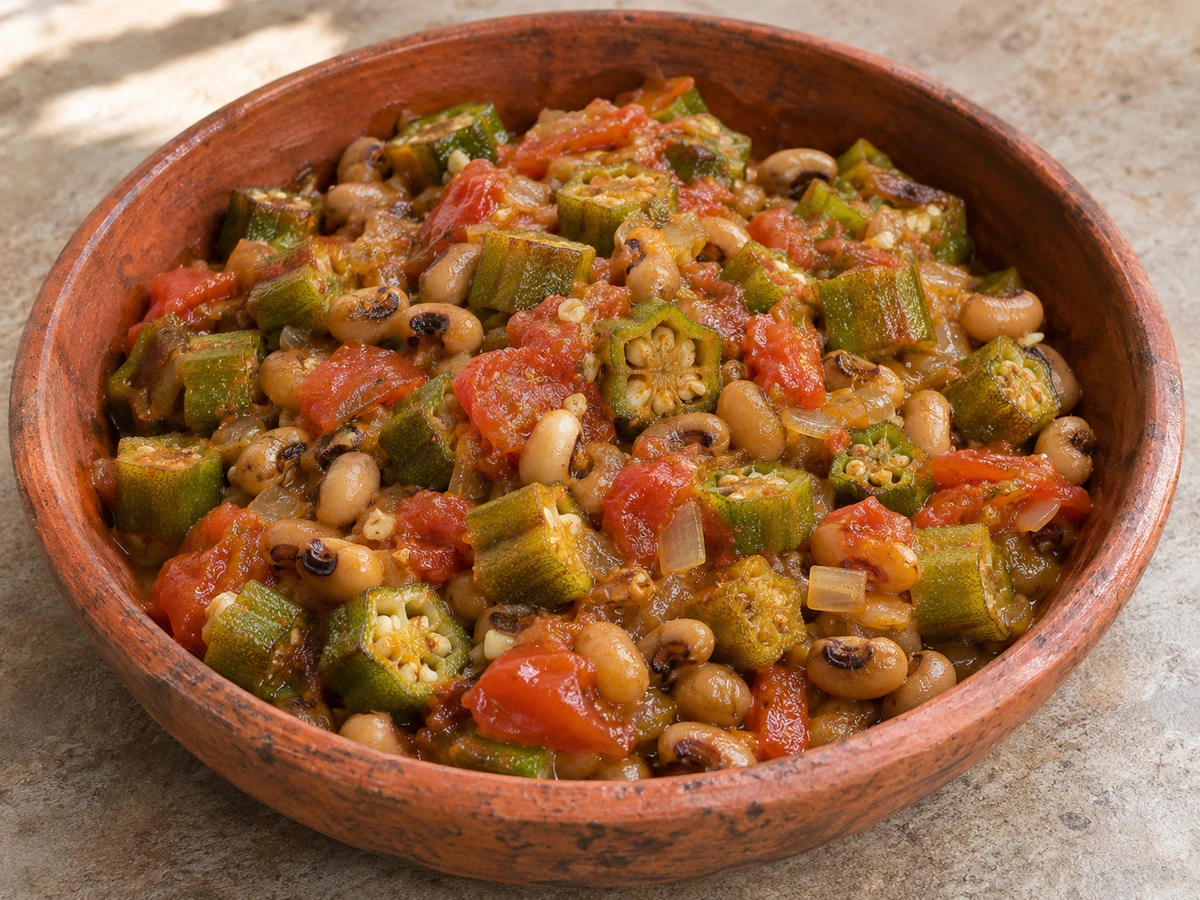
Ingredients
- 500 g raw okra, weighed after removing hard stalk ends
- 450 g black-eyed peas boiled without salt, drained
- 350 g raw tomatoes
- 120 g peeled onion
- 8 g peeled garlic
- 25 g olive oil: 15 g for okra and 10 g for tomato base
- 120 ml drinking water
- 3 g salt
Preparation
Wash and dry okra; remove hard stalk ends, weigh 500 g prepared raw pods and cut into 1.5 cm rounds.
Check and drain 450 g black-eyed peas already cooked without salt. Prepare 350 g tomatoes with juice, 120 g onion and 8 g garlic.
Sauté half the okra in half the reserved 15 g oil for 7–8 minutes; transfer to a clean plate. Repeat with remaining okra and that oil reserve.
Lower heat, add remaining 10 g oil and soften onion for 6 minutes; add garlic for 30 seconds.
Add tomatoes and juice, cook for 7 minutes, then add 120 ml water and 3 g salt.
Add peas and simmer uncovered for 8 minutes, stirring gently.
Return okra and its juices; cook for another 3 minutes until okra is tender and peas hot throughout.
Divide into four portions with equal proportions of vegetables, peas and tomato base.
Introduction
This dish aims for a moist pan preparation with visible components rather than a soup. Okra starts alone in a wide frying pan, in two batches, so its cut faces can acquire a light golden edge. Already-cooked black-eyed peas then enter a softened tomato base. Separating the stages controls water: putting everything together in a narrow vessel would mainly cook the ingredients in their own liquid.
The formula makes four portions using 450 g black-eyed peas cooked without salt and drained. Their preliminary cooking is not included in the stated times; they must be tender before starting. Okra is weighed raw after trimming. This contemporary creation for Angola à table does not claim to transcribe a named traditional Angolan recipe. The title simply describes ingredients and method, without an invented local name or supposed family history.
Cultural context
Black-eyed peas are the beans referred to here as cornilles, also associated with the name niébé depending on usage. This recipe uses them whole with okra in a contemporary pan dish. It does not confuse a new culinary combination with an attested national dish. The separate first cooking of okra and tomato reduction are methodological choices here, without an invented origin narrative.
FAO's representation in Angola provides institutional information on the country's agricultural and food context: https://www.fao.org/angola. Context illuminates the collection; it does not certify this dish's age or every combination proposed in its variations.
Tips
Dry okra before cutting and placing in oil.
Divide the first cooking into two batches to avoid piling up rounds.
Retain tomato juice and juice released by sautéed okra in the dish.
Reduce an overly liquid base before final combination rather than drying all vegetables for a long time.
Weigh cooked, drained peas: the same dry weight would produce a very different quantity.
Planning
Wash whole okra under drinking water and dry thoroughly with a clean cloth. Remove hard stalk ends without taking away a large part of each pod, weigh 500 g usable okra and cut rounds approximately one and a half centimetres thick. Regular pieces make cooking more predictable. Very fibrous pods or damaged parts should not be used as they are. A dry surface limits splashing when it meets oil, although the inside naturally remains moist.
Prepare black-eyed peas separately: check tenderness, drain and weigh 450 g. A fork should squash a pea without a hard centre. If insufficiently cooked, continue cooking in water before beginning this dish. Brief reheating in tomato is not designed to finish dried pulses. Salted canned peas do not match the stated formula; choose peas without added salt or disclose that salt calculation needs adjustment.
Dice tomatoes, retaining all juice, and weigh 350 g usable flesh. Finely chop onion and keep chopped garlic separate. Divide oil into two reserves: fifteen grams for the two okra batches and ten grams for tomato. Prepare a wide, sufficiently deep-sided frying pan, approximately twenty-eight centimetres across, and a clean plate for cooked okra. Avoid a small saucepan: available surface area matters here as much as heat intensity.
Heat half of the fifteen grams allocated to okra over medium-high heat. Spread half the rounds in one layer without piling them up. Cook seven to eight minutes, gently turning several times, until some faces are lightly golden and rounds begin softening. They should neither blacken nor become dry. Transfer to the plate, add the other half of this oil reserve and cook the remaining okra in the same way. Do not seek a thick crust: the dish will finish with tomato.
Lower to medium heat and add the remaining ten grams of oil to the same pan. Soften onion for six minutes, add garlic for thirty seconds and then tomatoes with their juice. Cook seven minutes, stirring and loosening light-coloured juices stuck on the bottom; do not incorporate burnt deposits. Add 120 ml water, three grams salt and drained peas. Keep a gentle simmer for eight minutes uncovered, stirring occasionally to distribute heat.
Return okra and all juice left on its plate to the pan. Lift ingredients with a broad spatula and cook for three more minutes until okra is tender and peas are hot at their centres. The base should coat ingredients without a large pool of broth. If tomatoes were very watery, reduce their base a few extra minutes before adding peas rather than extending final cooking substantially. Conversely, if the base dries, add a little hot water and note the volume adjustment without automatically pouring in oil or salt.
Serving
Serve hot on four plates or a wide platter, keeping rounds and peas as whole as possible. Stir gently before sharing because peas may collect at the bottom. Slight okra thickening is expected even after initial sautéing; a completely dry texture is not the aim. No rice, funge or other accompaniment is included in this formula. If offering one, serve separately and add its contribution to the portion's values.
Storage
Because peas are already cooked and reheated in this dish, preferably prepare the amount intended for the meal and avoid repeated cooling and reheating cycles. If the bases were freshly cooked, promptly divide leftovers between shallow containers, refrigerate at no more than 4 °C within two hours and consume within 48 hours. Reheat only the required amount until uniformly hot, stirring. Do not extend storage because tomato is acidic.
Variations
For longer pieces, cut okra into two-centimetre sections and check actual tenderness before serving; timing may change. For a thicker preparation, mash a few of the specified peas into the tomato base before returning okra, without adding a further quantity. Replacing peas with another bean species changes composition and sometimes texture. These variations are not declared tested with a result identical to the principal formula.
Nutrition notes
Black-eyed peas contribute protein and fibre, while okra and tomato provide some of the portion's vegetables. The calculation must distinguish prepared raw okra weight from cooked, drained pea weight. All twenty-five grams of oil are counted even though cooking takes place in several batches. The per-serving estimate assumes four equal shares without accompaniments; it is neither an analysis of the served dish nor a health promise.
Conclusion
A sufficiently wide pan, two batches for okra and a tomato base adjusted before final combination provide control over the result. Peas must be tender before entering the pan and hot when served. Keep a moist preparation that coats pieces without seeking abundant broth. This editorial formula is offered to cook and is not represented as kitchen-tested.
Enjoy your meal
Enjoy your meal!