Braised pork with cabbage and pineapple
Pork shoulder gently simmered, then combined with white cabbage and fresh pineapple pieces. A contemporary creation for Angola à table.
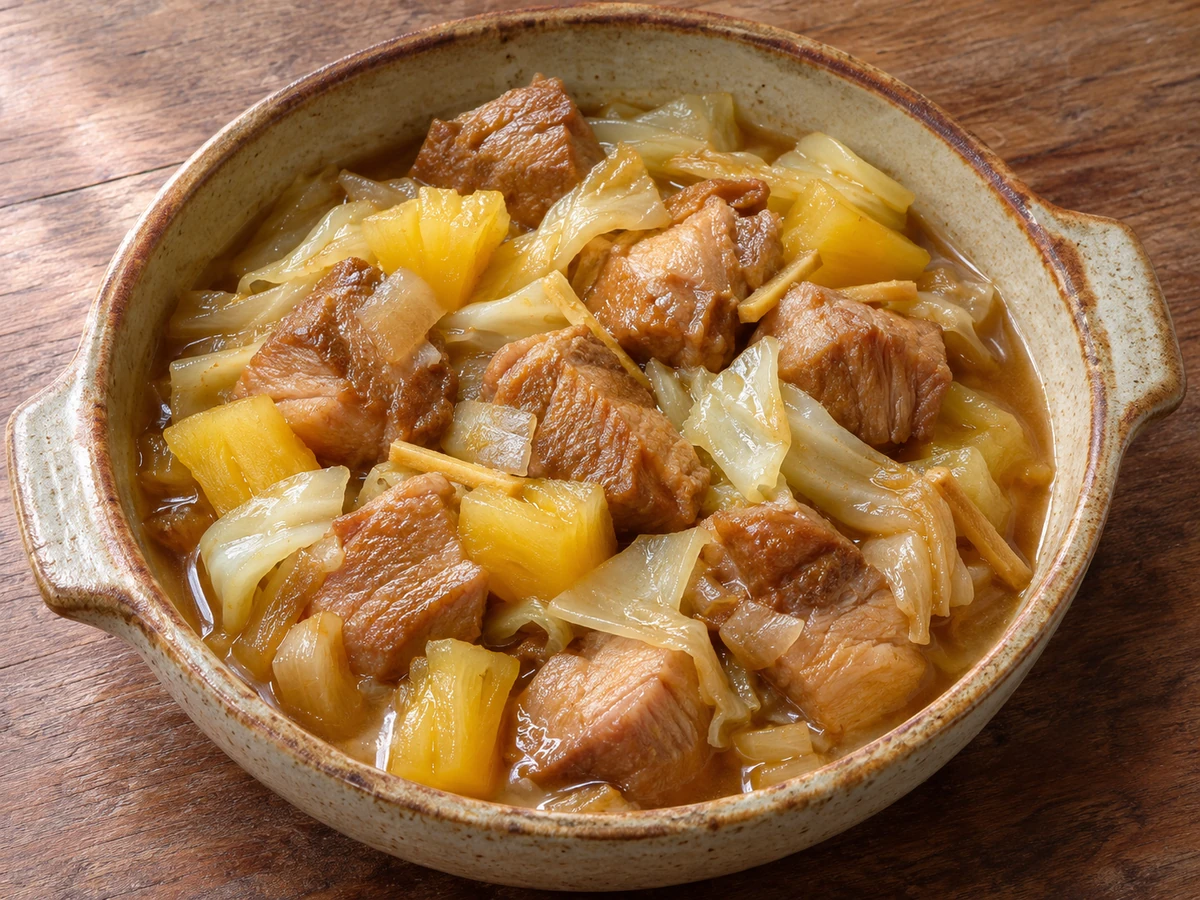
Ingredients
- 600 g raw boneless pork shoulder without rind, edible weight
- 600 g raw white cabbage without core
- 300 g fresh pineapple flesh without skin or fibrous core
- 150 g peeled onion
- 15 g peeled fresh ginger
- 20 g olive oil
- 350 ml drinking water, plus a small hot reserve if needed
- 3 g salt
Preparation
Prepare 600 g cabbage in strips, 300 g pineapple in 2 cm pieces, 150 g onion and 15 g ginger.
Cut 600 g pork shoulder into 3 cm cubes and pat dry; clean utensils that touched raw meat.
Heat 20 g oil and brown the meat in two batches, about 4 minutes each; set aside.
Soften the onion for 6 minutes, add ginger for 1 minute, then return meat, 350 ml water and 3 g salt.
Cover and simmer for 75 minutes, watching the liquid; add cabbage and cook for another 20 minutes.
Add pineapple and its juice, then cook for 10 more minutes, partly covered.
Check at least 74 °C in the centre of a large cube and tender flesh; continue cooking the meat separately if needed. Rest for 5 minutes and divide into four portions.
Introduction
This braise relies on three textures that need different cooking times: tender pork shoulder, softened but recognisable cabbage and pineapple that retains pieces. Putting everything into the pot at the beginning would make the fruit disappear and overcook the cabbage. The recipe therefore uses successive additions and a short cooking liquor that accompanies the food without turning it into soup.
The combination is a contemporary creation for the Angola à table collection. It is not presented as an old Angolan speciality or the recipe of a particular region. Pineapple provides fruity sweetness, but no sugar, honey or syrup is included. Water replaces commercial stock, making added salt clear and allowing the meat juices to come through. The stated yield is four portions, with no rice or bread included in the formula.
Cultural context
This dish explores a combination of braised meat, cabbage and fruit within a collection devoted to Angola. Its title describes a method and ingredients; it invents neither a local name nor antiquity. The presence of a product in a country's diet is insufficient evidence that every possible combination of it is traditional.
The FAO representation provides an institutional resource for approaching the national agricultural and food context: https://www.fao.org/angola. This starting point does not certify this creation's provenance. Cooling and hygiene guidance is consistent with the French Ministry of Agriculture's advice: https://agriculture.gouv.fr/cuisine-domicile-les-bons-gestes-dhygiene.
Tips
Weigh pork after removing bones and rind; a bone-in weight is not the calculated quantity.
Prepare vegetables and pineapple before raw meat to reduce cross-handling.
Brown in two batches without crowding cubes or increasing oil by eye.
Add pineapple late and retain all its juice rather than replacing fruit with syrup.
Adjust liquid with hot water while keeping a gentle simmer.
Planning
Begin with the vegetables and fruit on a clean board. Remove damaged cabbage leaves and the core, then weigh 600 g usable leaves. Cut into two-centimetre-wide strips and shorten them so they can be picked up with a spoon. Peel the pineapple deeply enough to remove the eyes, remove its hard core and weigh 300 g flesh. Cut approximately two-centimetre pieces, collecting and retaining their juice. Chop the onion and grate the ginger separately.
Next prepare the pork on a board reserved for raw meat. Remove only rind, any bone fragments and readily detachable lumps of fat, then weigh the 600 g actually used. Cut uniform three-centimetre cubes and pat dry with disposable paper. An excessively wet surface prevents quick browning. Clean hands, knife and work surface before returning to the prepared vegetables. Keep cabbage and pineapple refrigerated during the initial simmer.
Choose a heavy-based covered casserole holding about four litres. Heat the twenty grams of oil over medium-high heat without smoking. Brown the pork in two batches, approximately four minutes per batch, turning the cubes. Temporarily transfer to a clean container. This colours the surface; it does not yet cook the cubes through. Do not add unmeasured oil if the pot looks dry; adjust the heat first.
Reduce the heat, put the onion in the same pot and soften for six minutes. If the browned juices stick, add a spoonful taken from the 350 ml water. Stir in the ginger for one minute, return the meat and pour in the remaining water with the three grams of salt. Gently loosen the browned juices with a wooden spoon. Bring to a simmer, cover and cook over low heat for seventy-five minutes. Check after thirty and sixty minutes that the bottom remains moist; top up only with small amounts of hot water.
Add the cabbage and mix by lifting the pieces. Cover again and cook for twenty minutes, stirring once halfway through. The cabbage loses volume and releases water into the juices. Then add pineapple and all its collected juice and simmer for a further ten minutes, partly covered. The fruit should be hot and softened without completely breaking down. Do not boil vigorously to reduce faster: the edges of the meat may dry out.
Check a large pork cube with a clean probe, aiming for at least 74 °C in its centre, then separately assess tenderness with a fork. A sufficient temperature does not yet guarantee meltingly tender shoulder. If it remains resistant, temporarily remove the pineapple and cabbage and gently continue cooking the meat with a little water before reuniting everything. The stated 130-minute cooking time is a guide including pot operations; tenderness may require adjustment. Turn off the heat and rest for five minutes.
Serving
Divide pork cubes among four deep plates first, then distribute cabbage and pineapple. Finish with the juices, gently mixing to share what remains at the bottom of the pot. The sauce should lightly coat the food without being thickened with flour. Plain rice can accompany the dish, but neither its quantity nor its nutrition is included. Avoid adding salt before tasting meat, fruit and cooking liquor together.
Storage
Promptly divide leftovers between shallow containers and refrigerate at no more than 4 °C within two hours of cooking. Consume within forty-eight hours. Keep meat, vegetables and juices together to limit drying. Reheat only the amount needed, covered and with a little water if necessary, until hot throughout. Do not leave a large casserole cooling on the table all evening.
Variations
For less dominant pineapple, cut smaller pieces while retaining the stated 300 g; it will be distributed more evenly through each mouthful. Thinner cabbage gives a softer texture and requires closer observation. Replacing shoulder with tenderloin fundamentally changes the cooking: a lean cut does not automatically tolerate this long braise. Any meat substitution or addition of coconut milk creates another formula and requires nutrition to be reassessed.
Nutrition notes
Meat provides most of this preparation's protein; cabbage and pineapple contribute particularly to fibre and carbohydrates. Shoulder contains variable amounts of fat even after careful trimming. The calculation uses a generic raw shoulder reference and all added oil. Cooking juices are eaten with the dish and therefore are not arbitrarily removed from the estimate. Per-serving values assume four comparable portions without accompaniments.
Conclusion
Tender shoulder and still-visible fruit are this braise's two main guides. Successive additions respect the textures rather than seeking a compromise through one undifferentiated cooking time. Keeping the bottom moist, checking a large cube and sharing food before juices make serving more consistent. This contemporary editorial formula is offered to cook and is not declared kitchen-tested.
Enjoy your meal
Enjoy your meal!